How to Plan a Yard Sign Split Shipment for Urgent Deadlines

Quick answer: Plan a yard sign split shipment by calculating the minimum quantity needed for the first launch, sending that portion by air, and shipping the remaining inventory by ocean freight. Give each shipment its own quantity list, carton labels, packing list, tracking record, and expected delivery date. The first shipment should keep the project operating until the ocean shipment arrives.
When a Yard Sign Split Shipment Makes Sense
A split plan is most useful when a buyer has a fixed start date but does not need every sign on the first day. For example, a campaign may need signs for an announcement event before the full field rollout. A franchise may need starter kits for priority branches while the balance travels by sea. A distributor may need enough stock to fill confirmed orders before replenishment inventory arrives.
Common situations include:
- Artwork approval was completed later than planned.
- A campaign, promotion, or branch opening has a fixed launch date.
- The full order is too expensive to ship by air.
- Only selected locations require immediate inventory.
- The buyer needs a small emergency buffer before the main shipment arrives.
- Existing stock can cover part, but not all, of the waiting period.
A split shipment is not automatically the cheapest option. Two shipments may mean two freight charges, two sets of handling activities, separate receiving work, and more coordination. Buyers should compare the cost of splitting with the commercial cost of missing the launch date.
Calculate the Minimum Airfreight Quantity
The first mistake is choosing an arbitrary air quantity such as 100 or 500 signs. The urgent quantity should come from actual demand during the gap between the air delivery and the expected arrival of the ocean shipment.
Use this planning formula:
Urgent quantity = expected weekly use × coverage weeks + safety stock
Suppose a service network expects to install 150 signs per week. If the ocean shipment is expected four weeks after the air shipment, the operating requirement is 600 signs. Adding a reasonable project-specific safety buffer creates the air quantity. The remaining signs can move by ocean freight.
The calculation should use the expected usable quantity, not simply the number placed in cartons. Include a buffer for branch allocation changes, damaged pieces, last-minute requests, or unusually high early demand. The appropriate buffer depends on the project and should not be copied from an unrelated order.
Build the First Shipment Around Complete Launch Kits
An urgent shipment is useful only when it contains everything required for installation or resale. Sending 500 printed panels without matching H-stakes may still leave the buyer unable to launch.
For each urgent kit, confirm:
- The correct printed sign design and artwork revision
- The required number and type of H-stakes
- Installation instructions when needed
- Branch, customer, campaign, or route identification
- Any private-label inserts or reseller documents
- Carton labels that match the receiving plan
If the order contains multiple designs, do not allocate the air shipment only by total quantity. Allocate by SKU and operational priority. A 1,000-piece urgent shipment can still fail if one essential branch design or stake type is missing.
Create Two Controlled Shipment Lists
A yard sign split shipment should be managed as two linked deliveries, not one order with an informal note saying “send some by air.” Each portion needs a separate, approved quantity record.
| Control Item | Air Shipment | Ocean Shipment |
|---|---|---|
| Purpose | Launch or emergency coverage | Main inventory and replenishment |
| Quantity | Minimum complete kits needed early | Approved order balance by SKU |
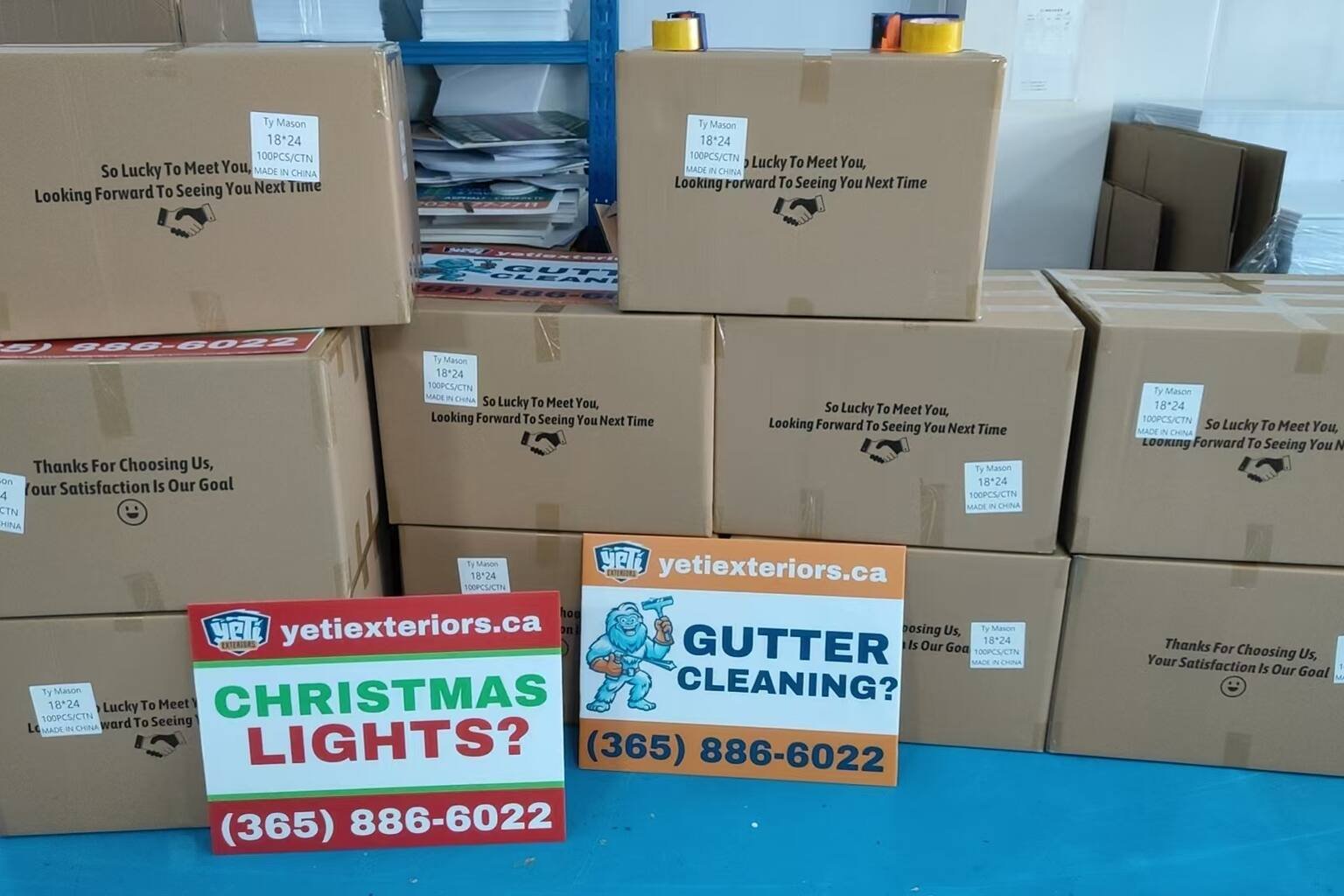
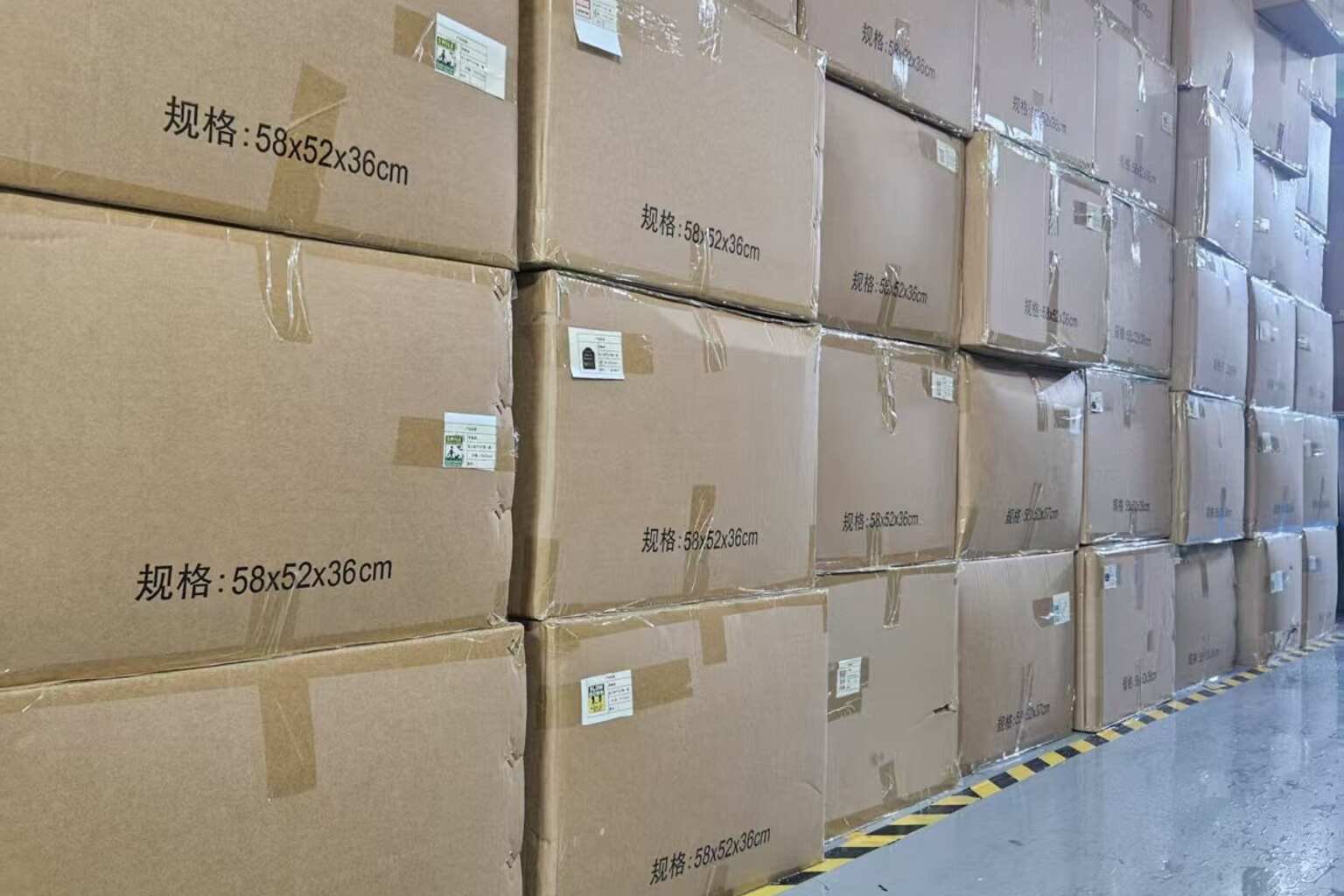
| Packing | Compact, clearly marked priority cartons | Warehouse-ready bulk packing |
| Documents | Its own packing and shipping records | Its own packing and shipping records |
| Receiving | Immediate count and deployment | Full warehouse receiving process |
The two quantity lists must add up to the approved production quantity. If 5,000 signs were ordered and 800 are assigned to air, the ocean list should account for the remaining 4,200 signs by design. Perform the same reconciliation separately for H-stakes and other accessories.
Protect Artwork and SKU Accuracy
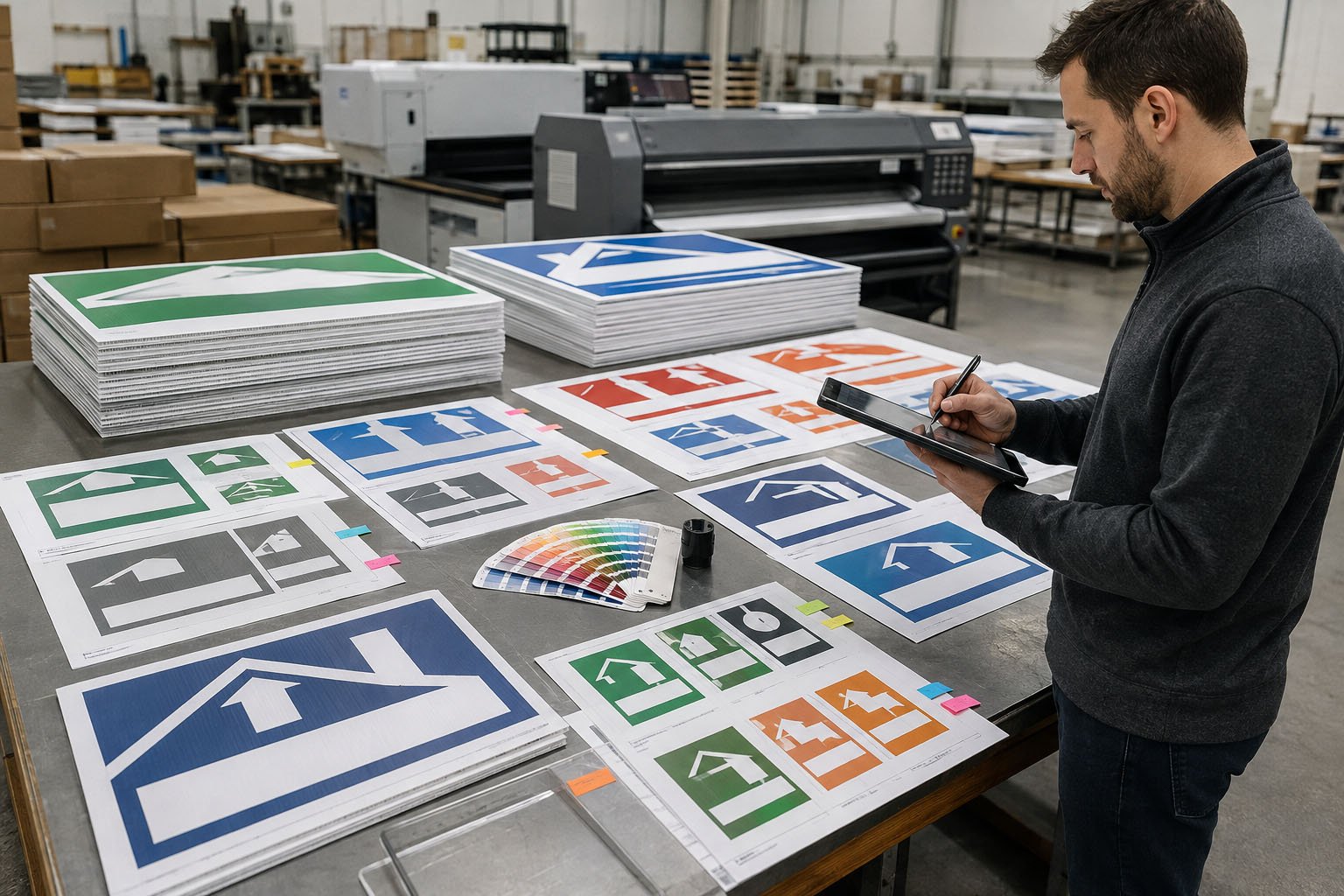
Speed creates pressure, and pressure increases the risk of using an outdated file. The air portion should not be printed from a preliminary proof merely because it must leave first.
Before production, freeze the approved information for every design:
- SKU or design ID
- Artwork filename and revision number
- Finished size and shape
- Single- or double-sided printing
- Air quantity and ocean quantity
- Compatible stake type and quantity
- Destination or branch assignment
The air and ocean portions should use the same approved master specification unless a difference is intentionally documented. If a phone number, QR code, date, offer, or branch name changes between portions, treat it as a controlled artwork revision rather than a verbal shipping adjustment.
For orders with many designs, use the separate yard sign artwork revision control guide before releasing production files.
Plan the Timeline Backward from the In-Hand Date
The required date should mean the date signs must be physically available for installation, distribution, or resale—not the factory completion date or carrier pickup date.
Build backward from that in-hand date and allow time for:
- Final artwork approval
- Production and inspection
- Carton separation and document preparation
- Carrier booking and cargo handover
- International transit
- Customs and final delivery
- Receiving, counting, sorting, and branch distribution
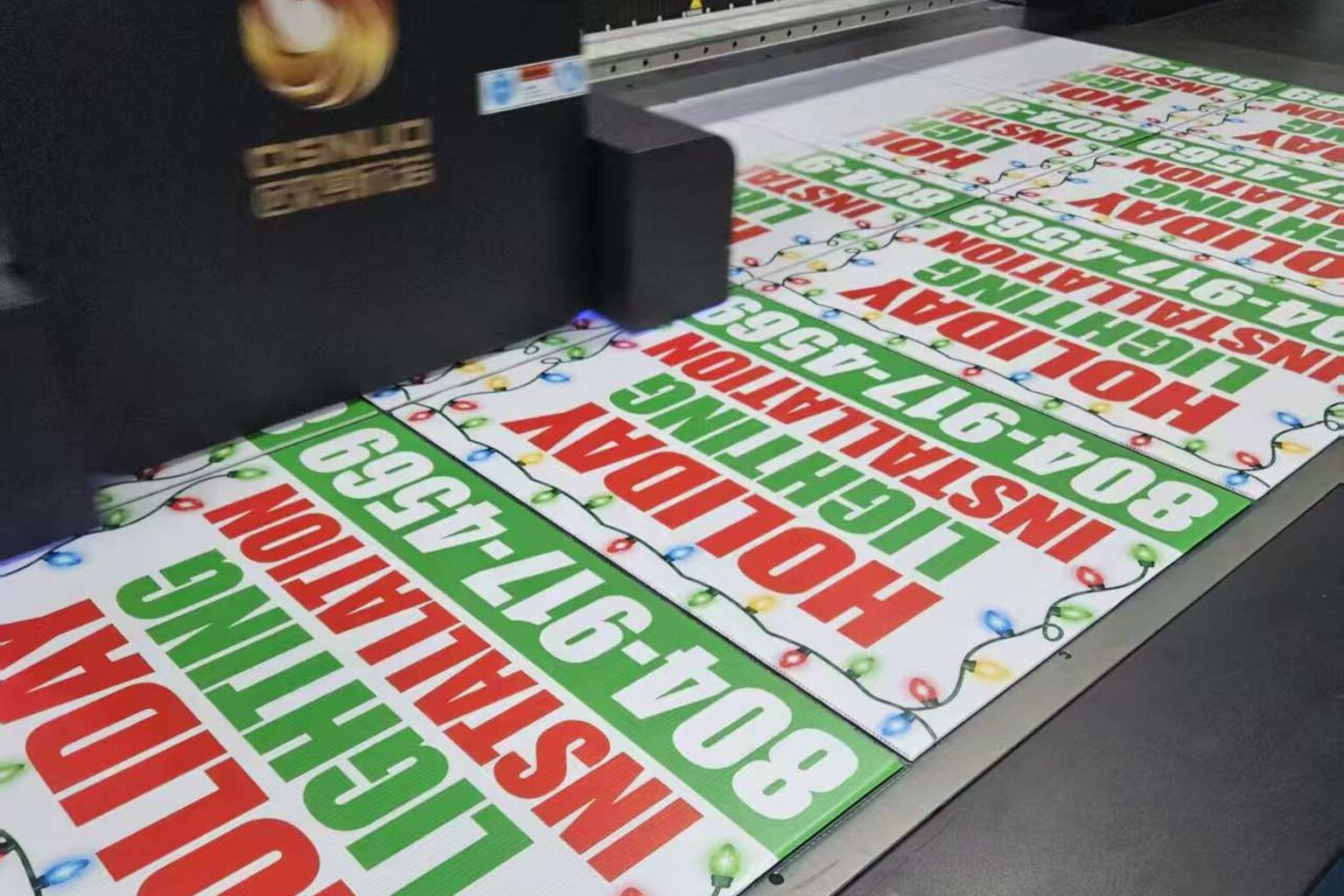
iYardSign typically produces orders up to approximately 1,000 sets in 3–5 days and orders up to approximately 10,000 sets in 7–10 days after artwork approval, depending on specifications and capacity confirmation. For planned bulk orders, DDP ocean delivery commonly requires about 35–45 days including production and transportation. Air options are faster but cost more, and every schedule must be confirmed for the actual destination and booking.
Do not promise an event date based only on a carrier estimate. Add operational time after delivery so staff can inspect and distribute the first cartons.
Compare the Real Cost of a Yard Sign Split Shipment
The correct comparison is not airfreight rate versus ocean freight rate. It is the complete business outcome of each plan.
Compare three scenarios:
- All air: fastest option, but the highest freight exposure for a large order.
- All ocean: usually more economical for planned volume, but may miss the launch date.
- Split shipment: higher coordination and handling complexity, but potentially a better balance between urgency and cost.
Include product cost, packing differences, airfreight, ocean freight, customs and delivery scope, receiving labor, branch redistribution, and the commercial cost of a delayed launch. Review the true landed cost of bulk yard signs when comparing the total expense.
Important: Sending too many signs by air can remove the financial advantage of splitting. Sending too few can create a second emergency shipment. Base the urgent quantity on demand coverage, complete kits, and a documented safety buffer.
Keep Shipping Terms and Documents Clear
The buyer and supplier should confirm the commercial scope for each shipment. Do not assume the air and ocean portions automatically use identical charges, delivery services, customs arrangements, or named places.
Confirm for each portion:
- Shipping method and service scope
- Incoterms rule and named place when applicable
- Freight, duty, tax, clearance, and final-delivery responsibility
- Consignee and delivery address
- Number of cartons and gross weight
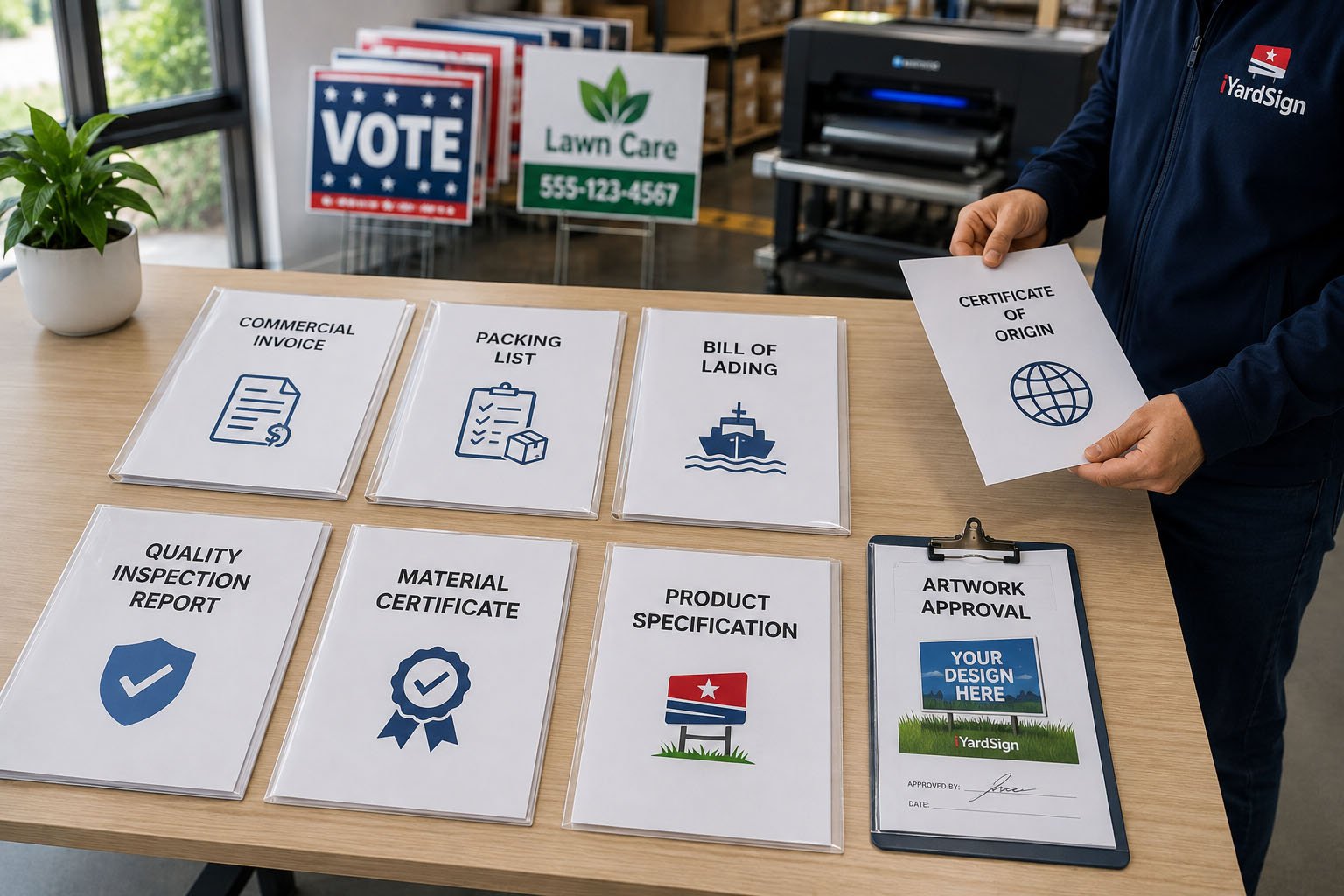
- Commercial invoice and packing-list references
- Tracking or shipment reference
- Unloading or appointment requirements
The International Chamber of Commerce publishes the official Incoterms rules overview. Buyers should use the agreed rule and named place precisely in commercial documents.
Prepare Receiving Teams for Two Deliveries
Tell the receiving team that the first delivery is intentionally partial. Otherwise, staff may record the missing balance as a shortage or hold the urgent signs while waiting for the rest of the order.
For the air portion, verify:
- Carton count and visible condition
- Quantity by design
- Correct artwork revisions
- H-stake quantities and compatibility
- Branch or customer allocations
- Usable quantity available for immediate release
Maintain a simple balance record showing the original order, air quantity received, ocean quantity in transit, and any claims or discrepancies. When the ocean portion arrives, close the order only after both shipment records reconcile with the approved purchase order.
When Not to Use Split Delivery
A split plan may not be appropriate when:
- The first portion is too small to support a useful launch.
- All signs are required simultaneously for one event.
- The artwork is still changing and cannot be frozen.
- Two receiving processes would create more cost than the deadline risk.
- The total order is small enough that one shipping method is simpler and economical.
- The buyer cannot manage inventory across two arrival dates.
In these cases, the better decision may be to adjust the launch, reduce the initial scope, place the order earlier, or choose one confirmed shipping method.
How iYardSign Supports Split Bulk Orders
iYardSign is a China-based custom yard sign manufacturer serving overseas B2B buyers, including local print shops, sign companies, distributors, political suppliers, real estate organizations, and multi-location service brands.
For a qualified bulk order, buyers can discuss:
- Air and ocean quantity allocation by design
- Production priorities for the urgent portion
- H-stake allocation and complete-kit packing
- Separate carton marks and packing lists
- Pre-shipment inspection records
- Available door-to-door delivery options
Send the total order quantity, urgent in-hand date, destination, quantity by design, H-stake requirements, and expected weekly use. These details make it possible to review whether a yard sign split shipment is practical before the quotation is approved.
Frequently Asked Questions About Yard Sign Split Shipments
What is a yard sign split shipment?
It is one bulk order divided into separate deliveries. A common plan sends a limited urgent quantity by air and the remaining inventory by ocean freight.
How many yard signs should be sent by air?
Send enough complete kits to cover expected demand until the ocean shipment arrives, plus a project-specific safety buffer. Calculate the amount by SKU and include matching H-stakes.
Does splitting a shipment always reduce cost?
No. It can reduce airfreight exposure compared with shipping the full order by air, but it also creates separate freight, handling, documentation, and receiving activities. Compare the complete cost of all-air, all-ocean, and split options.
Can different designs be divided between air and ocean freight?
Yes, but each design needs an approved quantity for each shipment. Prioritize the designs required for the first launch and reconcile both shipment lists to the total order.
Should H-stakes travel with the urgent signs?
The urgent portion should include enough compatible H-stakes to create usable kits unless the buyer already has verified local stock. Count panels and stakes separately.
Can the air and ocean portions use different delivery terms?
They can, but the service scope, Incoterms rule when used, named place, charges, customs responsibility, and final delivery requirements should be documented separately for each shipment.
Have an Urgent 500+ Piece Yard Sign Project?
Send your total quantity, urgent launch quantity, artwork count, H-stake requirements, destination, and required in-hand date.
iYardSign can review production timing and compare air, ocean, or split delivery options for your bulk custom yard sign order.