Bulk Yard Sign Storage: Prevent Damage and Missing H-Stakes

Quick answer: For reliable bulk yard sign storage, keep cartons dry, level, off the floor, and away from unnecessary heat or direct sunlight. Support panels evenly, prevent metal H-stakes from rubbing against printed surfaces, separate every artwork revision, and count signs and stakes independently. Check stored inventory before promising it to a customer or branch.
Why Bulk Yard Sign Storage Matters After Delivery
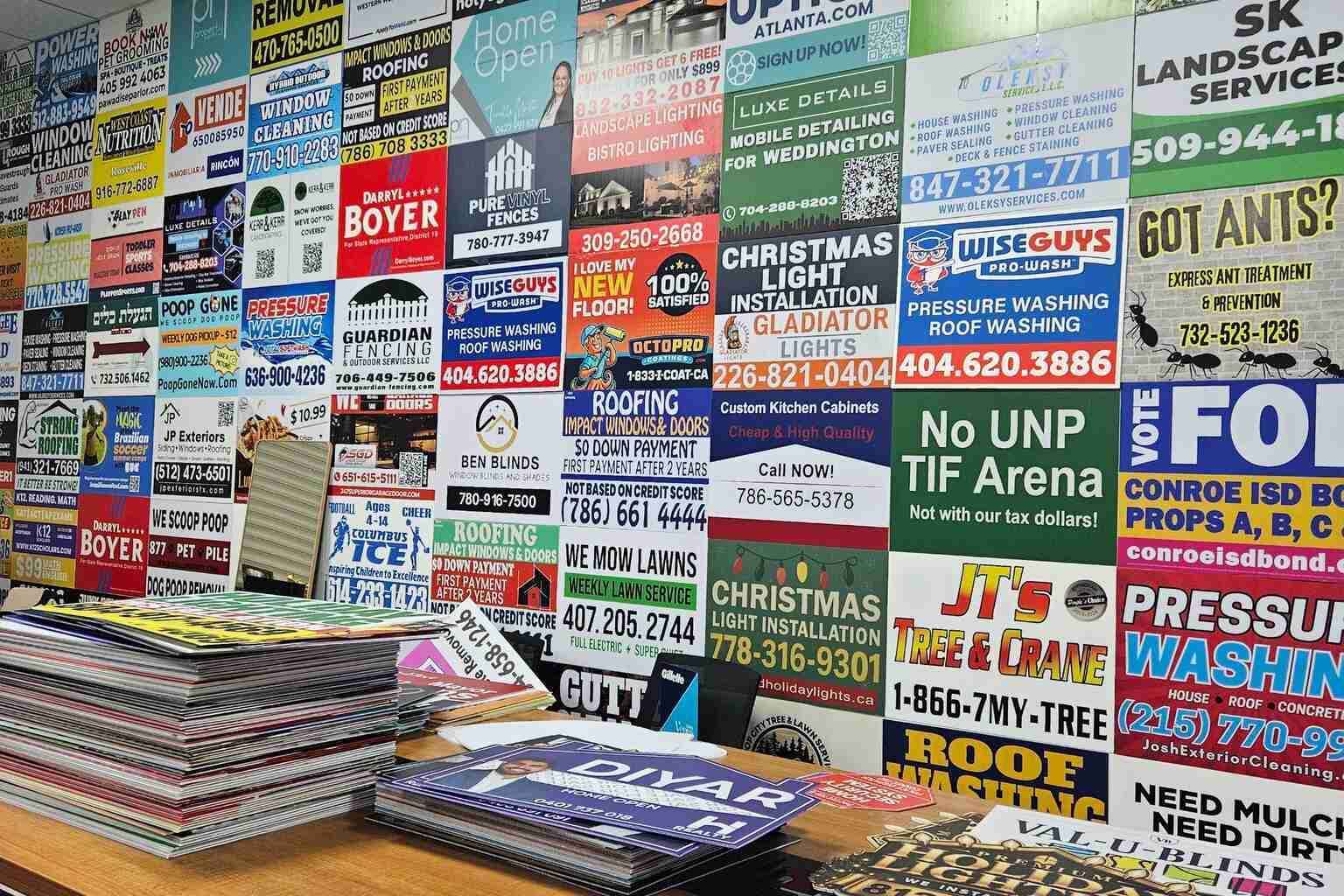
A bulk yard sign order may arrive in good condition but remain in storage for weeks or months. A distributor may wait for customer releases. A political organization may stage signs before field deployment. A franchise may distribute inventory to branches over time. A print shop may keep common sizes available for repeat customers.
Storage risk increases when teams treat closed cartons as finished, maintenance-free inventory. Typical problems include:
- Panels bending because cartons are leaning or poorly supported
- Printed faces becoming scratched by loose H-stakes
- Cartons becoming soft after contact with a damp floor
- Old and new artwork versions being mixed together
- Missing stakes reducing the number of complete sign kits
- Slow-moving stock carrying expired dates, offers, or contact details
The loss is not limited to the replacement cost. A reseller may miss a customer deadline, a service company may delay a promotion, or warehouse staff may spend hours recounting and sorting inventory.
How to Prepare a Bulk Yard Sign Storage Area
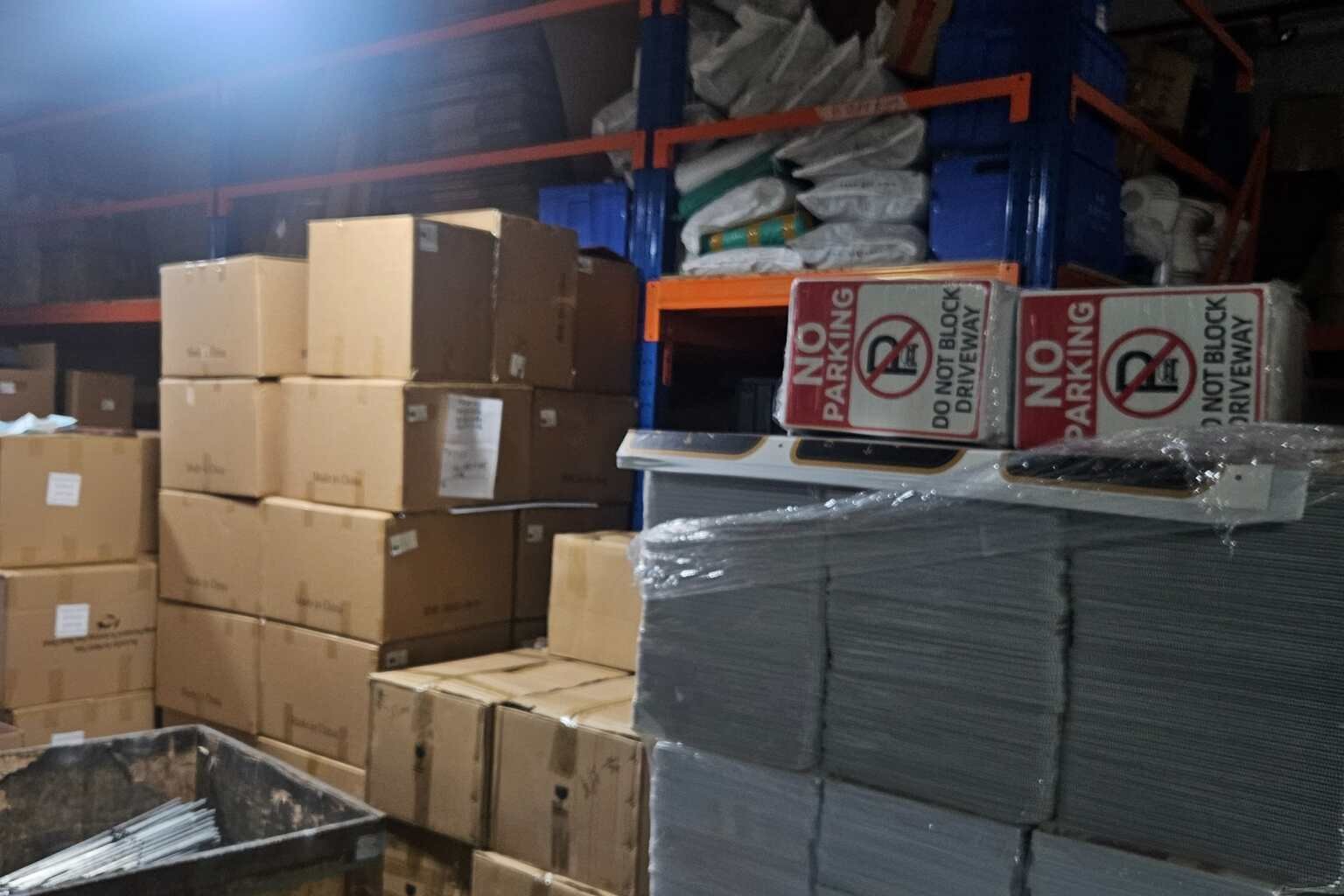
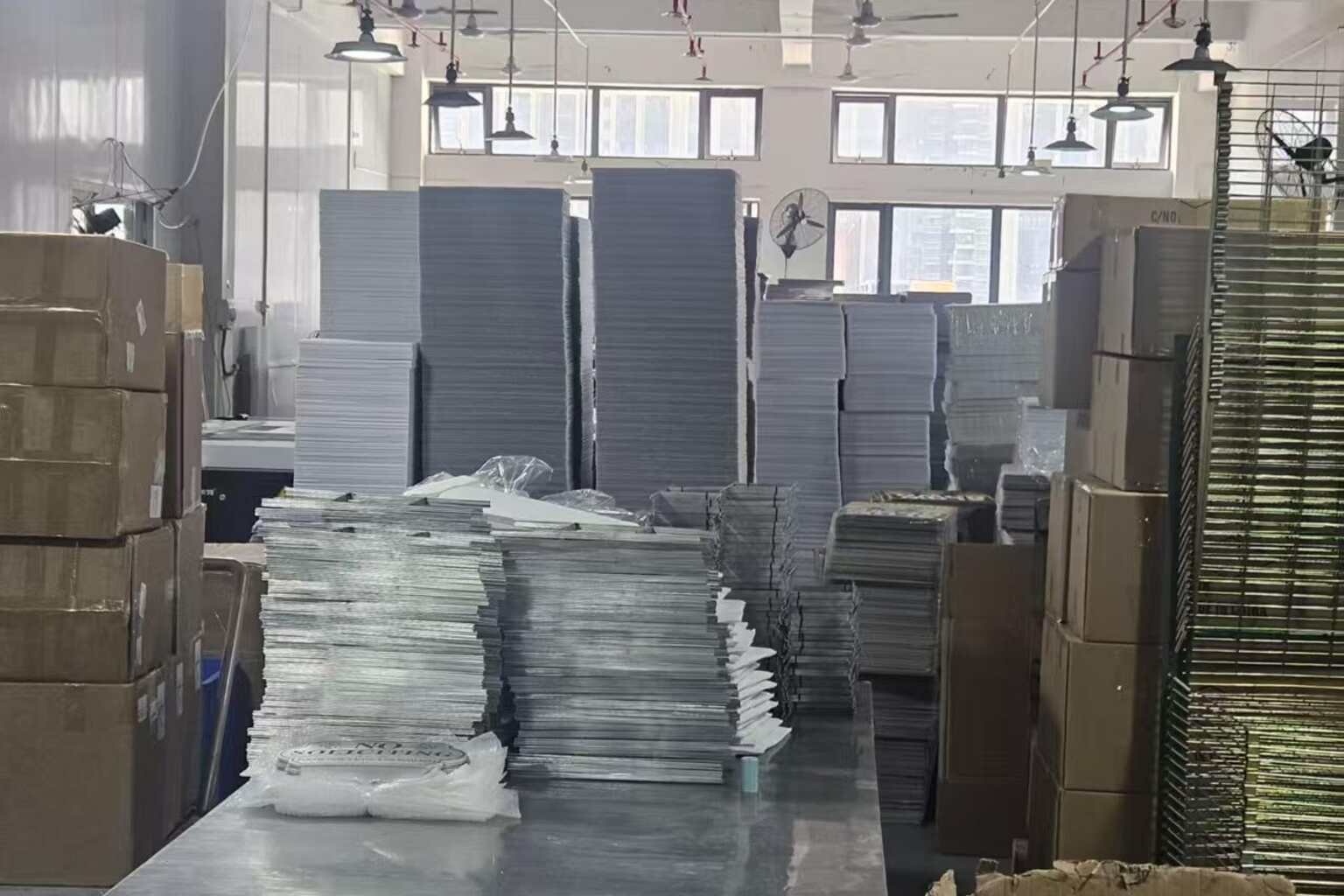
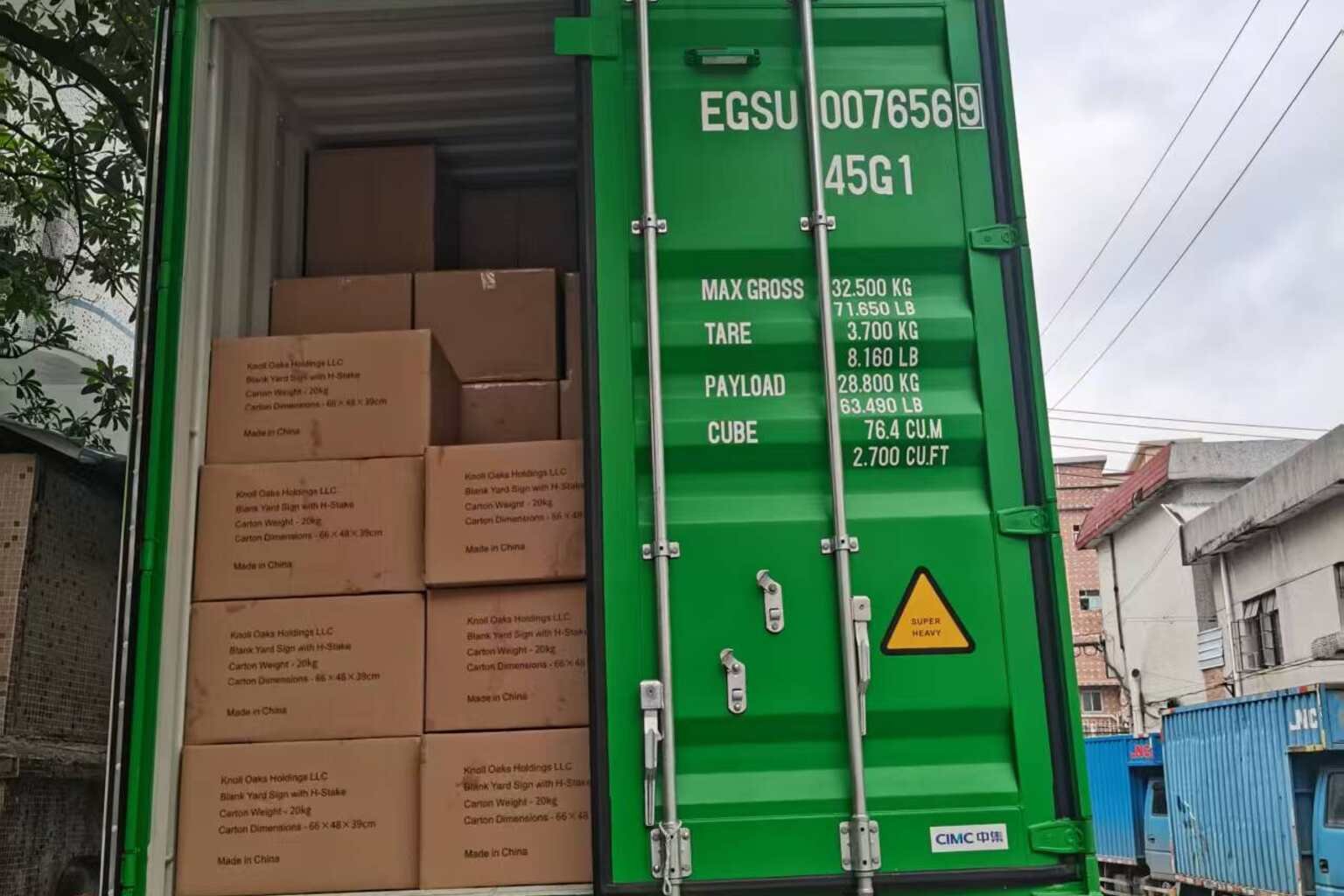
Do not wait until delivery day to decide where a 500- or 1,000-piece order will go. Ask the supplier for the estimated carton count, carton dimensions, gross weight, signs per carton, and H-stake packing method. Use that information to reserve appropriate pallet or shelf space.
A practical storage area should be:
- Dry and protected from roof leaks, open-door rain, and floor-cleaning water
- Level, stable, and capable of supporting the packed weight
- Away from heaters and prolonged direct sunlight through windows
- Large enough to remove one carton without tipping nearby stacks
- Organized so warehouse staff can read carton labels without moving every box
Corrugated plastic itself is used for outdoor applications, but the complete stored order also includes cardboard cartons, labels, printed surfaces, and metal hardware. Coroplast, a corrugated plastic sheet manufacturer, notes that grease, water, dust, and direct sunlight on sheet surfaces can affect surface treatment. Buyers can review the manufacturer’s material resource guidance. This should not be treated as a universal shelf-life guarantee for every finished printed sign.
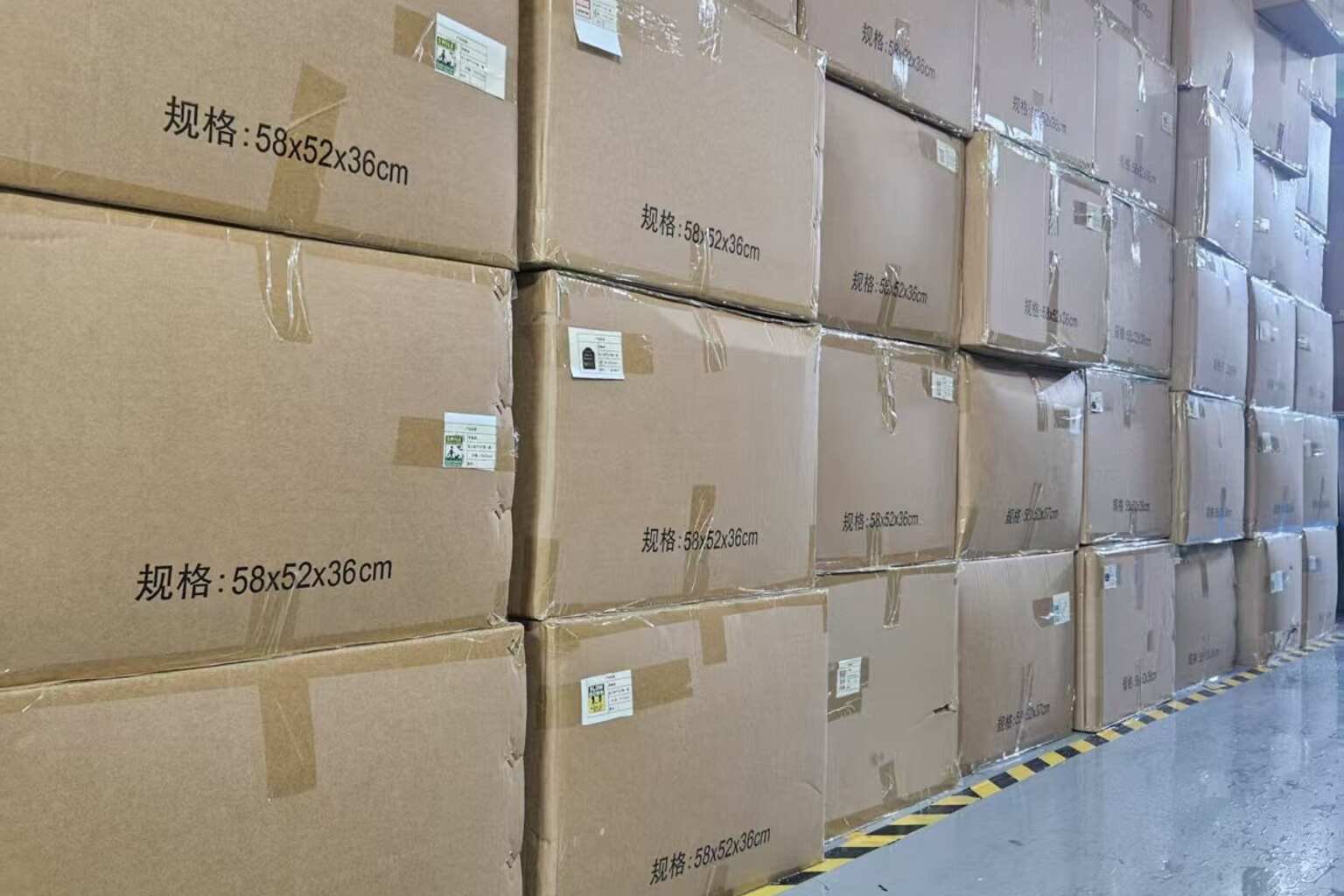
Buyer note: There is no universal safe stack height for every yard sign carton. The limit depends on carton construction, gross weight, panel size, pallet condition, shelf rating, and whether the lower cartons begin to deform.
Flat Panel Protection for Bulk Yard Sign Storage
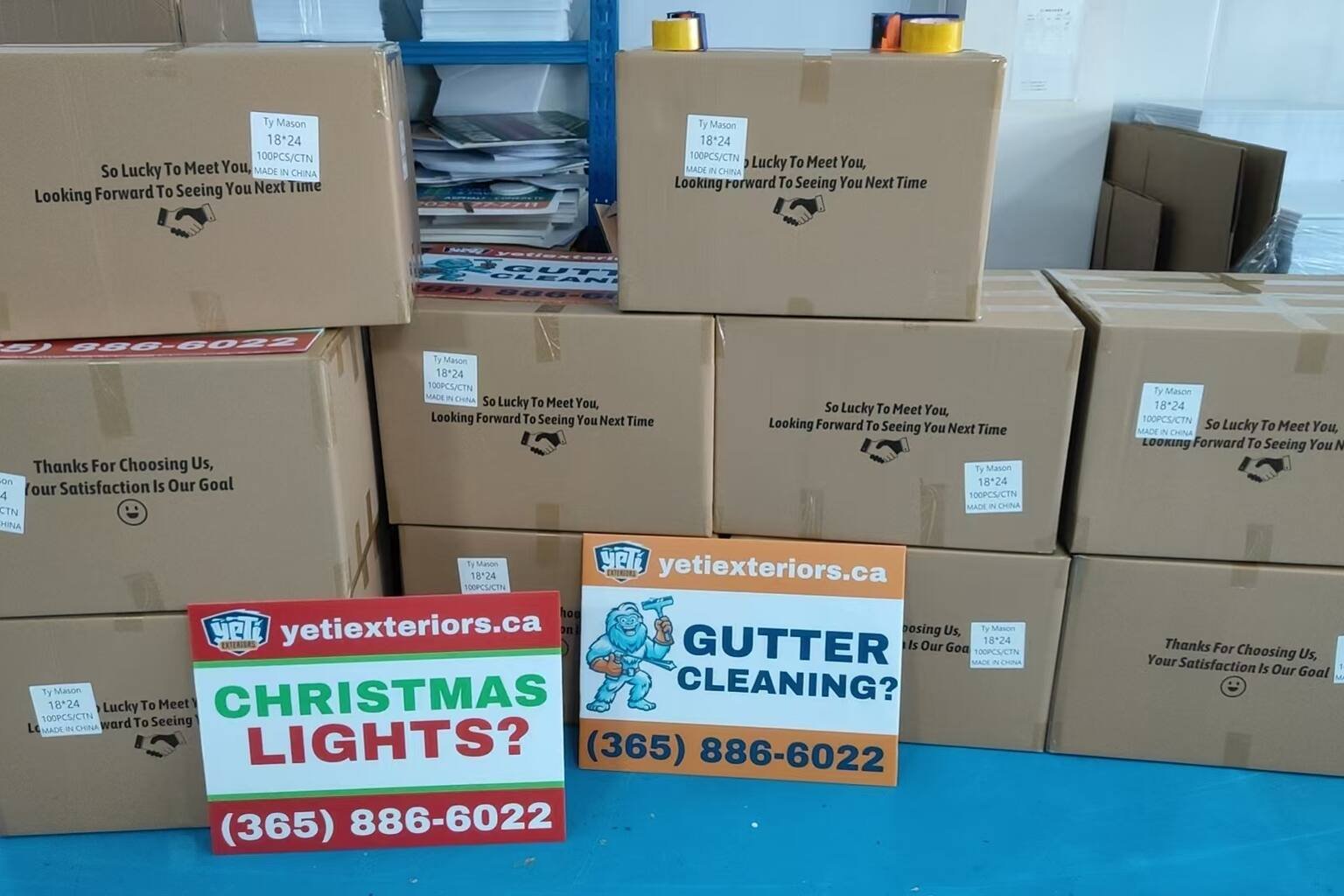
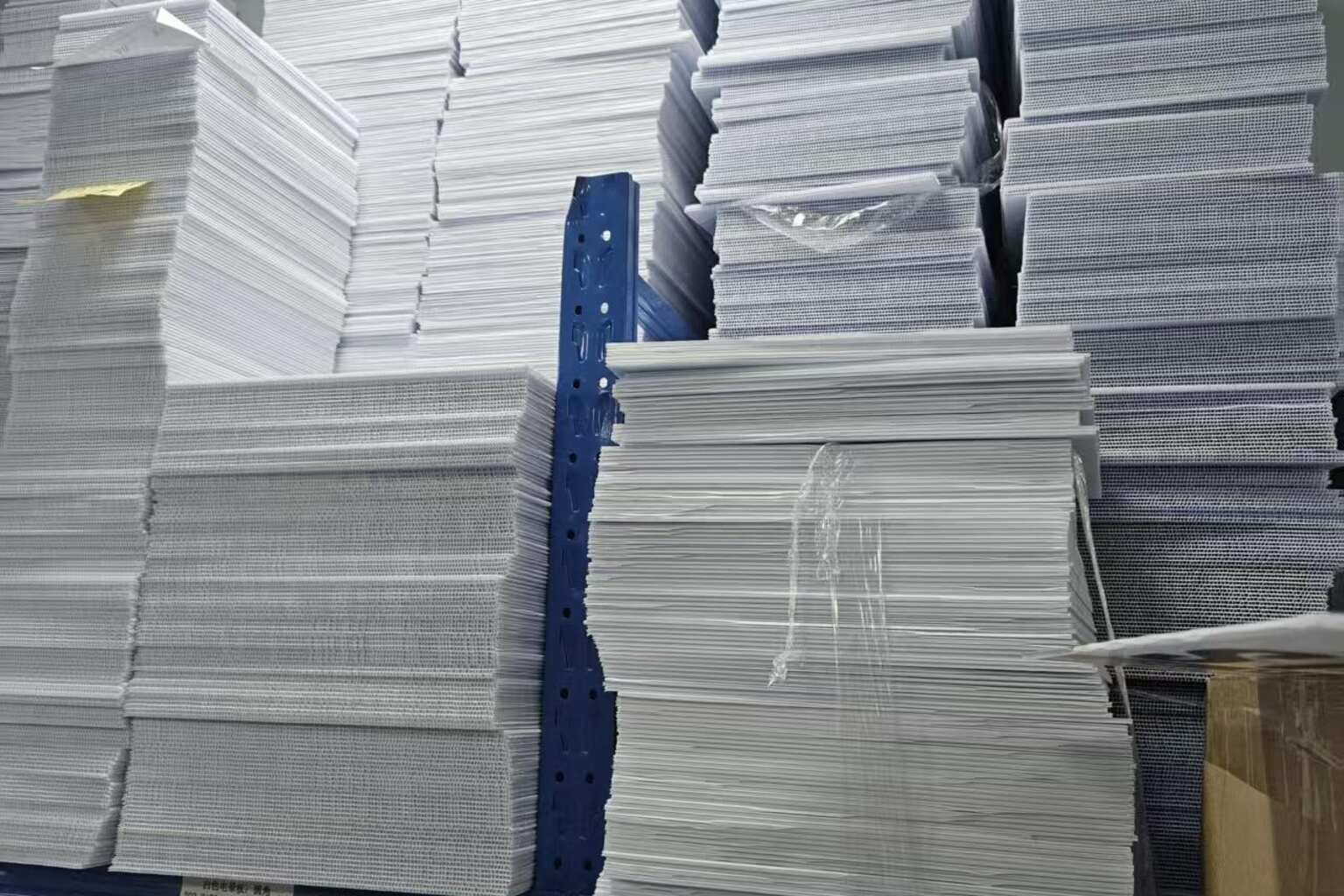
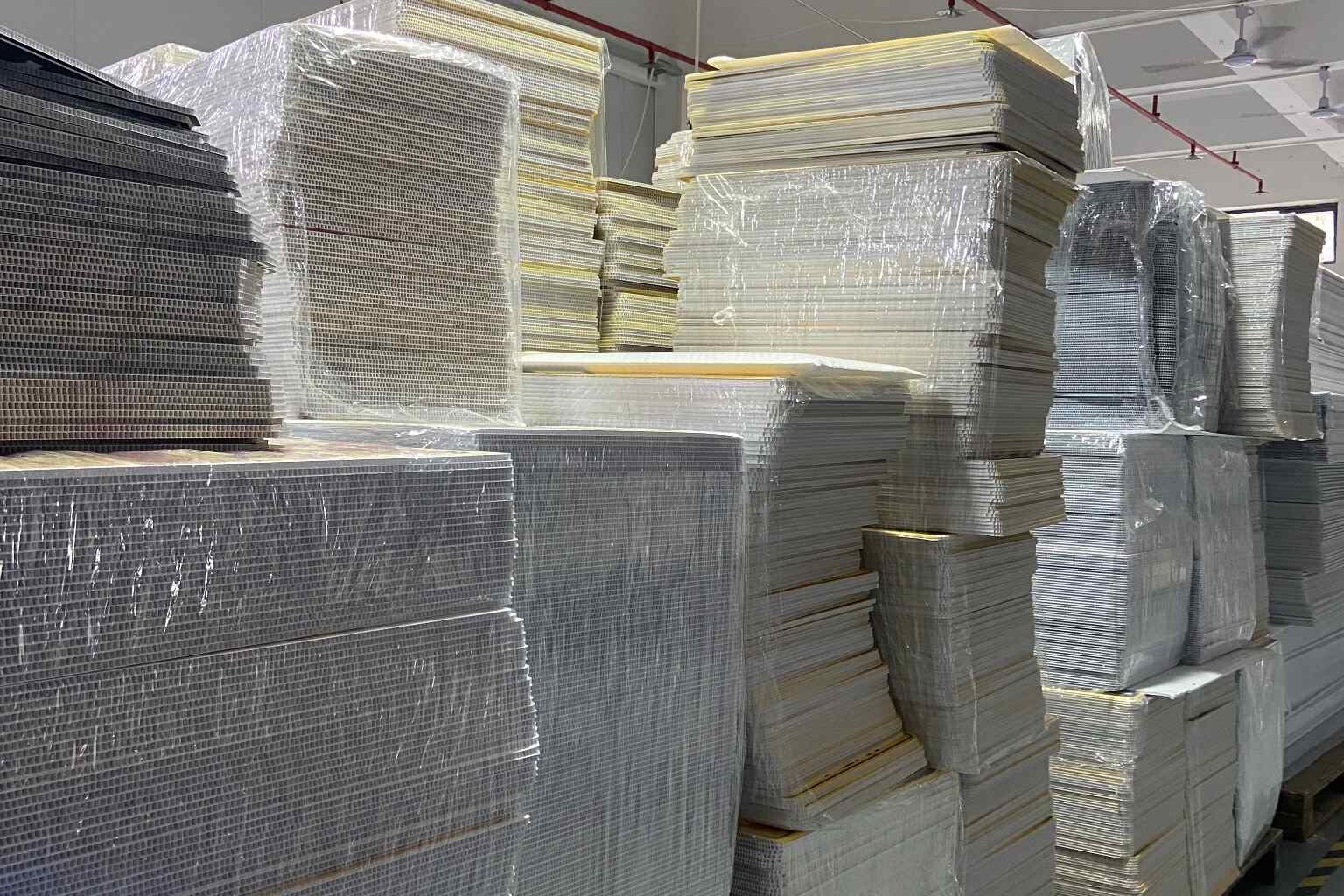
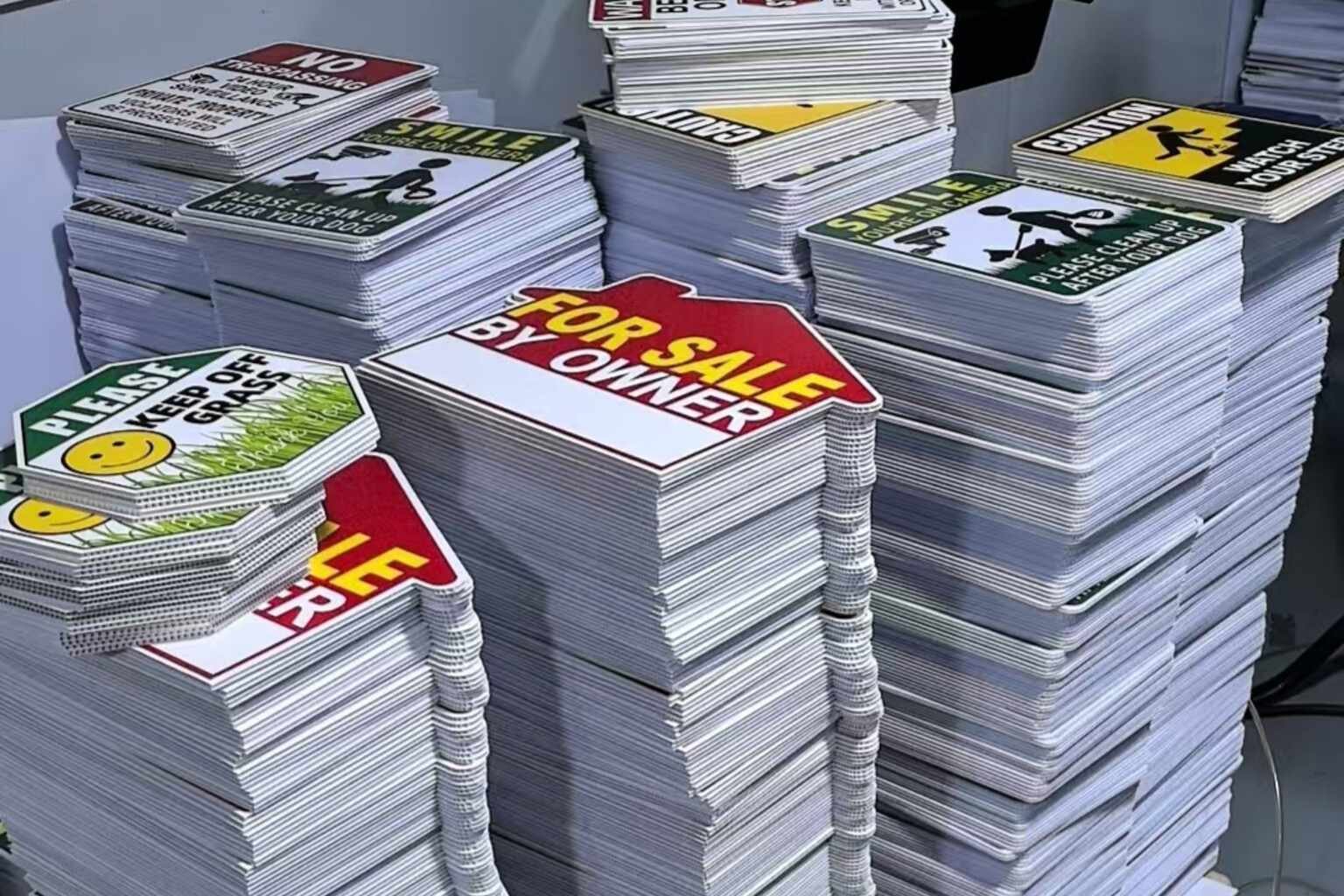
For standard rectangular signs, flat storage on a clean, level, fully supported surface is generally more practical than leaning loose panels against a wall. Keep the original cartons or clean protective dividers when they prevent printed faces from rubbing together.
When stacking cartons:
- Align cartons so the weight is distributed evenly.
- Do not place a narrow or heavy object in the center of a sign stack.
- Watch the bottom cartons for crushed corners, bowed lids, or leaning sides.
- Keep food, oils, solvents, dust-producing work, and sharp tools away from open cartons.
- Move signs with clean hands or appropriate handling practices to avoid marks on light-colored prints.
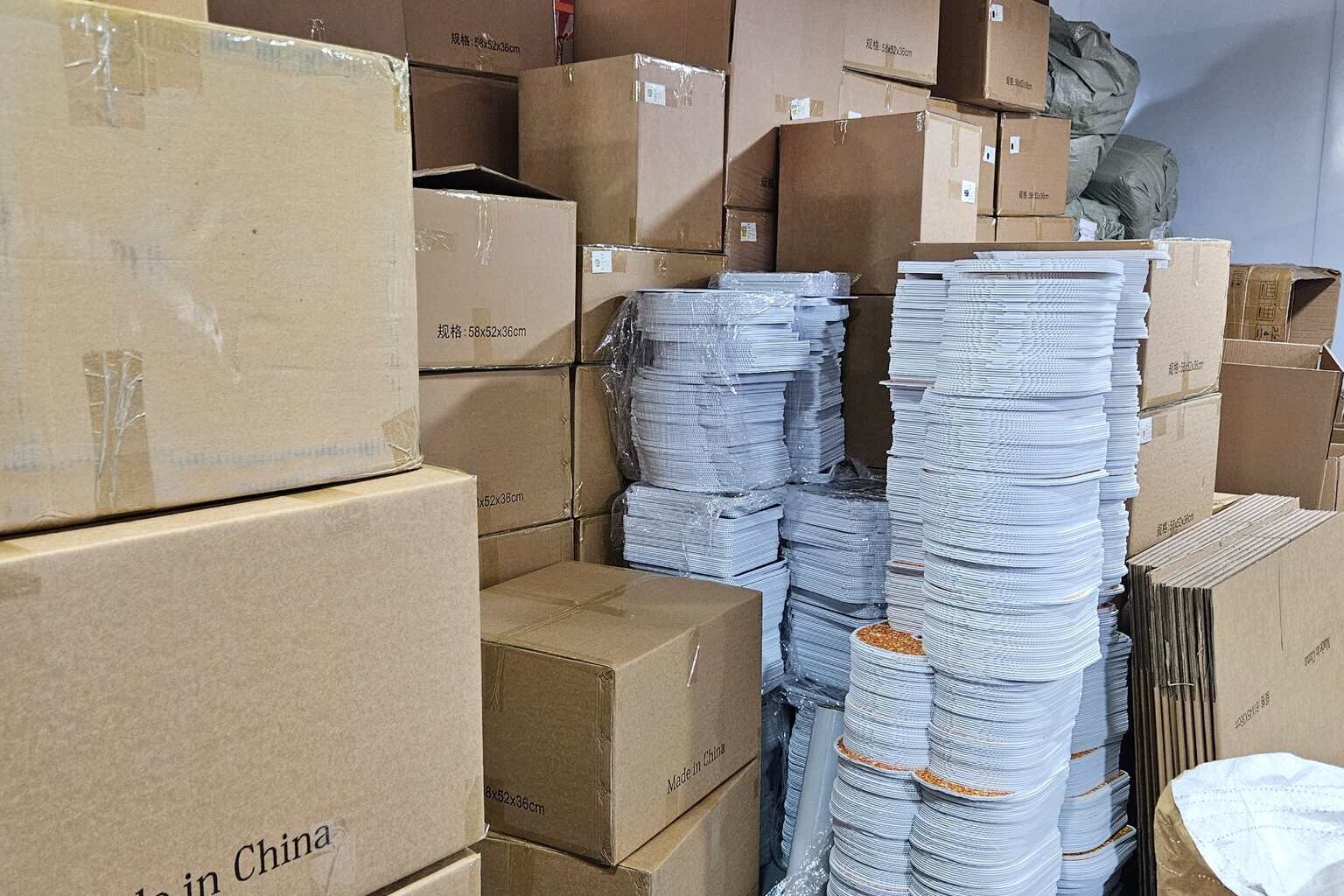
If vertical storage is necessary, use a suitable rack or divider that supports the panels and prevents them from sagging or sliding. Custom-shaped signs may require separate compartments because narrow cut areas or projecting outlines can catch on adjacent panels.
H-Stake Handling in Bulk Yard Sign Storage
Metal H-stakes should not move freely against printed sign faces. Loose wires can scratch ink, indent panels, catch custom-cut edges, or make warehouse counting difficult. Store stake bundles in identified cartons or bins unless the approved packing method already provides effective separation and protection.
Track panels and H-stakes as two inventory items, even when they were purchased as one set. The number of complete kits is limited by the component with the lower usable quantity.
| Inventory Record | Printed Signs | H-Stakes |
|---|---|---|
| Identifier | Design ID and artwork revision | Stake type and compatible sign |
| Quantity | Usable panels, not only sealed cartons | Usable stakes, not only bundles |
| Location | Pallet, rack, shelf, or bay | Separate carton, rack, bin, or bay |
| Pick check | Design, revision, quantity, and condition | Type, quantity, finish, and compatibility |
For example, 600 sellable panels and 480 compatible H-stakes create only 480 complete one-stake kits. Counting “600 signs in stock” without tracking hardware can cause an avoidable customer shortage.
Control Artwork Versions During Bulk Yard Sign Storage
Visual similarity is not a reliable warehouse control. Two designs may use the same colors and logo but show different phone numbers, branch names, campaign dates, QR codes, or promotions.
Every stored design should have:
- A unique design or SKU number
- The approved artwork revision
- The customer, branch, or campaign name
- Finished size and printing sides
- Quantity inside the carton
- The compatible H-stake reference
- A warehouse location
Keep old and new revisions physically separate. Use the oldest still-approved stock first, but do not release signs simply because they arrived earlier. Printed dates, offers, phone numbers, URLs, and QR-code destinations may no longer be valid.
For multi-SKU production controls, read How to Control Artwork Revisions in Multi-SKU Yard Sign Orders.
Bulk Yard Sign Storage Inspection Before Customer Release
A receiving inspection confirms the shipment at arrival. A storage check confirms that the same inventory remains usable later. Inspect stock before a large pickup, branch transfer, seasonal launch, or reseller shipment.
Check:
- Printed faces for new scratches, rubbing, dirt, or pressure marks
- Panels for bent corners, curling, crushed flute edges, or damaged outlines
- Cartons for moisture, crushing, pests, or unreadable labels
- Artwork revision against the current customer approval
- Sellable quantities of both panels and compatible stakes
- Correct allocation by branch, customer, event, or campaign
Move questionable inventory to a clearly marked hold area. Do not return a damaged panel to the sellable count simply because the carton still closes.
If damage was already present when the shipment arrived, use the separate bulk yard sign receiving inspection guide. Distinguishing incoming damage from later warehouse damage makes internal review and supplier communication clearer.
Create a Simple Bulk Yard Sign Storage Routine
A complicated warehouse system is not always necessary. The routine must be clear enough that different employees handle the stock consistently.
- Receive: Match carton labels, designs, and quantities to the packing list.
- Locate: Assign each design and stake type to a recorded pallet, rack, shelf, or bin.
- Protect: Keep cartons dry and supported, with hardware separated from printed surfaces.
- Review: Periodically check slow-moving cartons and investigate any leaning, moisture, or label damage.
- Release: Verify the current artwork revision, usable quantities, and matching stakes before picking an order.
Important: “Stored quantity” and “sellable quantity” are not always the same. Reserve customer orders against usable panels and compatible H-stakes after checking their condition and artwork status.
Plan Bulk Yard Sign Storage Before the Next Order
The best time to solve a storage problem is before production. Tell the manufacturer whether the signs will be installed immediately, held for resale, released by branch, or stored for a seasonal campaign.
Before approving the order, confirm:
- Signs and H-stakes per carton
- Estimated carton dimensions and gross weight
- Whether different designs require separate cartons
- Which fields must appear on carton labels
- Whether artwork revisions must be printed on each label
- Whether the proposed cartons fit the buyer’s shelves or pallet positions
- How printed surfaces and metal hardware will be separated
For more information about protection during international transportation, see Yard Sign Packaging for Wholesale Orders. Once those cartons enter the buyer’s warehouse, the bulk yard sign storage plan becomes the buyer’s operational control.
How iYardSign Supports Warehouse-Ready Bulk Orders
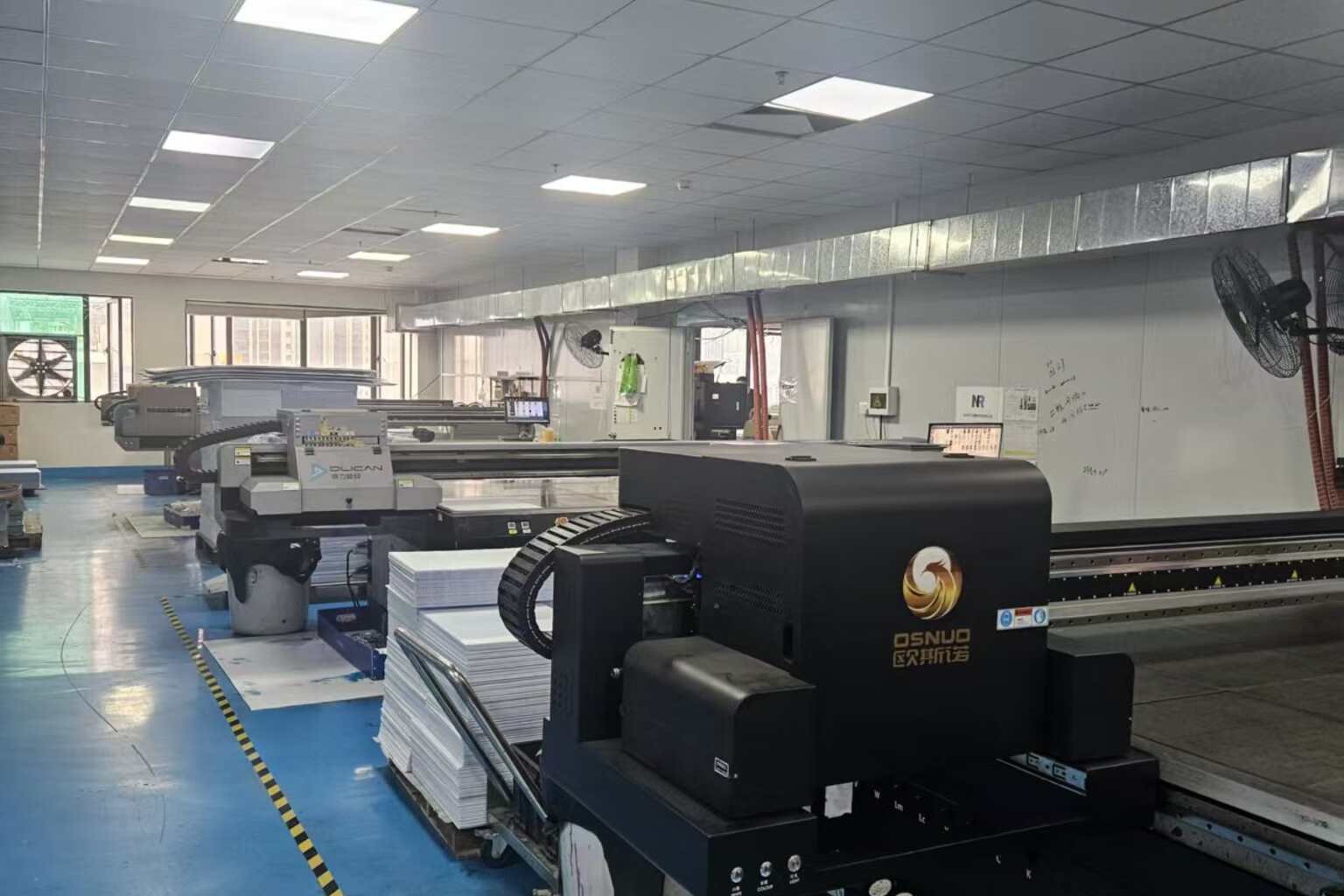
iYardSign is a China-based custom yard sign manufacturer supporting bulk orders for overseas business buyers.
Customers include:
- Local print shops and sign companies
- Distributors and print resellers
- Political campaign suppliers
- Real estate organizations
- Home service companies
- Franchise and multi-location brands
Depending on the order, buyers can discuss design-based packing, custom carton labels, H-stake separation, multiple artwork versions, packing lists, pre-shipment checks, and international shipping coordination. Send the planned storage or distribution model with the quotation request so packing and labeling requirements can be reviewed before production.
Frequently Asked Questions About Bulk Yard Sign Storage
Can corrugated plastic yard signs be stored for several months?
They can be held for later use when the storage environment is suitable and the printed message remains current. There is no universal shelf-life guarantee for every material, ink system, design, or warehouse. Inspect condition and artwork validity before release.
Should yard sign cartons sit directly on a concrete floor?
A level pallet or suitable shelf is generally safer than placing cardboard cartons directly on a floor that may be cleaned, damp, or exposed to spills. Follow the facility’s safety and racking rules.
How high can bulk yard sign cartons be stacked?
There is no universal carton count. Use the actual carton weight and construction, pallet condition, rack rating, and visible deformation of the lower cartons to establish a safe limit.
Should H-stakes be stored with printed panels?
Loose metal stakes should not rub against printed surfaces. Keep them separately identified or use an approved packing method that prevents movement, scratching, and pressure damage.
How should distributors manage old yard sign artwork?
Separate every revision and release older stock only after confirming that branding, offers, dates, phone numbers, websites, and QR-code destinations are still approved.
What should a buyer provide for warehouse-ready packing?
Provide quantities by design, signs and stakes per carton, label requirements, artwork revision identifiers, pallet or shelf restrictions, branch allocations, and the expected storage period.
Planning a 500+ Piece Yard Sign Stock Order?
Send the sign size, quantities by design, artwork versions, H-stake requirements, destination, carton-label needs, and planned warehouse or branch distribution method.
iYardSign can help prepare a factory-direct quotation and review the production, packing, labeling, and shipping details for your bulk custom yard sign order.