How to Build an AQL Inspection Plan for Bulk Yard Sign Orders

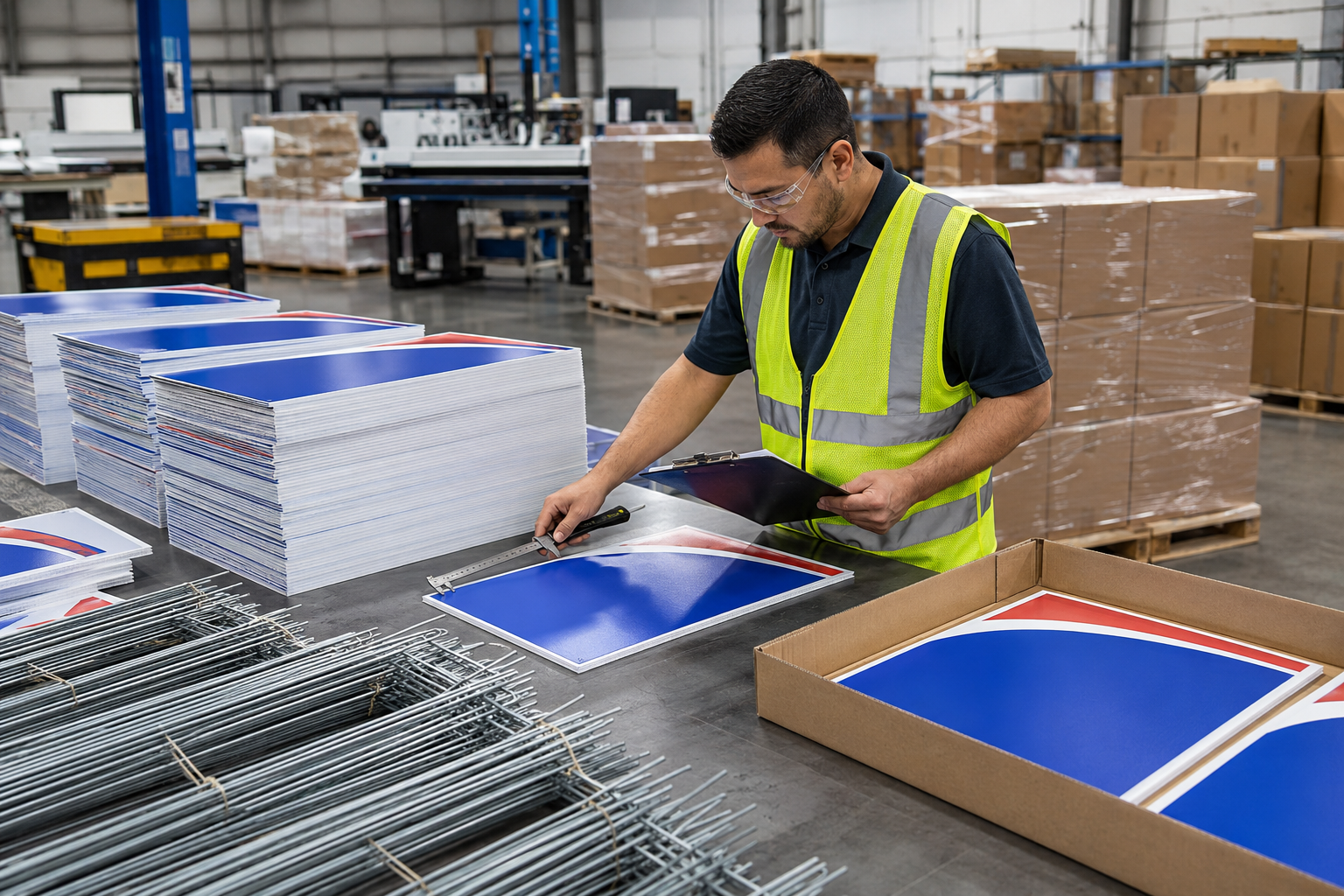
Checking only a few convenient samples without a written standard may produce inconsistent results. One inspector may accept a defect that another inspector would reject.
An AQL inspection plan gives the buyer, manufacturer, and third-party inspector a shared method for selecting samples, classifying defects, recording evidence, and deciding whether a production lot can be released.
Quick answer: A practical AQL inspection plan for bulk yard signs should define the production lot, approved reference standard, sampling plan, critical, major, and minor defects, inspection tests, packaging checks, reporting requirements, and shipment-release rules. These requirements should be approved before mass production—not created after a quality problem occurs.
Where AQL Inspection Is Useful
AQL inspection is useful when a buyer needs to evaluate a production lot without inspecting every individual sign.
It is commonly used for:
- Large custom yard sign orders
- Multi-location promotional campaigns
- Real estate sign programs
- Franchise and dealer sign orders
- Political and community campaigns
- Seasonal home service promotions
- Event and directional sign programs
- Repeat orders requiring consistent quality
The larger and more complicated the order becomes, the more important it is to use a written inspection plan.
For example, one purchase order may contain 10 artwork versions, several branch quantities, two stake models, different carton labels, and deliveries to multiple warehouses. In this situation, an instruction such as “check the quality before shipping” is not specific enough.
Define the Production Lot
The first step is to define which finished products will be treated as one inspection lot.
Products may be grouped into the same lot when they were produced under the same basic conditions, including:
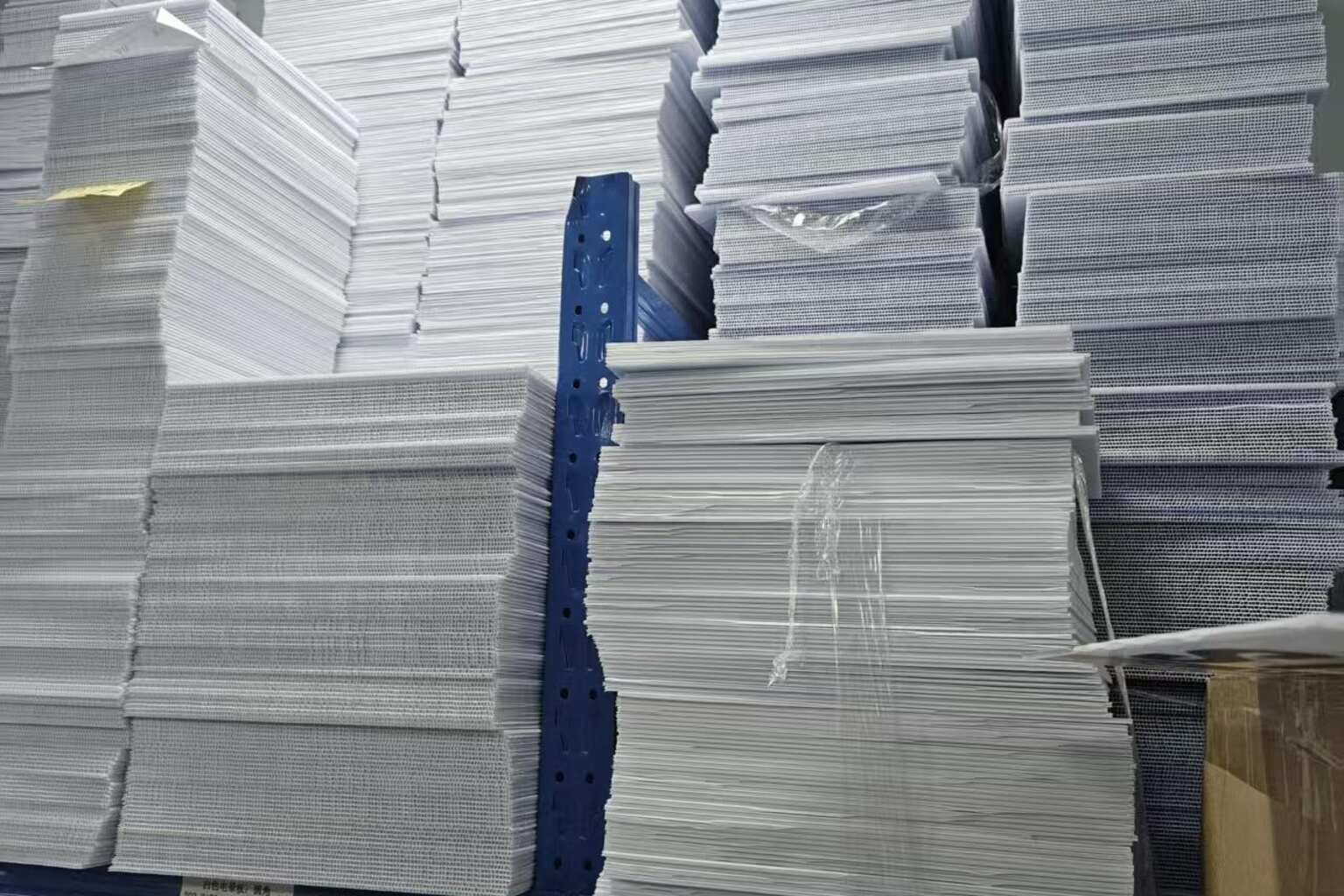
- The same corrugated plastic specification
- The same nominal material thickness
- The same printing process
- The same finishing process
- The same production period
- The same manufacturing location
- The same approved quality requirements
Materially different products should not automatically be combined into one inspection lot.
A buyer may need separate lots for 4 mm and 5 mm panels, rectangular and custom-shaped signs, different production dates, or products made with different printing processes.
Buyer note: Do not allow acceptable results from one product group to hide problems in another. If products have different specifications, production conditions, or failure risks, inspect and report them separately.
Confirm the Approved Reference Standard
An inspector needs a controlled reference before deciding whether a finished yard sign is acceptable.
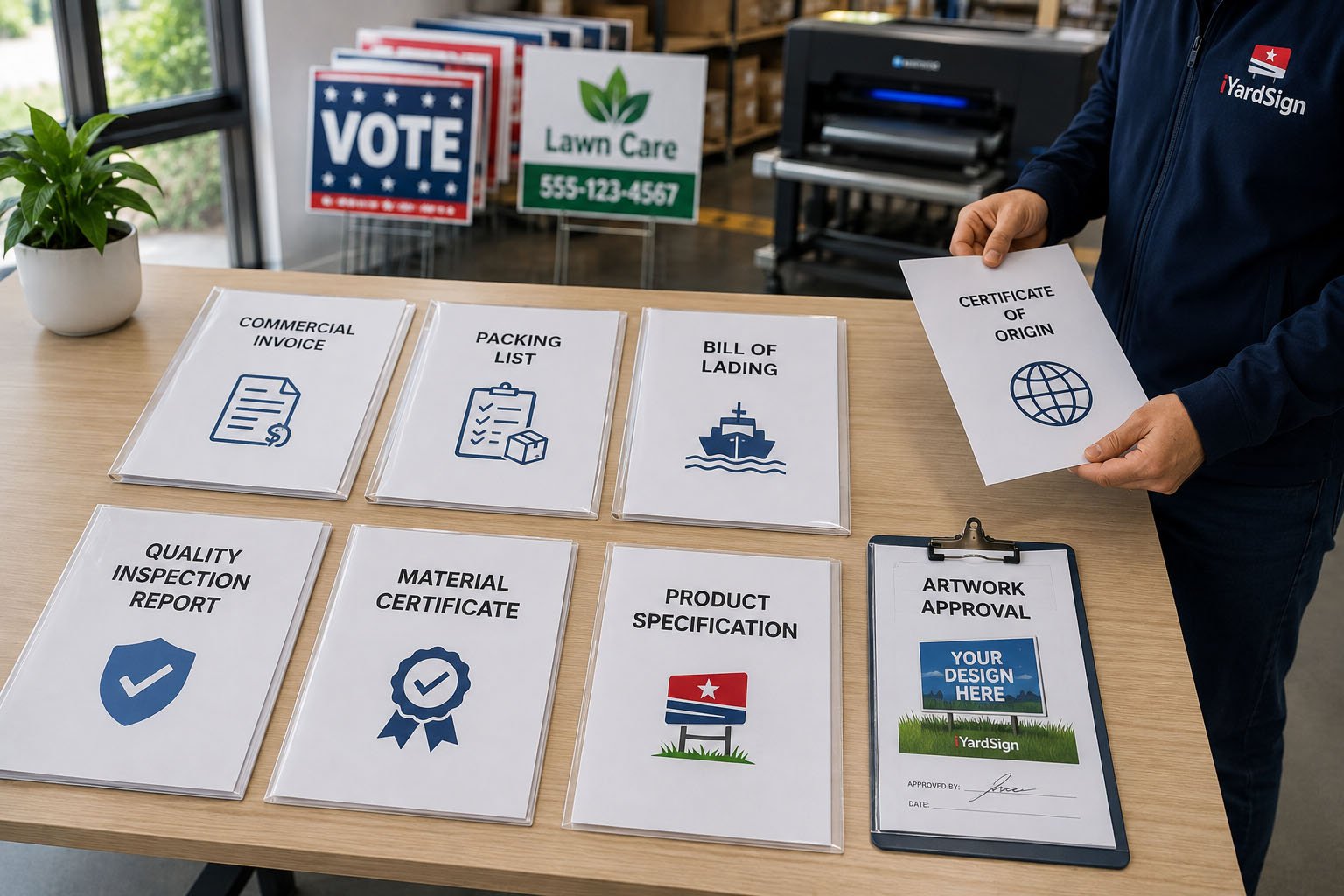
The inspection package should include:
- Purchase order number
- Approved artwork files
- Artwork revision numbers
- Product specification sheet
- Approved digital proofs
- Approved physical sample when required
- Approved color reference
- Quantity schedule by SKU and design
- Packing instructions
- Carton- and pallet-label requirements
- Shipment and warehouse requirements
The product specification should confirm:
- Finished sign width and height
- Corrugated plastic material
- Nominal material thickness
- Flute direction
- Single-sided or double-sided printing
- Color requirements
- Cutting shape
- Stake model
- Signs per bundle
- Signs and stakes per carton
- Carton-label information
A phrase such as “standard corrugated plastic yard sign” can be interpreted differently by different suppliers. A measurable specification produces a more reliable inspection result.
Classify Critical, Major, and Minor Defects
Not every defect has the same effect on the buyer’s business. Possible defects should be classified before the inspection begins.
| Defect Class | Business Impact | Possible Yard Sign Examples |
|---|---|---|
| Critical | Creates an unacceptable safety, legal, compliance, or serious brand risk. | Dangerously exposed wire, prohibited artwork, incorrect customer identity, contamination, or confidential campaign content printed for the wrong customer. |
| Major | Makes the sign unusable or commercially unacceptable for its intended purpose. | Wrong artwork, incorrect phone number, unreadable printing, wrong arrow direction, severe color shift, incorrect dimensions, crushed panels, missing stakes, or incorrect quantities. |
| Minor | Does not normally prevent use but falls outside the approved workmanship standard. | A small isolated print mark, slight cutting irregularity outside the main viewing area, or a minor cosmetic surface mark. |
Words such as “small,” “slight,” and “acceptable” are subjective. Whenever possible, add measurable limits and reference photographs to the inspection specification.
For example, “bad printing” is difficult to inspect consistently. A requirement such as “missing print through a phone number, QR code, logo, or primary message is a major defect” gives the inspector a clearer decision rule.
Choose the AQL Sampling Plan
AQL stands for Acceptance Quality Limit.
ISO 2859-1:2026 defines acceptance-sampling schemes indexed by AQL for lot-by-lot inspection. The selected plan connects the lot size, inspection level, sample-size code, and acceptance or rejection numbers.
The buyer should confirm:
- The applicable sampling standard and edition
- Total production-lot quantity
- Inspection level
- Sample-size code
- Required sample quantity
- AQL for each defect class
- Acceptance number
- Rejection number
- Normal, tightened, or reduced inspection status
The correct plan depends on:
- Intended application
- Product complexity
- Brand exposure
- Campaign deadline
- Supplier performance history
- Cost of field failure
- Ability to replace defective signs
Important: AQL is not permission for a manufacturer to intentionally produce or ship a fixed percentage of defective signs. It is an index used within a defined statistical sampling system to make an acceptance decision about a production lot.
Check Yard Sign Dimensions and Materials
The inspector should randomly select finished products from different cartons and different positions within the production lot.
Material and dimensional checks may include:
- Finished sign width and height
- Corrugated plastic material
- Nominal panel thickness
- Panel weight when specified
- Flute direction
- Cutting accuracy
- Corner and edge condition
- Hole or slot position
- Surface condition
- Panel flatness
The purchase specification should provide measurable tolerances rather than requiring the inspector to make a subjective decision.
If the order uses H-stakes, flute direction is especially important. A printed sign can look correct but still be difficult or impossible to install when the flutes do not align with the stake.
Inspect Printing and Artwork Accuracy
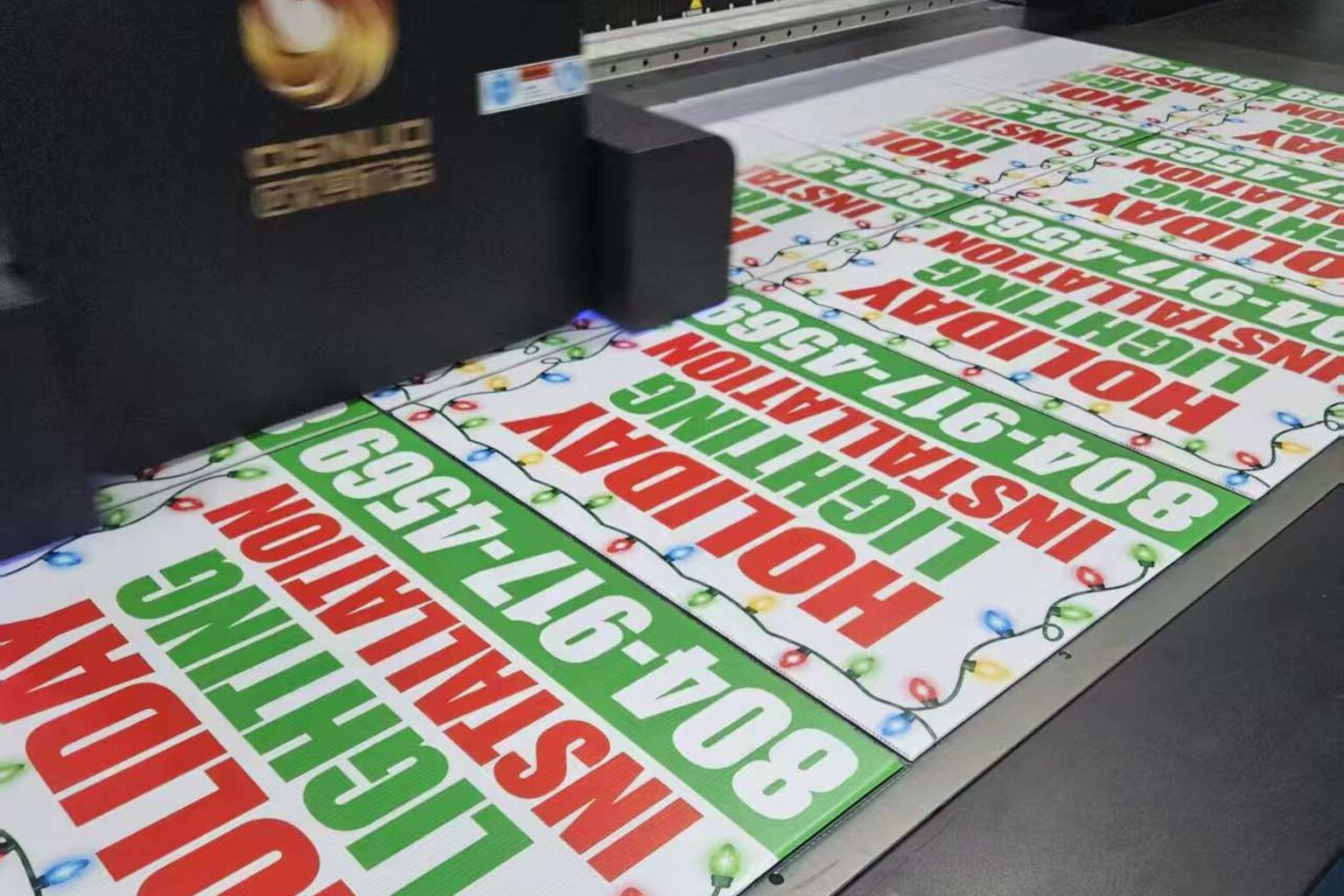
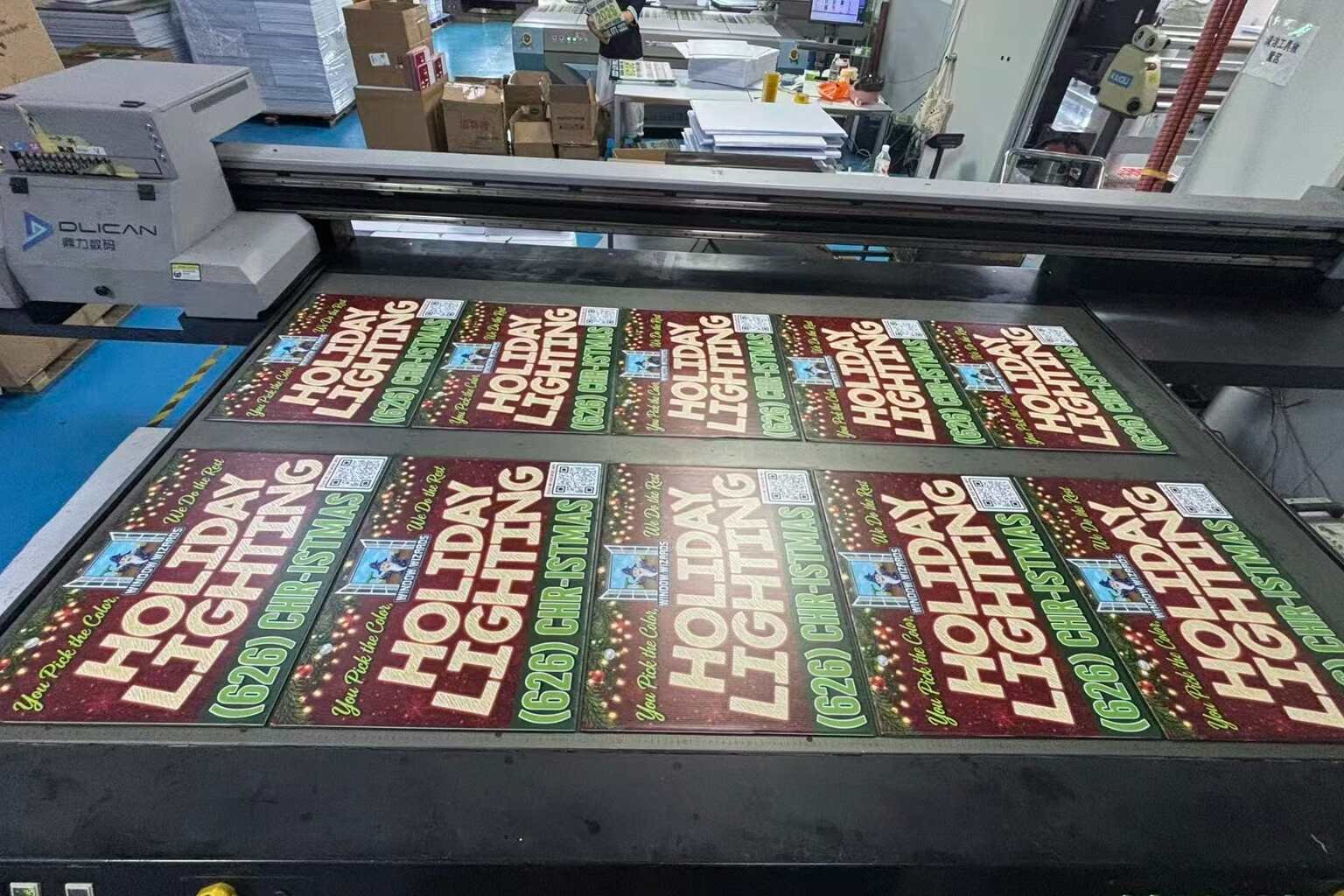
Finished printing should be compared with the exact artwork revision approved for production.
The inspector should check:
- Correct artwork and revision
- Correct logo and brand information
- Correct phone number and website
- Correct promotional dates
- Correct branch or location information
- Correct arrow direction
- Text readability
- Print registration
- Ink coverage
- Color consistency
- Missing print or banding
- Double-sided print orientation
- QR-code readability and destination
Small text and variable information require particular attention. For a multi-location order, the inspection report should identify which artwork versions were checked and how many samples were selected from each version.
Do not inspect only the design with the largest order quantity. A lower-volume version may contain a different phone number, QR code, offer, language, or directional arrow and may therefore carry a different failure risk.
Test Stakes and Sign Assembly
A yard sign should be inspected as an installed product, not only as a printed panel.
The inspector should confirm:
- Correct stake model
- Correct stake dimensions
- Correct quantity of stakes
- Wire and crossbar condition
- Surface coating
- Absence of dangerous exposed ends
- Compatibility with the sign flutes
- Stake insertion force
- Installed sign stability
- Stake packaging method
A representative number of finished signs should be assembled using the actual stakes included in the order.
This test can identify incorrect stake width, difficult insertion, weak wire construction, damage during installation, or a support position that interferes with important printed content.
For custom-shaped panels, the inspector should also check whether the support position keeps the sign balanced and whether the shape creates additional movement in outdoor conditions.
Check Quantities and Packing
Pre-shipment inspection should confirm that the buyer is receiving the correct products in the correct quantities and packaging.
The inspector should compare:
- Purchase-order quantity
- Finished quantity
- Quantity by artwork and revision
- Quantity by location
- Signs per bundle
- Bundles per carton
- Stakes per carton
- Total carton count
- Carton sequence numbers
- Total pallet count
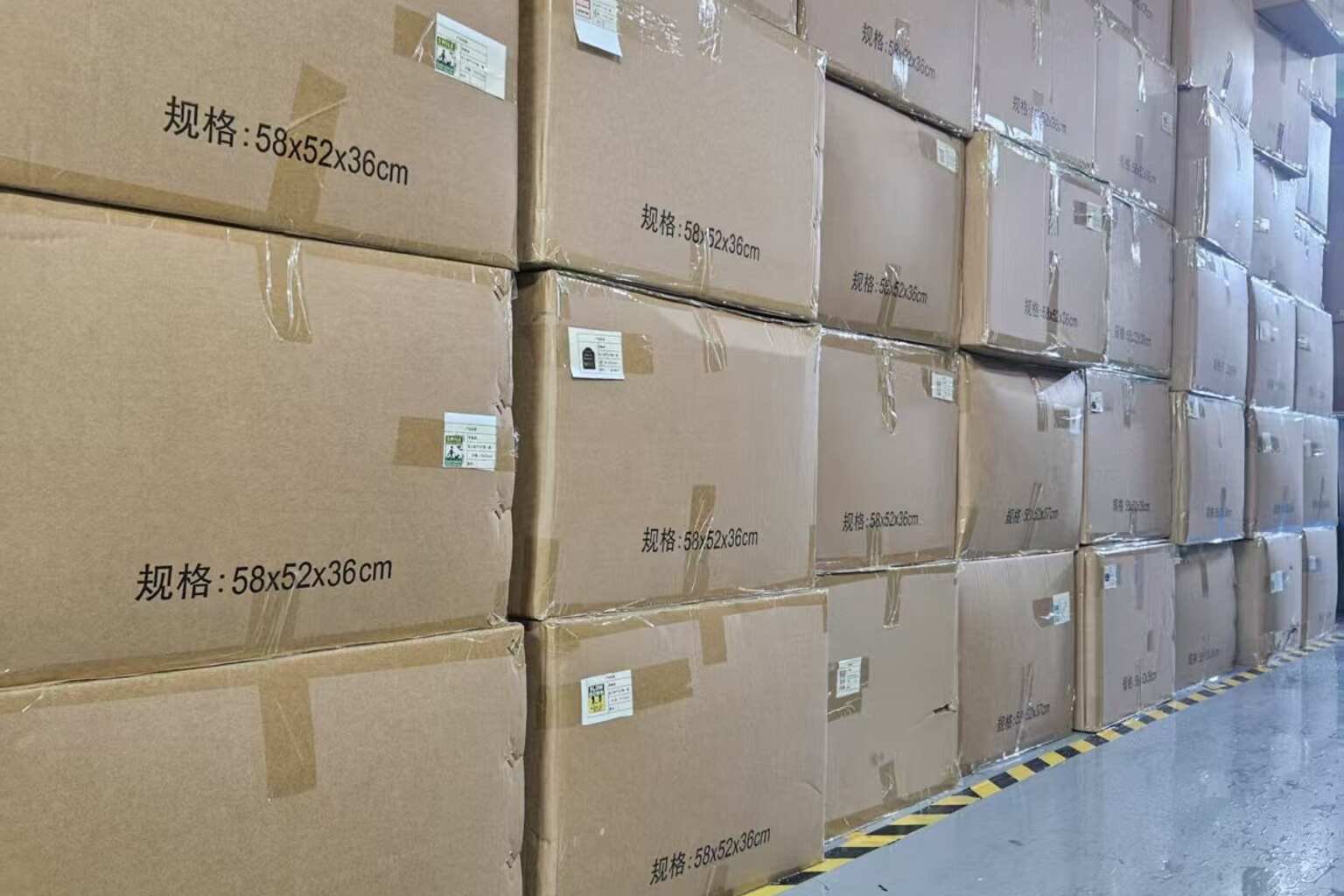
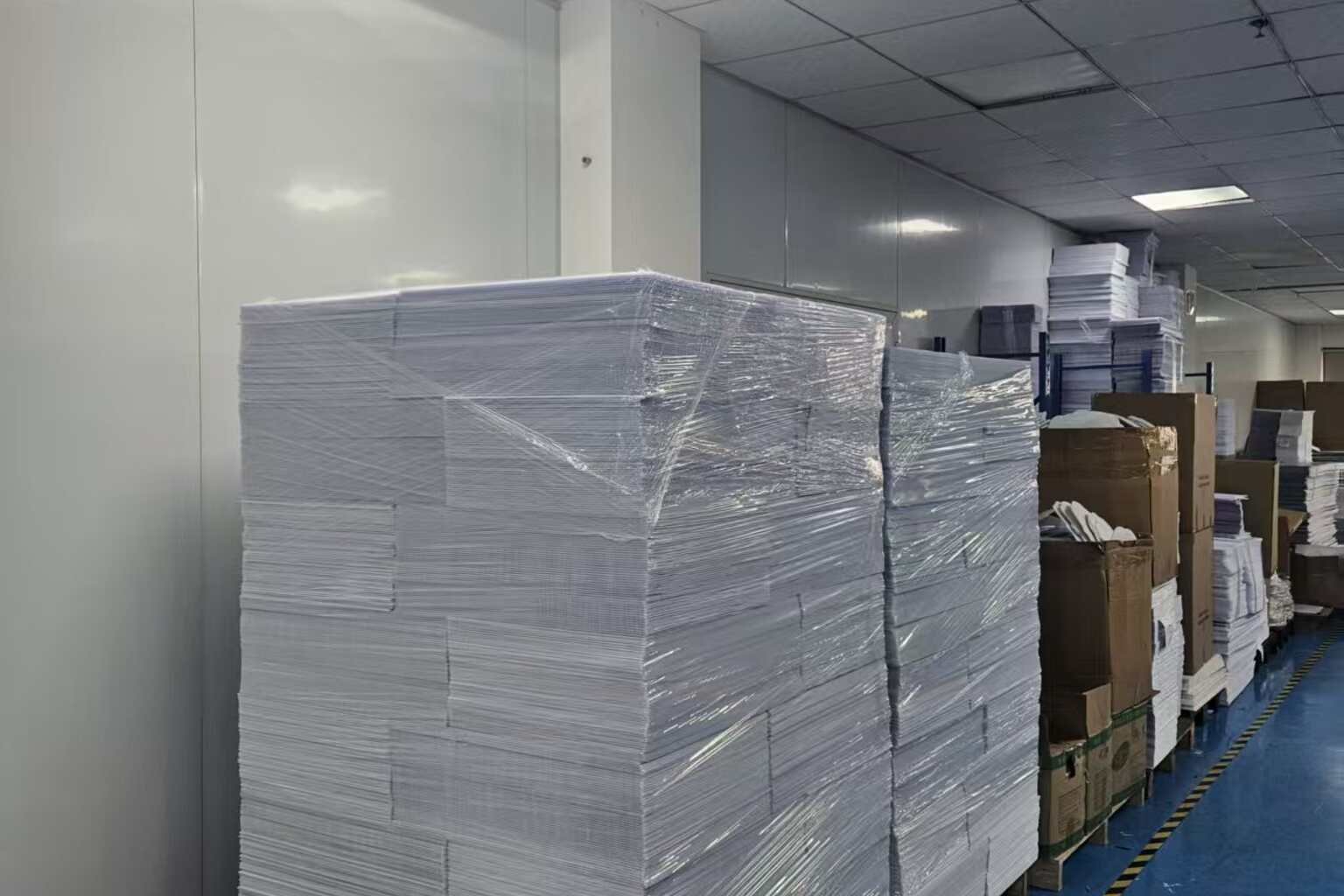
Packaging checks should cover inner surface protection, carton strength, carton closure, moisture protection, stake separation, edge protection, carton labels, pallet labels, stretch wrapping, and pallet stability.
Metal stakes should not be allowed to move freely against printed surfaces during transportation.
If several artwork versions are included in the order, each version should be packed and labeled according to the buyer’s distribution plan. This reduces sorting errors when products arrive at a distribution center or are shipped to multiple branches.
For additional preparation, review the bulk yard sign shipping and packaging guide.
Record Traceable Inspection Evidence
The inspection report should provide evidence connected to the actual purchase order and production lot.
A useful report should include:
- Supplier and factory name
- Factory location
- Inspection date
- Purchase-order number
- Product SKU
- Artwork revision
- Production-lot quantity
- Sample quantity
- Selected carton numbers
- Defect quantities by classification
- Measurements and test results
- Inspection photographs
- Packing results
- Pass, fail, or hold conclusion
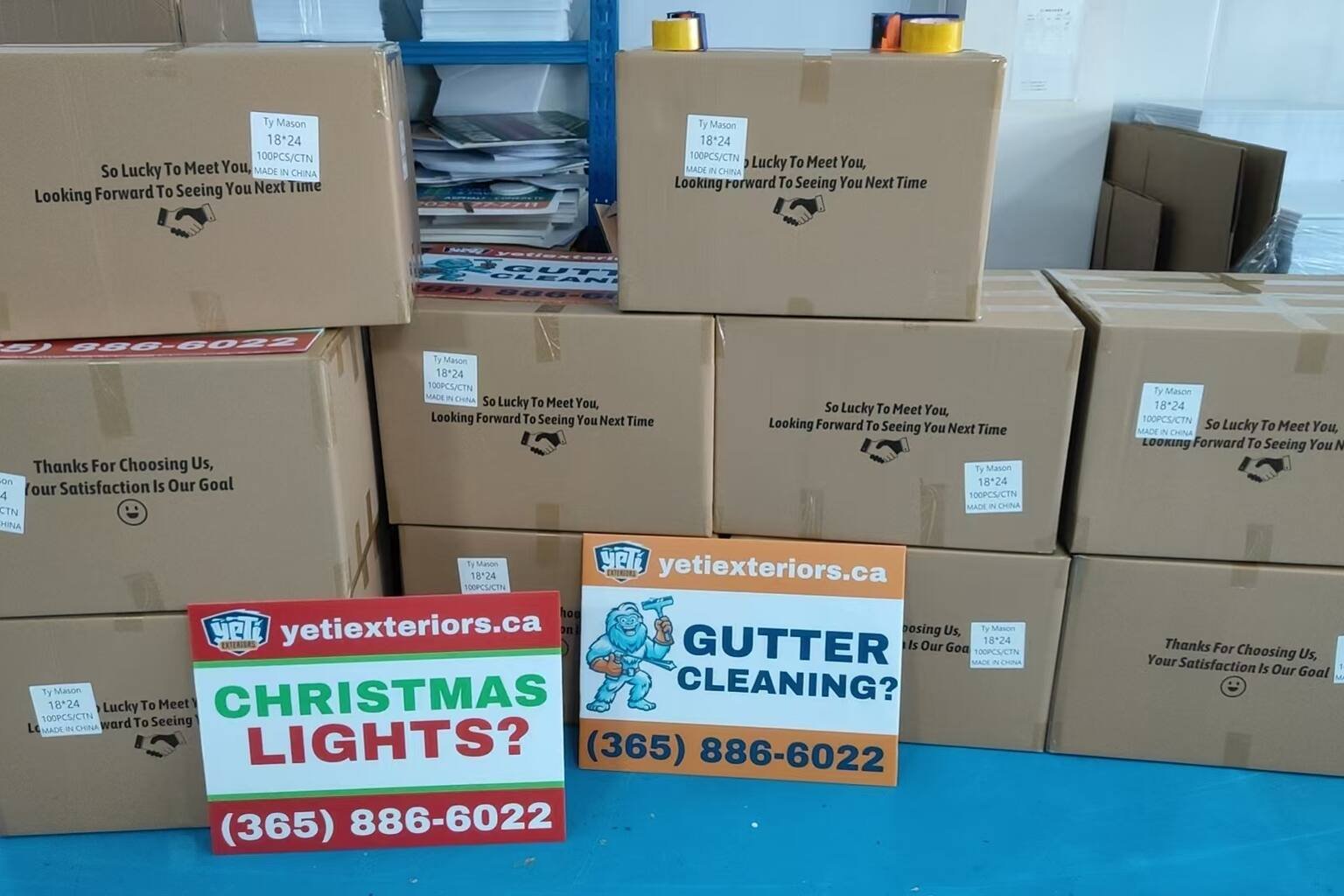
Useful photographs include carton-selection evidence, sign dimensions, material thickness, front and back printing, QR-code testing, stake assembly, quantity counting, inner protection, carton labels, finished pallets, and container loading.
The report should allow the buyer to understand what was inspected, how samples were selected, and why the lot passed or failed without being physically present at the factory.
Define What Happens When Inspection Fails
The failed-inspection process should be agreed before production begins.
The process may include:
- Holding the affected production lot
- Identifying the defect and potentially affected quantity
- Reviewing production and inspection records
- Performing root-cause analysis
- Sorting, reworking, or remaking affected products
- Conducting a new inspection
- Obtaining written shipment approval
The purchasing agreement should also explain:
- Who pays for reinspection
- Whether complete sorting is required
- Whether defective products may be reworked
- How reworked products will be identified
- Whether partial shipment is allowed
- Who may approve a deviation
- How the delivery schedule will be updated
A salesperson’s verbal approval should not replace documented authorization from the buyer’s procurement or quality representative.
Bulk Yard Sign Inspection Checklist
| Stage | Buyer Action | Required Output |
|---|---|---|
| Before production | Approve the artwork, product specification, defect definitions, sampling plan, tests, and packing requirements. | A controlled inspection specification connected to the purchase order. |
| During inspection | Select random samples and inspect materials, printing, assembly, quantities, labels, and packaging. | Measurements, defect totals, test results, carton references, and photographs. |
| After inspection | Review results, corrective action, reinspection requirements, and any requested deviation. | A documented pass, fail, hold, or concession decision. |
How iYardSign Supports Bulk Order Inspection
iYardSign is a China-based custom yard sign manufacturer supporting bulk orders for real estate companies, franchise groups, home service businesses, event organizers, distributors, resellers, and commercial campaigns.
Depending on the order specification, buyers can discuss:
- Artwork proof confirmation
- Product specification review
- Pre-production samples
- Material and thickness confirmation
- Printing and dimension checks
- Stake compatibility checks
- Quantity verification
- Design-based packing
- Carton-label confirmation
- Pre-shipment inspection coordination
- Loading photographs
- Bulk delivery coordination
For orders containing multiple designs or destinations, buyers should provide an order schedule connecting every artwork file to its revision, quantity, packing method, and delivery location.
Frequently Asked Questions
Is AQL the percentage of defects a supplier is allowed to produce?
No. AQL is an index used with a defined acceptance-sampling plan. It helps determine the sample size and acceptance or rejection decision for a production lot. It should not be treated as permission to intentionally ship a fixed percentage of defective products.
Does an AQL inspection check every yard sign?
Usually not. An AQL inspection examines randomly selected samples from a defined production lot. However, 100% inspection or sorting may be appropriate for a critical characteristic, a high-risk order, or a lot that has previously failed.
When should the inspection standard be confirmed?
The standard should be approved before mass production. Defining defects and acceptance rules after manufacturing can create disagreements between the buyer, supplier, and inspection company.
Can a third-party company inspect a bulk yard sign order?
Yes. The appointed inspector should receive the approved artwork, product specification, packing requirements, sampling plan, defect definitions, and reporting instructions before arriving at the factory.
What should happen after a failed yard sign inspection?
The affected lot should normally be held while the supplier identifies the scope and cause of the problem. The buyer and supplier can then decide whether the signs should be sorted, reworked, remade, accepted under a written concession, or rejected.
Need an Inspection Plan for Your Bulk Yard Sign Order?
Send the sign dimensions, material requirements, artwork files, order quantities, stake specifications, packing instructions, inspection standard, destination requirements, and delivery deadline.
iYardSign can help organize the production specification, artwork approval, quality checkpoints, packing requirements, and pre-shipment inspection information for your order.