How to Specify Palletization and Container Loading for Bulk Yard Signs

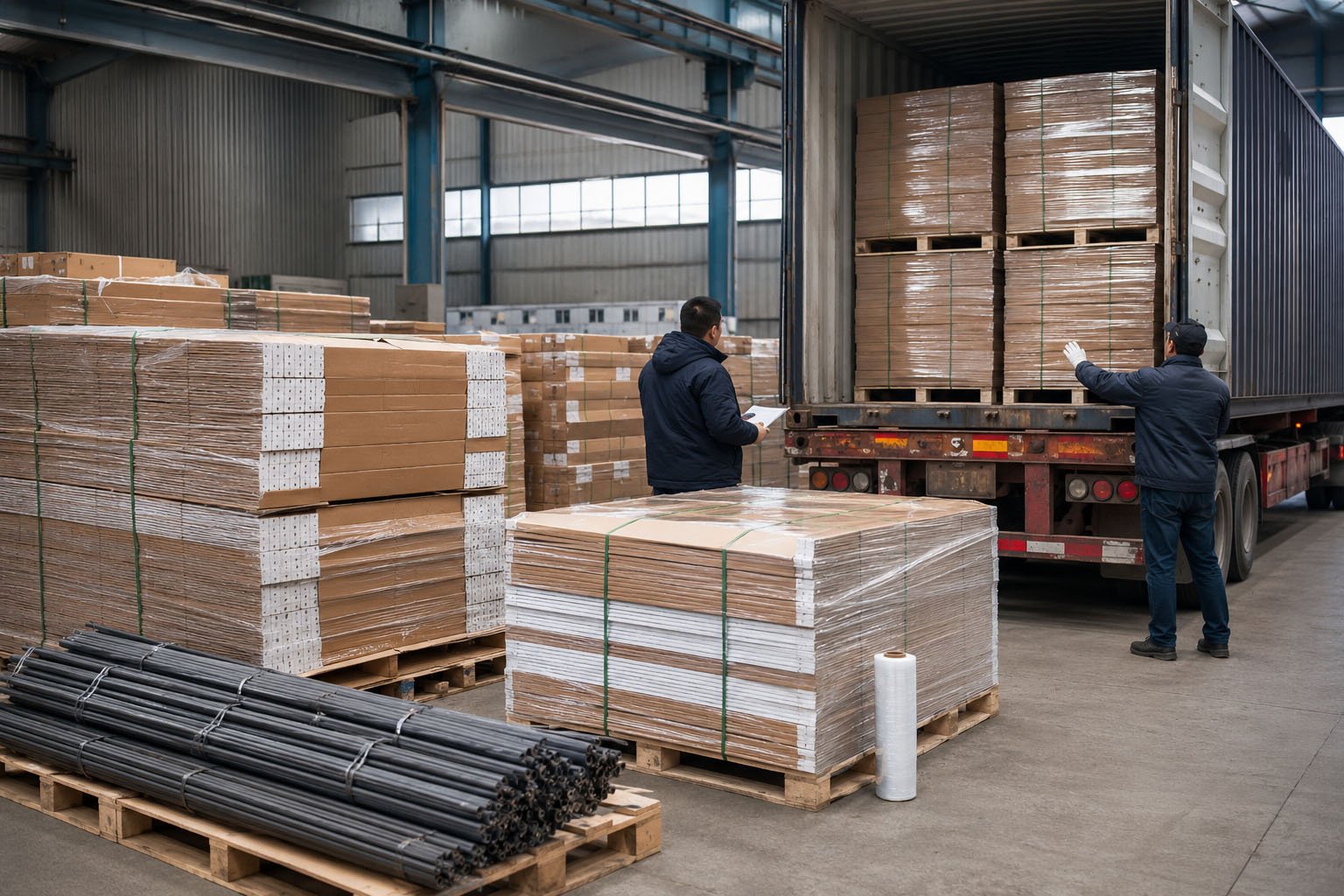
For large orders, the buyer should approve the complete unit-load plan—not only the individual carton.
A palletization and container loading plan connects carton strength, pallet dimensions, stacking pattern, load weight, edge protection, moisture control, labels, container condition, and unloading requirements.
Quick answer: Before shipping bulk yard signs, approve a written plan covering pallet type, pallet dimensions, cartons per layer, number of layers, maximum height and weight, overhang, corner protection, strapping, stretch wrap, label position, moisture controls, container inspection, weight distribution, loading sequence, blocking or bracing, seal control, and photographic evidence.
Start with the Destination Warehouse
Pallet planning should begin with the destination—not with the supplier’s preferred packing method.
A pallet that uses container space efficiently may still be unacceptable to the receiving warehouse.
Before approving the pallet plan, ask the buyer, distributor, retailer, or third-party logistics provider about:
- Accepted pallet dimensions
- Maximum pallet height
- Maximum pallet weight
- Two-way or four-way forklift entry
- Wood, plastic, or export-pallet requirements
- Wood-packaging treatment and marking requirements
- Carton overhang policy
- Pallet-label requirements
- Dock and forklift capability
- Racking requirements
- Delivery appointment rules
- Floor-loaded container restrictions
- Manual unloading limitations
The correct pallet configuration depends on how the shipment will be handled after arrival.
Signs delivered to a central distribution center may require dense, standardized pallets. Signs distributed directly to branches may need smaller cartons, lighter handling units, and location-based labeling.
Buyer note: Pallet requirements should be provided before quotation. Pallet material, dimensions, height limits, labeling, additional protection, and unloading method can affect packing cost, freight utilization, and delivery planning.
Choose the Shipping Format
Bulk yard signs may be shipped using several packing formats.
| Shipping Format | Possible Advantage | Possible Risk |
|---|---|---|
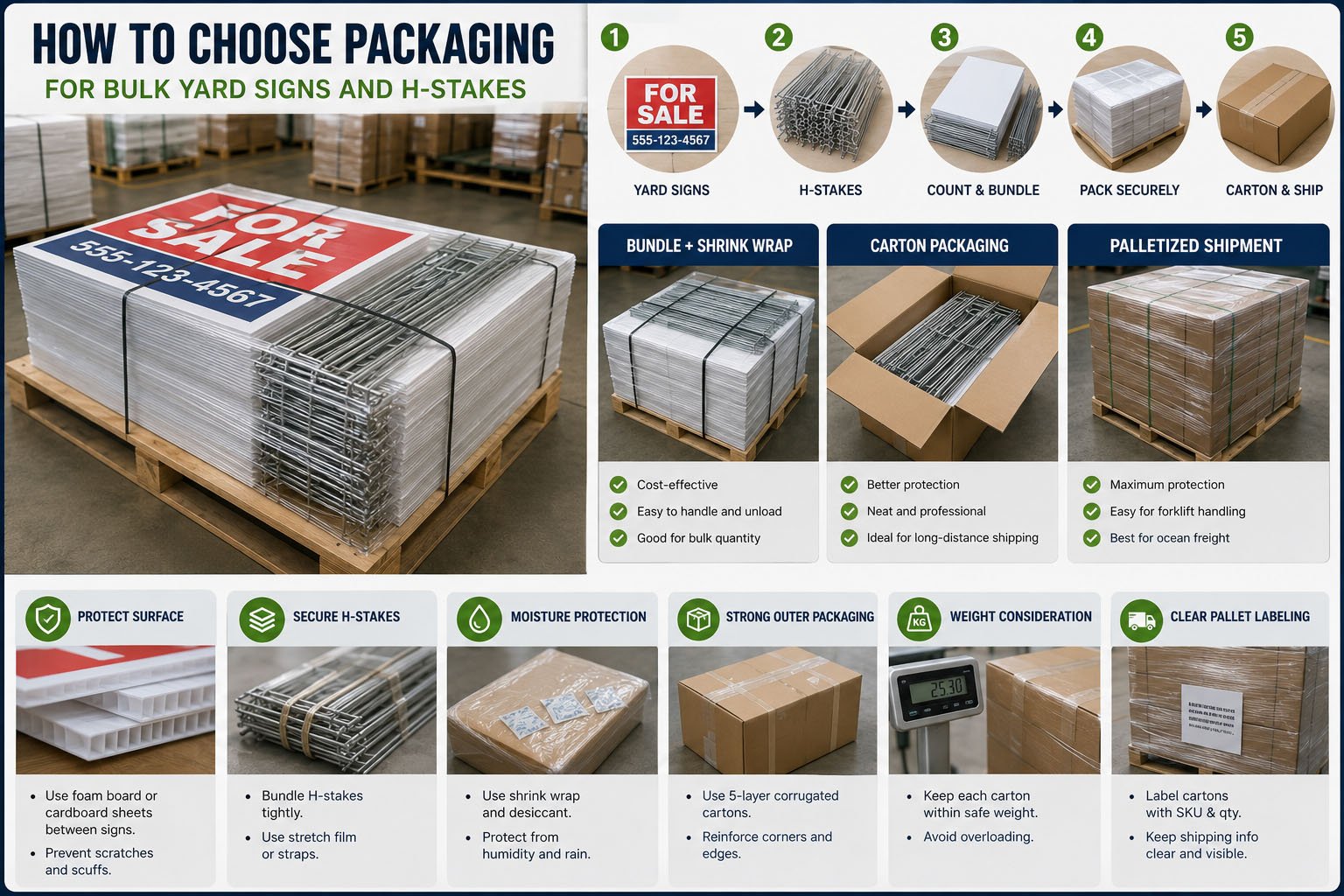
| Individual cartons | Suitable for parcel, courier, branch, or smaller LTL deliveries. | More individual handling and greater risk of cartons being separated. |
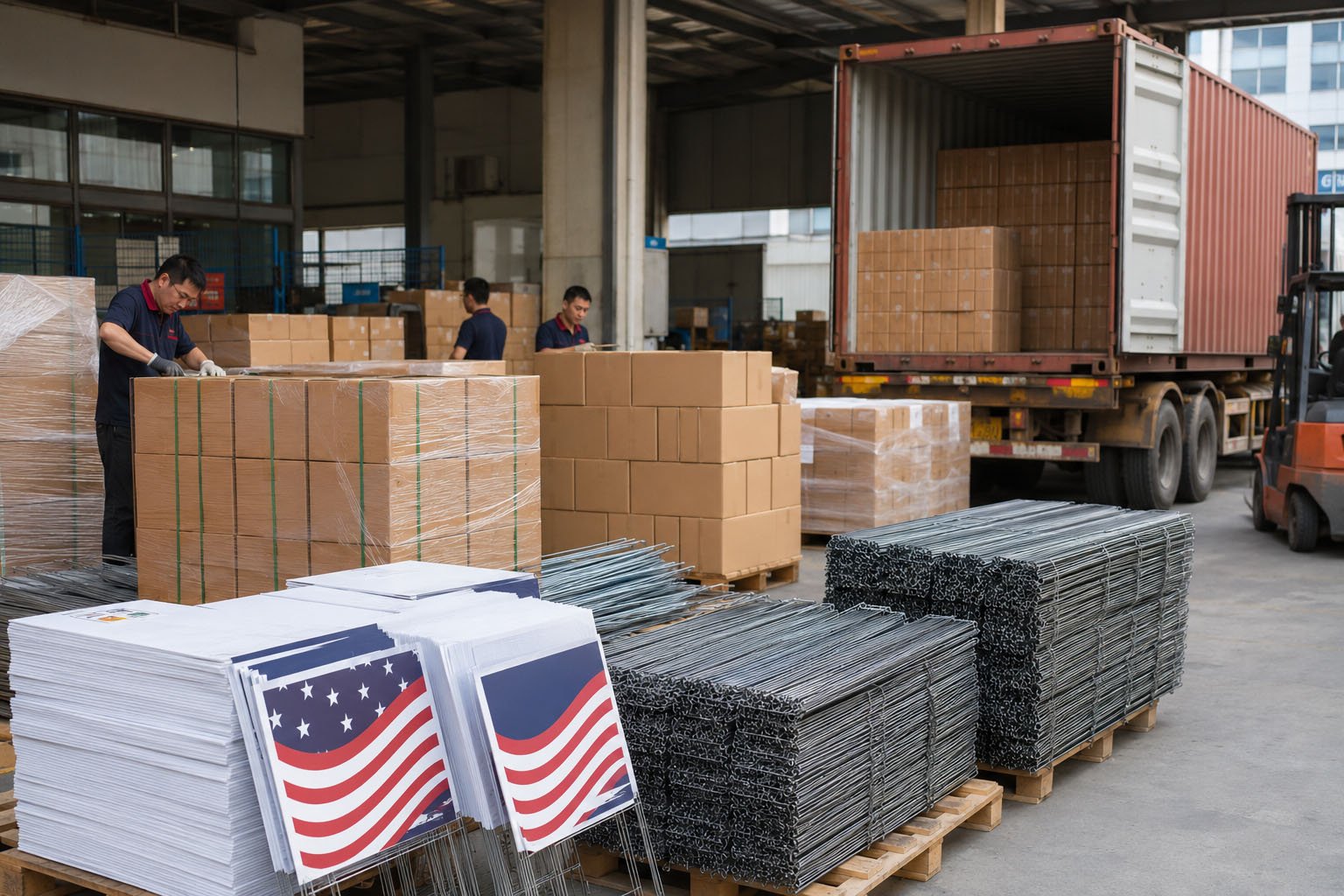
| Palletized cartons | Faster forklift handling and easier unit-level identification. | Pallet dimensions and empty space may reduce container utilization. |
| Floor-loaded cartons | May improve container-space utilization. | Requires more unloading labor and may increase handling or carton damage. |
| Mixed format | Can adapt to different product sizes and final destinations. | Requires a clear loading map and more careful receiving instructions. |
The decision should compare freight utilization, unloading capability, labor cost, damage exposure, warehouse rules, and traceability.
The lowest freight cost is not always the lowest delivered cost if the shipment creates extra unloading, sorting, relabeling, or damage expenses.
Design the Carton as Part of the Unit Load
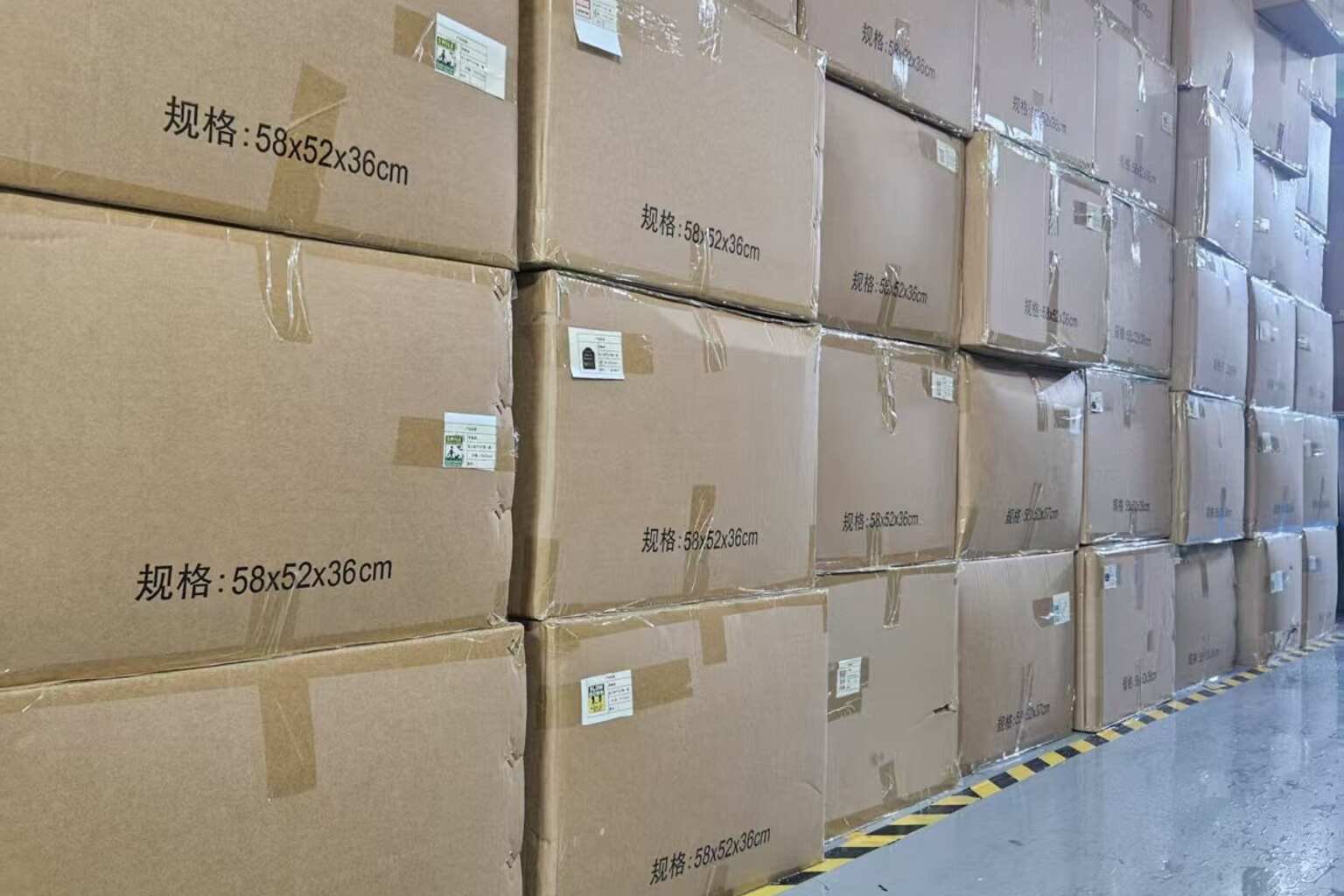
The carton should be designed for the weight, dimensions, handling route, and stacking conditions of the actual order.
The packing specification should confirm:
- Carton dimensions
- Carton board specification
- Maximum gross weight
- Signs per bundle
- Bundles per carton
- Stake quantity
- Internal pads or separators
- Edge and corner protection
- Moisture protection
- Carton closure method
- Carton-label position
- Required handling marks
Corrugated plastic signs are lightweight, but large flat panels can still be damaged by concentrated pressure, abrasion, bending, and crushed carton edges.
H-stakes and other metal components should be secured so they cannot move against printed surfaces during transportation.
Empty space inside the carton should be controlled. Too much movement may damage sign edges, while excessive compression may mark or deform the panels.
For more carton-level planning, review yard sign packaging for wholesale orders.
Define the Pallet Specification
The pallet specification should describe the physical handling unit in measurable terms.
Confirm:
- Pallet material
- Pallet length and width
- Pallet height
- Entry direction
- Load capacity
- Export or treatment requirements
- Permitted repairs or recycled pallet policy
- Cleanliness and dryness requirements
- Maximum pallet overhang
- Maximum underhang when relevant
A pallet should be strong enough for the intended load and handling route. Broken boards, protruding fasteners, moisture, contamination, or poor construction can damage cartons and create warehouse safety problems.
When wood packaging is used for international trade, the buyer and supplier should confirm applicable import and wood-packaging requirements for the destination.
Approve the Pallet Stacking Pattern
The supplier should prepare a pallet pattern showing how cartons will be arranged.
The plan should include:
- Cartons per layer
- Number of layers
- Total cartons per pallet
- Total signs per pallet
- Palletized load height
- Gross pallet weight
- Carton orientation
- Label-facing direction
- Overhang
- Corner-board position
- Strap position
- Stretch-wrap method
The stack should remain stable during forklift movement, truck transport, container movement, unloading, and warehouse storage.
Cartons should not extend beyond the pallet unless the buyer has approved a controlled overhang. Overhanging cartons lose edge support and are more exposed to impact and compression damage.
The supplier should also avoid an arrangement that hides carton labels or makes them inaccessible during receiving.
Control Pallet Height and Weight
Pallet height and weight affect container utilization, warehouse handling, racking, and worker safety.
A pallet may be unacceptable when it is:
- Too high for the receiving dock or warehouse rack
- Too heavy for the destination forklift
- Top-heavy or unstable
- Difficult to unload from the container
- Unable to pass through warehouse doors
- Outside the carrier’s freight class or handling limits
Do not estimate pallet weight from sign quantities alone. Include:
- Printed signs
- H-stakes or other supports
- Inner packaging
- Cartons
- Pallet
- Corner boards
- Straps
- Stretch wrap
- Top cap or protective materials
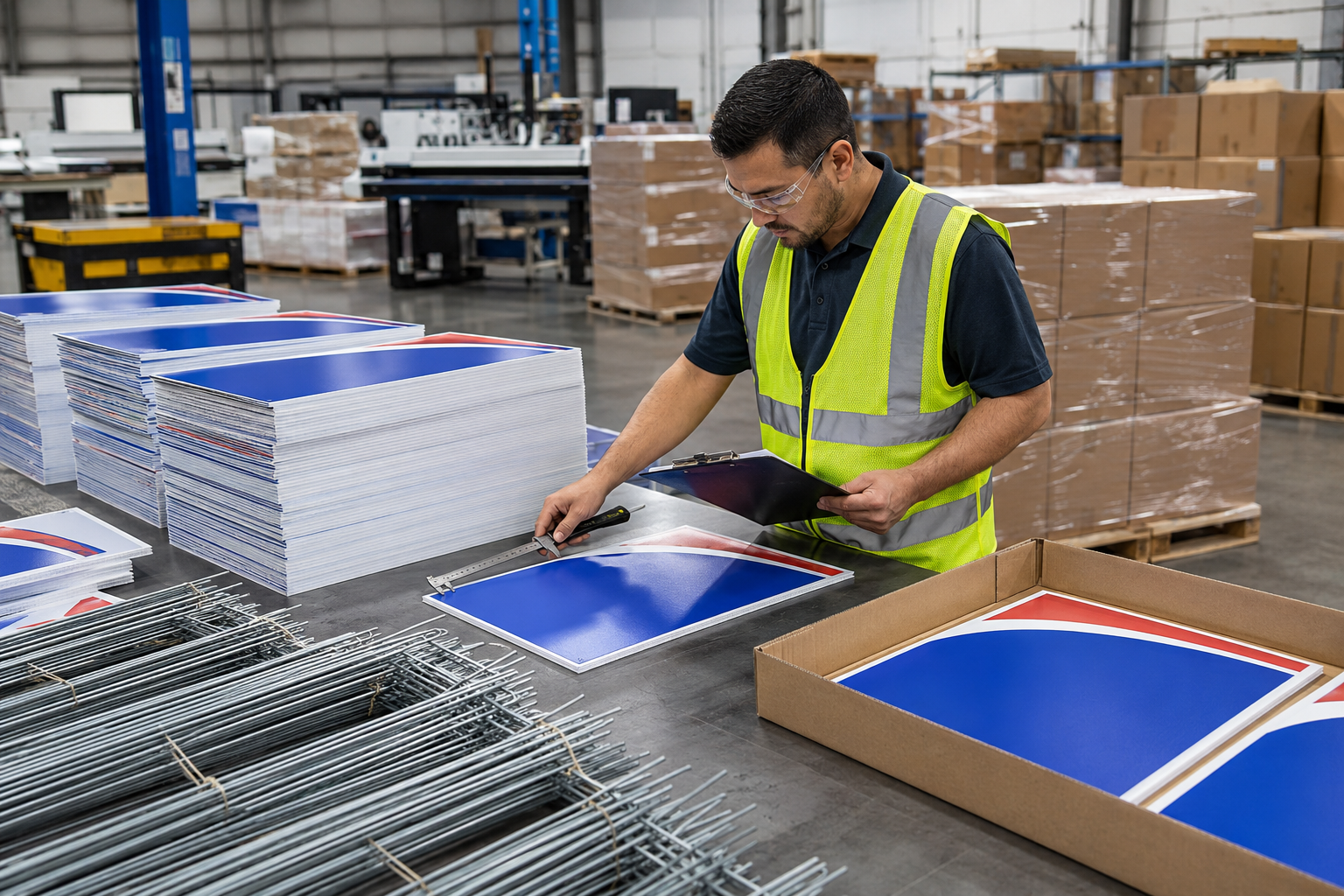
The final pallet should be measured and weighed after packing.
Use Corner Protection, Straps, and Stretch Wrap Correctly
Load-securing materials should stabilize the pallet without damaging the cartons.
Corner Boards
Corner boards may improve vertical stability, distribute strap pressure, and protect carton edges. Their dimensions and placement should match the finished load.
Strapping
Straps should secure the load without cutting into cartons or crushing the yard signs. Strap tension, quantity, position, and material should be appropriate for the load.
Stretch Wrap
Stretch wrap should connect the load securely to the pallet and reduce movement during handling. It should not hide required carton or pallet labels.
If labels must remain scannable through transparent wrap, the supplier should test the actual label and wrapping condition.
Important: More wrapping and tighter strapping do not automatically create a safer pallet. Excessive pressure can crush carton edges, deform panels, or make required labels difficult to scan.
Plan for Moisture and Condensation Risk
International shipments may experience temperature and humidity changes during storage, port handling, and ocean transportation.
Moisture risk should be evaluated based on:
- Shipping route
- Season
- Transit time
- Container condition
- Carton material
- Product sensitivity
- Warehouse conditions
- Packaging permeability
- Time stored before unloading
Possible controls may include:
- Using dry cartons and pallets
- Keeping packed goods away from wet floors
- Inspecting the container for water ingress
- Using suitable moisture barriers when required
- Using container desiccants after a route-specific assessment
- Avoiding loading during uncontrolled rain exposure
- Recording container condition before loading
Desiccants should not be added automatically without considering the container size, route, expected humidity, product, packaging, and safe placement.
Inspect the Container Before Loading
The container should be checked before any pallet or carton is loaded.
The inspection should confirm that the container is:
- Correctly identified
- Clean
- Dry
- Free from strong odors
- Free from visible contamination
- Free from obvious holes
- Structurally suitable for loading
- Equipped with functioning doors
- Equipped with functioning locking bars
- Suitable for applying the required seal
The container number should match the shipping documents and booking information.
A practical light test may help identify visible holes: with the doors closed, unexpected light entering the container can indicate a possible opening. This check does not replace a professional container inspection when one is required.
Prepare a Container Loading Plan
A loading plan shows where each pallet or carton group will be placed inside the container.
The plan should consider:
- Total cargo weight
- Weight distribution
- Pallet dimensions
- Loading sequence
- Unloading sequence
- Destination sequence
- Heavy and light cargo positions
- Void spaces
- Movement during transport
- Door clearance
- Label access
- Blocking and bracing
The heaviest cargo should not be concentrated in a way that creates unsafe or unacceptable axle, floor, or handling conditions.
When several destinations are included, the loading sequence should support the unloading plan. Products needed first should not be trapped behind unrelated freight unless the warehouse expects a complete unload.
Control Empty Space and Load Movement
Unused container space may allow pallets and cartons to shift during transportation.
The supplier, loading warehouse, carrier, or freight professional should determine whether the shipment needs:
- Blocking
- Bracing
- Load bars
- Air bags or void fillers
- Anti-slip materials
- Additional straps
- Other approved cargo-securing methods
The selected method should not crush cartons, puncture packaging, hide labels, or damage printed surfaces.
Do not rely on the container walls to correct an unstable pallet. Each unit load should be stable before it enters the container.
Document the Loading Process
Loading evidence helps the buyer verify shipment condition and investigate later damage or shortages.
The loading record should include:
- Container number
- Empty-container condition
- Container floor and walls
- Pallet or carton condition before loading
- Pallet labels
- Loading sequence
- Partially loaded container
- Fully loaded container
- Door area before closing
- Closed container doors
- Seal number
- Loading date and location
Photographs should be clear enough to read relevant pallet, carton, container, and seal information.
The packing list should connect pallet numbers or carton ranges to the loaded shipment.
Validate the Plan Before a Large Rollout
For a new product, new carton, new pallet pattern, or high-volume program, build a trial pallet before full production.
The trial should confirm:
- Actual carton dimensions
- Actual pallet height
- Actual gross weight
- Stack stability
- Forklift access
- Strap pressure
- Stretch-wrap stability
- Label visibility
- Container fit
- Warehouse acceptability
Depending on the risk, the buyer may also request suitable package testing or a controlled shipping trial.
Any transport test should define the package weight, conditioning, method, severity, orientation, acceptance criteria, and results. A statement such as “drop test passed” is not meaningful without the test conditions.
Review Results After the First Delivery
The first delivery provides information that cannot always be predicted at the factory.
Ask the receiving warehouse:
- Were the pallets stable on arrival?
- Were any cartons crushed or leaning?
- Were labels visible and scannable?
- Was unloading efficient?
- Did pallet height and weight meet requirements?
- Was there any concealed product damage?
- Did cartons show moisture exposure?
- Were signs and stakes easy to distribute?
- Were any pallets rebuilt or relabeled?
Use this information to improve the carton, pallet pattern, protection, labeling, or loading plan before the repeat order.
For additional shipment preparation, review how to package and ship bulk yard signs without damage or delays.
Palletization and Container Loading Checklist
| Control Point | Required Action | Required Evidence |
|---|---|---|
| Warehouse requirements | Confirm accepted pallet dimensions, height, weight, material, and unloading method. | Current routing guide or written warehouse approval. |
| Carton design | Define carton strength, quantity, closure, internal protection, and weight. | Approved packing specification. |
| Pallet pattern | Confirm cartons per layer, layers, height, weight, overhang, labels, and protection. | Pallet diagram and trial-pallet photographs. |
| Container condition | Inspect container identity, cleanliness, dryness, structure, doors, and visible openings. | Empty-container inspection photographs. |
| Loading | Control weight distribution, sequence, voids, movement, and door clearance. | Loading map and progressive loading photographs. |
| Shipment release | Verify pallet count, carton count, packing list, container number, and seal. | Final loading report and shipping documents. |
How iYardSign Supports Bulk Shipping Preparation
iYardSign is a China-based custom yard sign manufacturer supporting bulk orders for distributors, franchise groups, multi-location businesses, real estate organizations, home service brands, resellers, events, and commercial campaigns.
Depending on the order and destination requirements, buyers can discuss:
- Carton quantity planning
- Stake separation and protection
- Design-based packing
- Custom carton labels
- Location-based packing
- Pallet dimensions and height
- Pallet pattern planning
- Corner protection
- Strapping and stretch wrapping
- Loading photographs
- Packing-list preparation
- Bulk shipping coordination
Send the warehouse routing guide before production so the carton, pallet, labeling, and delivery requirements can be reviewed as part of the complete order.
Frequently Asked Questions
Should bulk yard signs be floor-loaded or palletized?
There is no universal answer. Compare container utilization, unloading capability, warehouse rules, labor cost, product damage risk, and the need for pallet-level identification.
Can yard sign cartons overhang the pallet?
Overhang should normally be avoided unless the buyer and warehouse approve a controlled design. Overhanging cartons have less edge support and are more exposed to impact and compression damage.
Should desiccants be used in every yard sign container?
No. The need and quantity should be evaluated according to the route, season, transit time, container, packaging, product sensitivity, and expected humidity conditions.
How should H-stakes be packed on a pallet?
H-stakes should be secured so they cannot move against printed sign surfaces or create concentrated pressure. The exact method depends on stake quantity, carton design, product dimensions, and distribution plan.
What photographs should the supplier provide during loading?
Useful photographs show the empty container, container number, pallet condition, readable labels, loading sequence, completed load, closed doors, and final seal number.
When should a trial pallet be built?
A trial pallet is especially useful for a new carton, new pallet pattern, new warehouse, unusually large signs, heavy stake quantities, custom-shaped panels, or a high-volume program.
Planning a Palletized Bulk Yard Sign Shipment?
Send the sign dimensions, quantities, stake requirements, carton requirements, pallet limits, warehouse routing guide, shipping method, destination, and required delivery date.
iYardSign can help organize the carton specification, pallet configuration, labeling requirements, loading evidence, and bulk shipping plan for your order.