How to Reduce Yard Sign Shipping Cost for Bulk Orders


For printing companies, sign shops, distributors, political campaigns, resellers, franchise groups, and local service companies ordering 500, 1,000, or several thousand yard signs, logistics should be planned before production—not after the cartons are already packed.
Quick answer: To reduce yard sign shipping cost, buyers should optimize the finished sign size, carton dimensions, number of signs per carton, H-stake configuration, shipping method, delivery timing, pallet plan, and final address. Sea freight is often more economical for planned bulk orders, while urgent air freight can become expensive because yard sign cartons may be lightweight but bulky.
Why Is Bulk Yard Sign Shipping Sometimes Expensive?
Corrugated plastic yard signs are relatively lightweight.
However, they can occupy a large amount of shipping space.
This means freight cost may be influenced by both:
- Actual shipment weight
- Shipment volume
- Carton dimensions
- Number of cartons
- H-stake weight
- Pallet dimensions
- Shipping method
- Destination
A shipment does not need to be extremely heavy to become expensive.
A large number of bulky cartons can also increase transportation cost.
Buyer note: Do not wait until production is finished to ask how to save freight. By that point, the sign dimensions, stake quantity, carton plan, and delivery deadline may already limit your options.
1. Reduce Yard Sign Shipping Cost by Planning Earlier
One of the most effective ways to control freight cost is simply to place the order early enough.
A buyer with sufficient lead time may be able to choose:
- Ocean freight
- Economical door-to-door services
- Consolidated freight
- A planned split shipment
A buyer who waits until the signs are urgently needed may have fewer choices.
The project may then require:
- Air freight
- Express delivery
- Priority handling
- Multiple urgent shipments
In many cases, the delivery deadline—not the factory production price—is what makes the order expensive.
2. Compare Air Freight and Sea Freight Before Production
Air and ocean freight solve different problems.
| Factor | Air Freight | Sea Freight |
|---|---|---|
| Speed | Faster | Slower |
| Bulk Cost | Usually higher | Often more economical for planned volume |
| Best Use | Urgent orders or launch quantities | 500, 1,000+ and larger planned orders |
| Planning Requirement | Lower transit-time buffer | Requires earlier purchasing |
For large-volume orders, buyers should ask for both options before confirming the production and delivery schedule.
3. Do Not Ship 1,000 Yard Signs by Air Just Because 100 Are Urgent
One expensive mistake is treating the complete order as urgent when only part of it is required immediately.
For example:
A buyer orders 1,000 yard signs.
Only 200 signs are required for the initial launch.
Instead of shipping all 1,000 pieces by air, the buyer may consider:
- 200 pieces by air
- 800 pieces by sea
This is called a split shipment.
The urgent portion should contain enough complete sign-and-stake kits to support the launch until the main shipment arrives.
For more detail, read How to Plan a Yard Sign Split Shipment for Urgent Deadlines.
4. Yard Sign Size Can Change Freight Cost
Sign dimensions affect more than material cost.
They can also affect:
- Carton length
- Carton width
- Signs per carton
- Pallet efficiency
- Airfreight chargeable volume
- Warehouse handling
A standard 18 × 24 inch yard sign is often easier to pack efficiently than an unusually large custom panel.
This does not mean buyers should always choose the smallest sign.
The correct approach is to compare:
Visibility benefit vs production and freight cost.
If increasing the sign size creates little marketing value but significantly increases carton dimensions, the standard size may provide better economics.
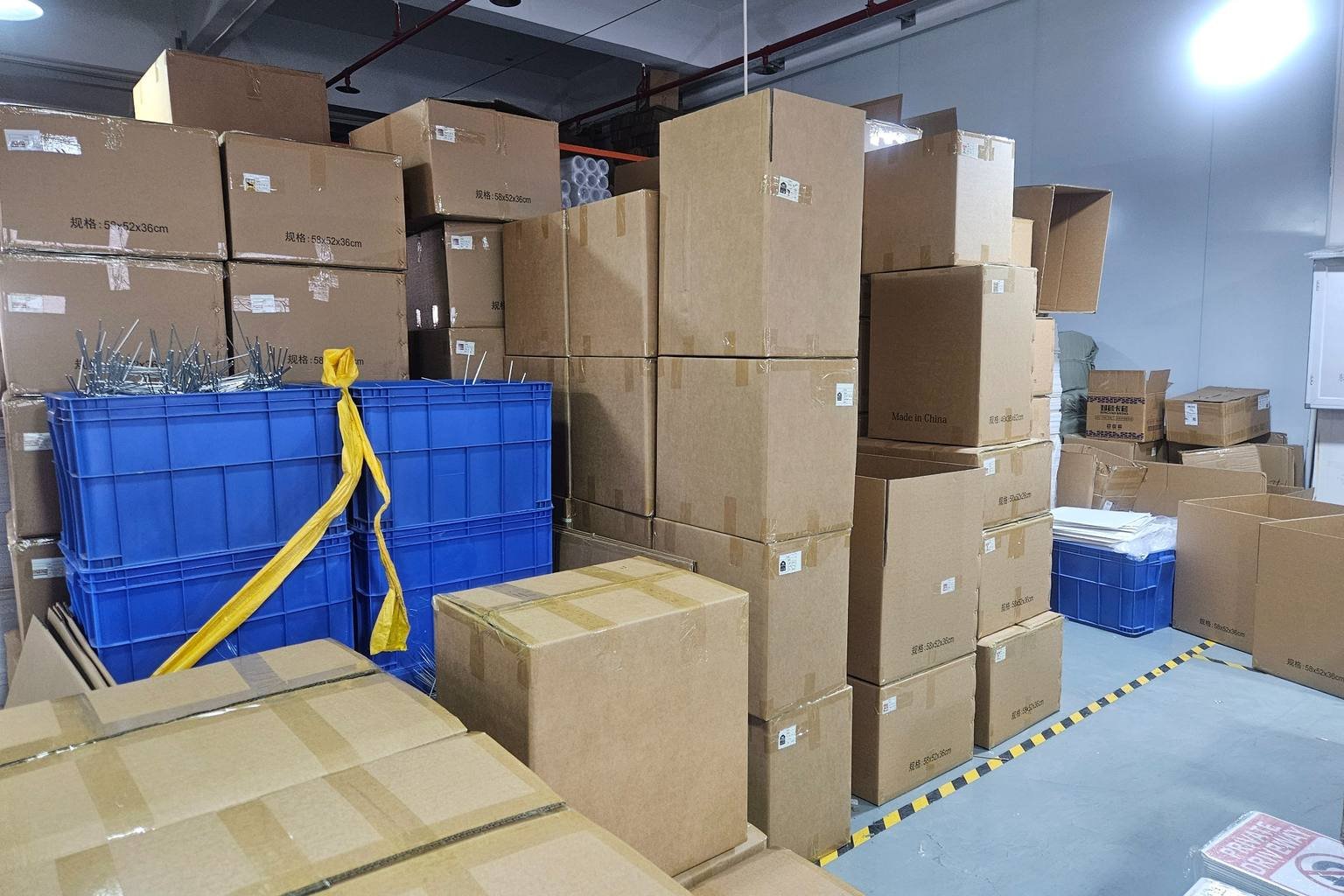
5. Avoid Oversized Cartons When They Are Not Necessary
Packaging should protect the product without creating unnecessary empty space.
Too much unused space inside cartons can increase shipment volume.
At the same time, cartons should not be packed so tightly that:
- Sign corners become crushed
- Printed surfaces are scratched
- Cartons split during handling
- H-stakes damage the signs
The goal is efficient packing—not minimum packaging at any cost.
A good carton plan balances:
- Protection
- Weight
- Volume
- Warehouse handling
- Shipping efficiency
6. Optimize the Number of Signs per Carton
Carton quantity affects both logistics and receiving.
If too few signs are packed per carton:
- Carton count increases
- Labeling increases
- Handling increases
- Total shipment volume may increase
If too many are packed:
- Cartons become difficult to lift
- Edges may become damaged
- Carton strength may become insufficient
- Receiving becomes harder
Buyers should ask the factory for:
- Signs per carton
- Carton dimensions
- Carton gross weight
- Total carton count
before shipping.
7. H-Stakes Can Be a Major Part of Shipping Weight
Corrugated plastic panels are lightweight.
Metal H-stakes are not.
When a buyer orders:
1,000 yard signs + 1,000 H-stakes
the metal hardware can become a significant part of total shipment weight.
Before ordering, consider:
- Does every sign need a stake?
- Does the buyer already have compatible stakes?
- Are some signs wall-mounted?
- Are some units being used only as replacement panels?
- Are extra stakes actually required?
Do not remove required stakes simply to reduce freight.
But do not automatically ship hardware the buyer does not need.
8. Do Not Choose a Weak H-Stake Just to Save Freight
A lighter stake may reduce weight.
But the stake still needs to support the actual sign.
Choosing an unsuitable lightweight stake can lead to:
- Bending
- Difficult installation
- Poor outdoor stability
- Customer complaints
- Replacement shipping
That can cost much more than the original freight saving.
Hardware optimization should therefore focus on:
the lightest appropriate specification—not simply the lightest available product.
For stake selection, see Yard Sign H-Stakes: Size, Fit & Wind Resistance Guide.
9. Packing Signs and Metal Stakes Separately Can Reduce Damage
Signs and stakes should not be allowed to move freely against one another.
Metal wire can:
- Scratch printed surfaces
- Puncture corrugated plastic
- Damage edges
- Deform during transportation
Depending on the order, separate cartons for signs and hardware may be safer.
The buyer should compare:
- Protection
- Carton count
- Shipment volume
- Receiving convenience
rather than assuming one packaging method is always cheapest.
10. Standardize Sizes Across Multiple Designs
A reseller may order 20 different artworks.
If all designs use the same:
- Sign size
- Material thickness
- H-stake
- Carton format
production and packing become much easier to organize.
Mixed sizes can require:
- Different cartons
- Different pallet layouts
- Different stakes
- Additional warehouse sorting
Where practical, product standardization can help control both production and logistics costs.
11. Use Sea Freight for Predictable Repeat Orders
Repeat buyers have an advantage:
They already know approximately how many signs they use.
A distributor or print reseller may know that it consumes:
- 300 signs per month
- 500 signs per month
- 1,000 signs during peak season
Instead of waiting until inventory is nearly empty, the buyer can reorder early enough to use a slower and potentially more economical shipping method.
A basic reorder formula is:
Reorder Point = Expected Usage During Lead Time + Safety Stock
Planning inventory earlier can reduce emergency freight.
12. Do Not Overorder Just to Improve Freight Cost per Piece
A larger shipment may reduce the apparent freight cost per sign.
But that does not mean the buyer should order inventory it cannot use.
Extra signs can become obsolete because of:
- Changed phone numbers
- Changed QR codes
- Expired campaigns
- Election dates
- Changed promotions
- Brand updates
The best quantity is not always the quantity with the lowest freight cost per unit.
It is the quantity that produces the lowest practical business cost while remaining usable.
13. Choose the Final Delivery Address Before Freight Booking
The final destination can materially change freight.
A normal commercial warehouse may be easier to serve than:
- A residential address
- A remote location
- An island
- A construction site
- A school
- A location without a loading dock
The buyer should provide the complete address before approving the final shipping price.
For more detail, read How a Yard Sign Shipping Address Affects Delivery Cost.
14. Consider One Central Warehouse Instead of Many Small Deliveries
Multi-location businesses may need signs for:
- 10 branches
- 50 franchise stores
- 100 dealers
Shipping directly to every location can sometimes create many separate final-mile charges.
An alternative is:
Factory → Central warehouse → Regional distribution
This may simplify international freight.
However, it also creates:
- Warehouse receiving
- Sorting
- Domestic shipping
- Additional handling
The buyer should compare the complete cost of both approaches.
15. Use Blind Shipping When It Removes Unnecessary Handling
Print shops and resellers may normally follow this route:
China factory → Reseller warehouse → Customer
If the reseller does not need to inspect, repack, or divide the order, blind shipping may allow:
China factory → End customer
This can remove:
- One warehouse receiving step
- Domestic reshipping
- Repacking labor
- Temporary storage
Blind shipping only works when packing, customer protection, documents, labels, and final delivery are organized correctly.
16. Palletization Should Match the Receiving Warehouse
Pallets can make bulk handling safer and more organized.
But the pallet configuration should match:
- Warehouse equipment
- Door dimensions
- Forklift capacity
- Maximum pallet height
- Truck unloading method
Poor pallet planning can create:
- Unused space
- Carton overhang
- Damaged cartons
- Unloading problems
For large orders, the unit-load plan should be approved before shipping.
17. Compare the Same Shipping Scope
A shipping quote may appear cheaper simply because it includes fewer services.
For example:
Quote A may include only port-to-port freight.
Quote B may include customs clearance and final delivery.
The lower number is not automatically the cheaper completed shipment.
Buyers should confirm whether the price includes:
- International freight
- Destination handling
- Customs clearance
- Duties or taxes where applicable
- Final-mile delivery
- Residential or commercial delivery
- Liftgate service
- Appointment delivery
The International Chamber of Commerce publishes the official Incoterms® rules, which help define buyer and seller responsibilities for delivery, costs, and risk. Buyers can review the ICC Incoterms® rules overview.
18. Do Not Reduce Quality to Save a Few Dollars in Freight
Some freight-saving ideas create false savings.
Examples include:
- Using cartons that are too weak
- Removing necessary edge protection
- Choosing unsuitable lightweight H-stakes
- Packing too many signs into one carton
- Removing essential moisture protection
If these changes lead to damaged products, the buyer may need:
- Replacement production
- Repacking
- Airfreight replacements
- Customer refunds
- Additional labor
The goal should be:
lower logistics waste—not lower product protection.
What Information Is Needed to Optimize Shipping?
Before requesting the final quotation, provide:
| Information | Why It Matters |
|---|---|
| Sign Size | Affects carton dimensions and packing efficiency. |
| Total Quantity | Determines shipment volume. |
| Number of Designs | Affects packing and sorting. |
| H-Stake Quantity | Can materially affect shipment weight. |
| Packing Requirements | Affects carton count and volume. |
| Full Delivery Address | Required for final-mile planning. |
| Required Delivery Date | Determines whether economical freight options are practical. |
A Simple Example: 1,000 Yard Signs
Consider a print company ordering:
- 1,000 custom yard signs
- 18 × 24 inches
- 1,000 H-stakes
- Delivery to a US warehouse
The buyer has two months before the signs are required.
Instead of waiting until the last minute and shipping everything by air, the buyer can:
- Finalize artwork early
- Use standard dimensions
- Confirm an efficient carton plan
- Pack stakes safely
- Use planned ocean delivery
- Confirm the warehouse address and unloading conditions
The saving does not come from reducing print quality.
It comes from removing avoidable logistics cost.
Shipping Cost Reduction Checklist
Before placing a bulk order, ask:
- Can we order earlier?
- Can the main quantity ship by sea?
- Do we really need the entire order urgently?
- Is the sign size efficient for packing?
- Are the carton dimensions optimized?
- How many signs are packed per carton?
- Do we need one H-stake for every sign?
- Are the stakes the correct specification?
- Can multiple designs use one standard size?
- Is blind shipping practical?
- Should delivery go to one central warehouse?
- Is the final address confirmed?
- Do we know the receiving conditions?
- Are both air and sea quotations available?
Important: The cheapest freight quotation is not always the lowest-cost shipping plan. Compare product protection, shipping scope, transit time, customs responsibility, final delivery, and the cost of delays or damaged goods.
Why Business Buyers Work with iYardSign
iYardSign is a China-based custom yard sign manufacturer focused on bulk B2B production for overseas buyers.
Typical customers include:
- Printing companies
- Sign shops
- Distributors
- Print resellers
- Political campaigns
- Real estate organizations
- Home service companies
- Franchise groups
- Multi-location businesses
Depending on the project, iYardSign can support:
- Bulk corrugated plastic yard signs
- Standard and custom sizes
- Matching H-stakes
- Carton planning
- Custom packing and labeling
- Air freight coordination
- Ocean shipping coordination
- Split shipments
- Door-to-door delivery planning
For buyers who want to compare the complete purchasing cost rather than freight alone, read How to Calculate the True Landed Cost of Bulk Yard Signs.
Frequently Asked Questions
How can I reduce yard sign shipping cost?
Order early, compare air and sea freight, optimize sign and carton dimensions, avoid unnecessary hardware, confirm efficient packing, and provide the final delivery address before freight booking.
Is sea freight cheaper for 1,000 yard signs?
Sea freight can be more economical for planned bulk shipments, but the exact result depends on shipment volume, destination, service scope, and current freight conditions.
Why are yard signs expensive to ship if they are lightweight?
Corrugated plastic panels can occupy significant space. Freight pricing may be affected by shipment dimensions and volume as well as actual weight.
Do H-stakes increase shipping cost?
Yes. Metal H-stakes can add substantial actual weight when hundreds or thousands are included.
Can I ship some yard signs by air and the rest by sea?
Yes. A planned split shipment can send the minimum urgent quantity by air while the remaining bulk inventory travels by ocean freight.
Does yard sign size affect freight?
Yes. Finished dimensions can affect carton size, packing efficiency, pallet dimensions, and shipment volume.
Should I remove packaging to reduce shipping cost?
Not if it increases the risk of damage. The goal should be efficient protective packaging rather than simply using less packaging.
Can iYardSign compare different shipping options?
Buyers can provide the sign size, quantity, number of designs, H-stake requirements, packing instructions, full delivery address, and required delivery date so different practical shipment options can be reviewed.
Want to Reduce Shipping Cost on 500+ Yard Signs?
Send your sign size, quantity, artwork, H-stake requirements, packing preference, full delivery address, and required delivery date.
iYardSign can help review the production, packing, air freight, ocean freight, and delivery options for your bulk yard sign order.