How Yard Signs Help Real Estate Agents Get More Leads

In real estate, local visibility can turn into real leads. Online listings, social media, and paid ads are important, but buyers and sellers still notice physical signs in the neighborhoods where they live, drive, and search for properties.
Real estate yard signs are one of the most practical marketing tools for agents because they promote a listing, build agent recognition, guide buyers to open houses, and create local lead opportunities at the property level.
A well-designed yard sign does more than say “For Sale.” It helps real estate agents get noticed, build trust, and generate more calls, website visits, and buyer inquiries.
Why Yard Signs Still Matter in Real Estate
Even in a digital-first market, many buyers still discover homes by driving through neighborhoods they like. A clear, professional yard sign can catch attention at the exact moment a potential buyer is near the property.
Real estate yard signs also support brand awareness. When people repeatedly see your name, logo, and contact details on listings and open houses, they begin to recognize you as an active local agent.
For sellers, a professional sign can also create confidence. It shows that the property is being actively marketed both online and offline.
How Real Estate Yard Signs Help Agents Get More Leads
Real estate yard signs can generate leads in several direct and indirect ways. They attract attention, make contact easy, and create repeated exposure in your target neighborhoods.
1. They Capture Local Buyer Attention
A bold “For Sale” or “Open House” sign can immediately catch the eye of people driving or walking nearby. Some buyers are not actively searching online every day, but they may still notice a property sign in a neighborhood they like.
2. They Promote the Agent, Not Just the Property
Every real estate sign is also a branding opportunity. Your name, logo, brokerage, phone number, website, or QR code can help people remember you, even if they are not interested in that specific property.
3. They Make It Easy for Buyers to Contact You
A sign with a clear phone number, short URL, or QR code can turn interest into action. Buyers can call, scan, or visit the listing page immediately.
4. They Drive Traffic to Open Houses
Open house signs and directional yard signs help guide buyers from main roads to the property. This can increase foot traffic and make the event easier to find.
5. They Build Neighborhood Recognition
When your signs appear across multiple listings, people begin to associate your name with local real estate activity. This can help generate seller leads as well as buyer leads.
Best Types of Yard Signs for Real Estate Agents
Different real estate situations call for different sign types. The best agents often use several types together to create a complete local marketing system.
For Sale Signs
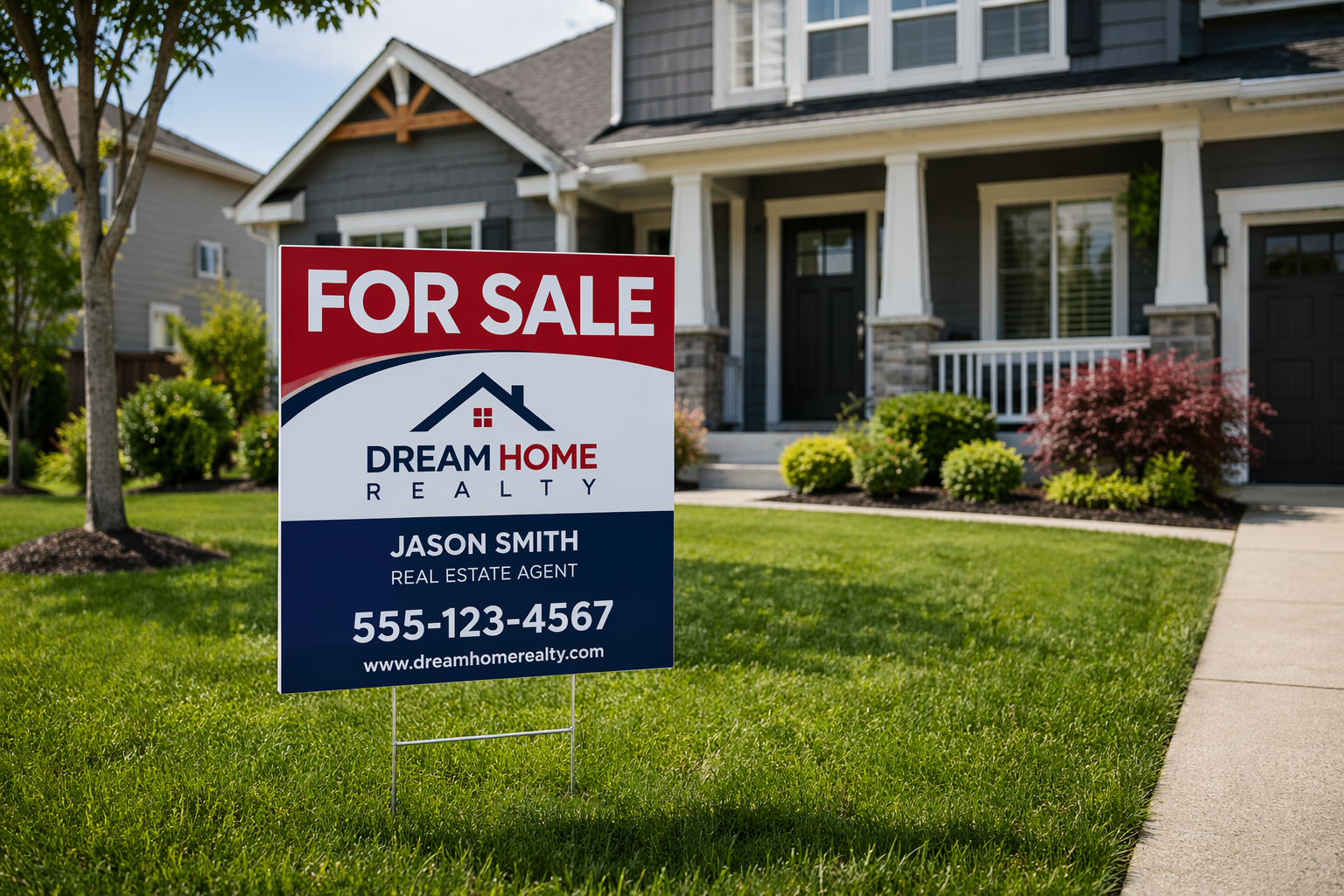
For Sale signs are the most common real estate yard signs. They should include the property status, agent name, brokerage or team branding, and a clear contact method.
Open House Signs
Open House signs help attract visitors and guide them to the property. These signs should be easy to read quickly and may include arrows, time, date, and contact details.
Directional Signs
Directional signs are placed along routes to help buyers find a property. They are especially useful for neighborhoods with multiple turns, gated communities, or hidden streets.
Sold Signs
Sold signs help build agent credibility. They show nearby homeowners that you are successfully closing deals in the area.
Coming Soon Signs
Coming Soon signs can create early interest before a property officially hits the market. They help build anticipation and may generate buyer inquiries before the listing goes live.
What Should a Real Estate Yard Sign Include?
A real estate sign should be clear, professional, and easy to read from a distance. It should not be crowded with too much information.
A strong real estate yard sign usually includes:
- A clear message such as For Sale, Open House, Sold, or Coming Soon.
- Agent name or team name.
- Brokerage logo or brand mark.
- Phone number or website.
- QR code for the listing page or contact form.
- High-contrast colors.
- Large, readable text.
The goal is to help buyers understand the sign in seconds and know exactly how to take the next step.
Design Tips for Real Estate Yard Signs
Real estate signs need to look trustworthy and professional. A cluttered or low-quality sign can make the listing and agent look less polished.
Use these design tips:
- Use bold text for the main message.
- Keep the layout clean and balanced.
- Use brand colors consistently.
- Make the phone number easy to read.
- Use a QR code only if it is large enough to scan.
- Avoid too many fonts or decorative elements.
- Leave enough white space around important information.
Professional design matters because real estate is a trust-based business. Your sign should make buyers and sellers feel confident contacting you.
Best Yard Sign Size for Real Estate Agents
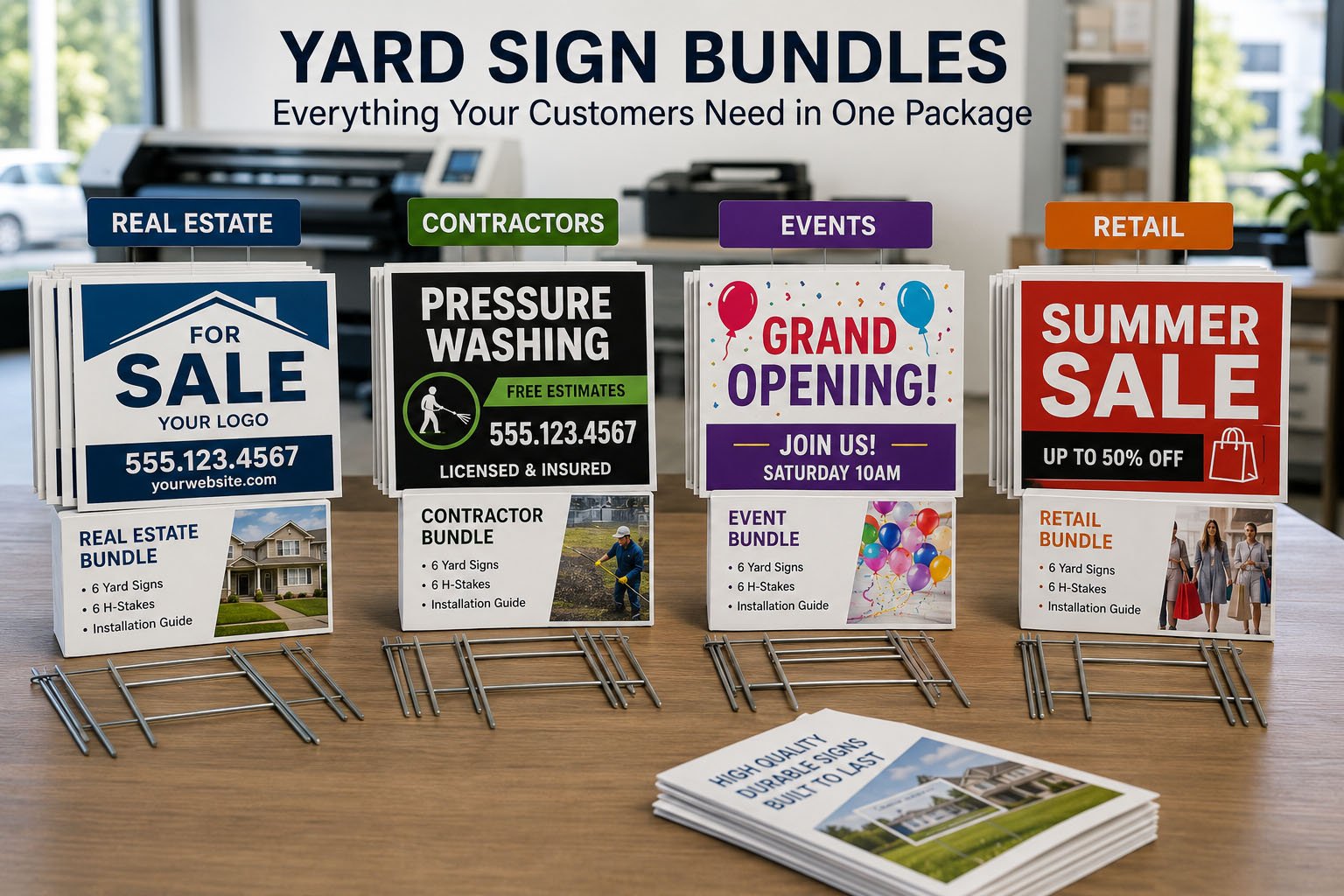
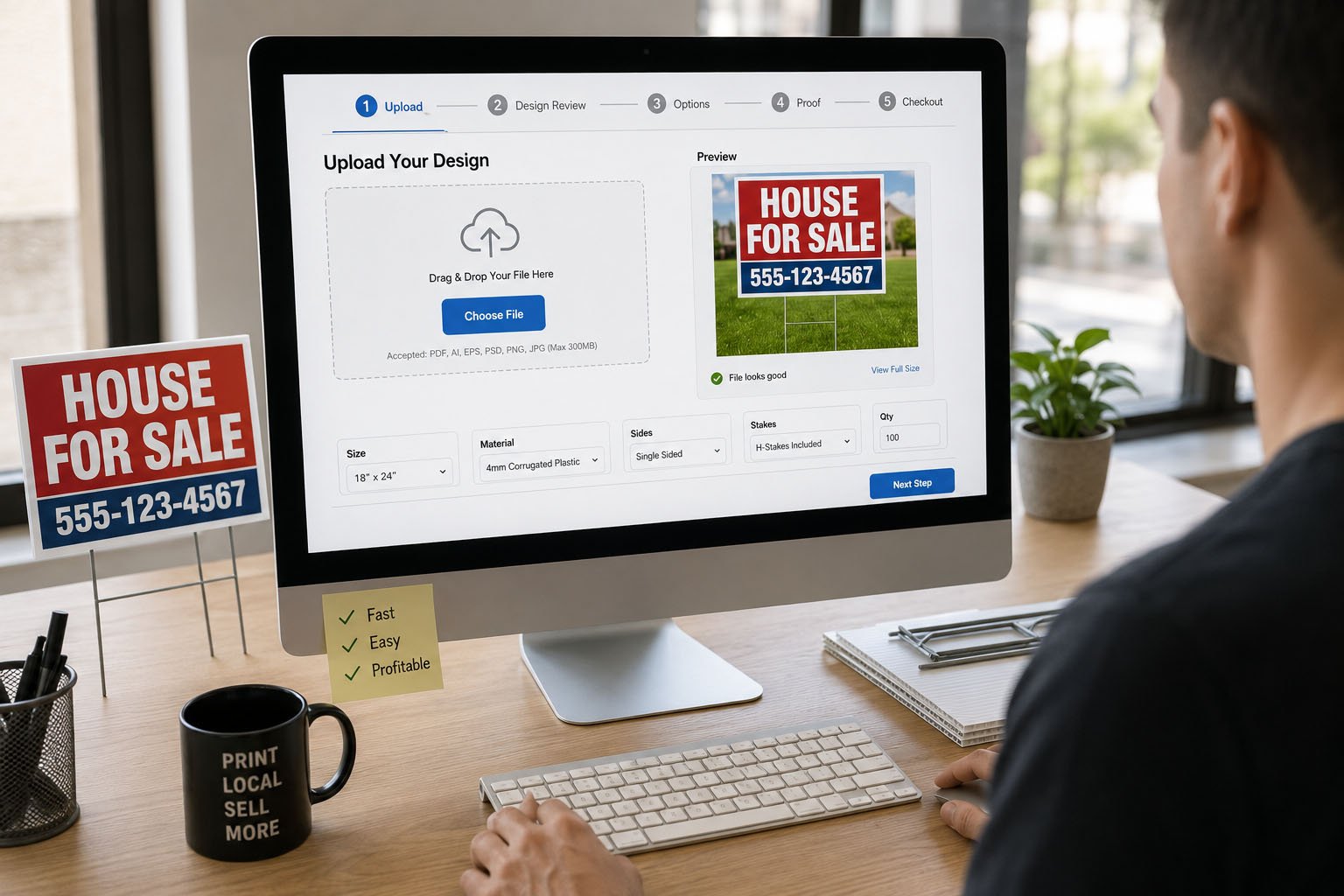
The most common size for real estate yard signs is 18″ x 24″. This size works well for standard lawn placement, open houses, and temporary listing signs. It is affordable, easy to install, and compatible with metal H-stakes when printed on corrugated plastic.
For higher visibility, 24″ x 36″ signs may be a better option. Larger signs are useful for busy roads, premium listings, commercial properties, and locations where the sign needs to be seen from farther away.
For directional open house signs, smaller signs such as 12″ x 18″ may also work well when the message is short and simple.
Best Material for Real Estate Yard Signs
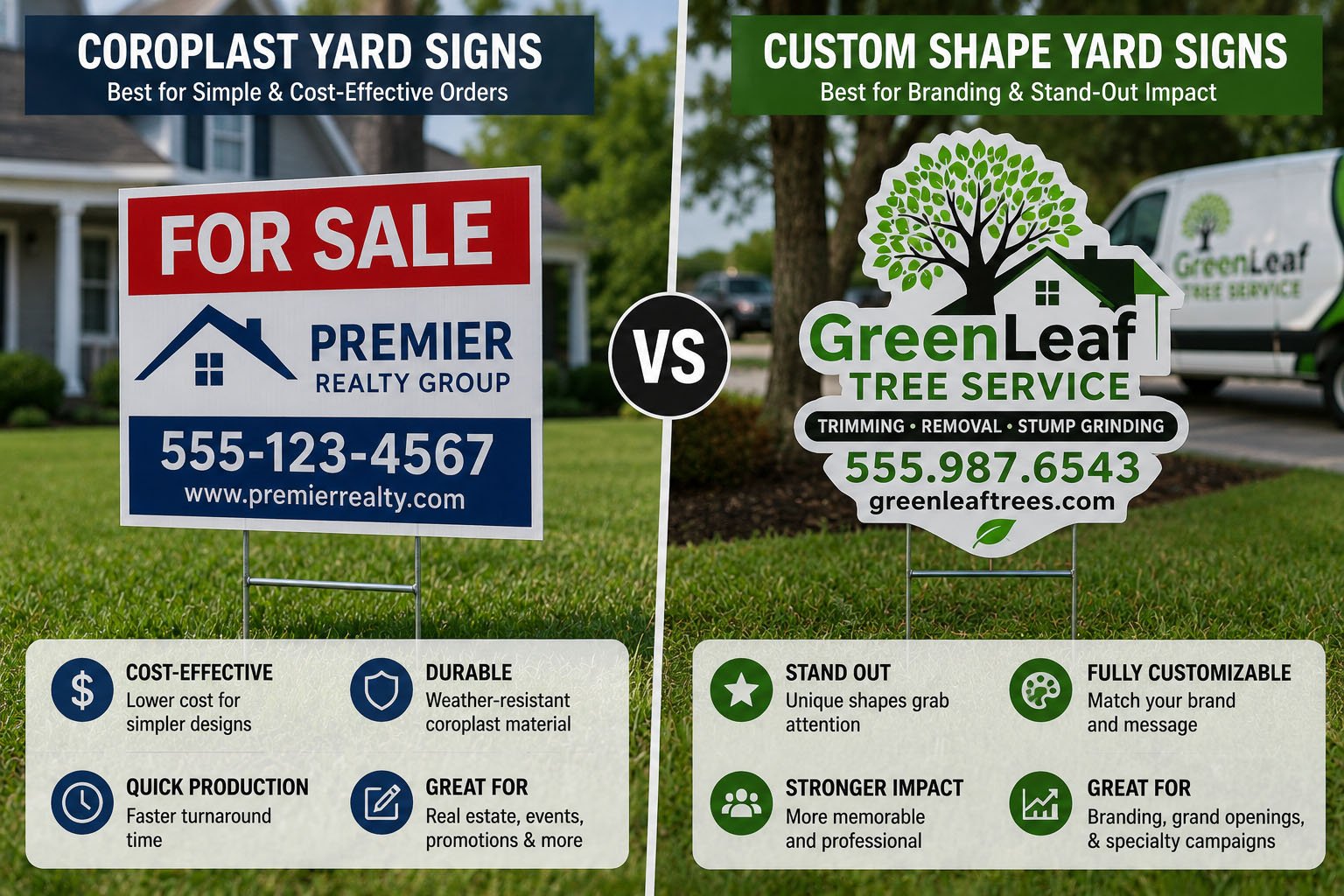
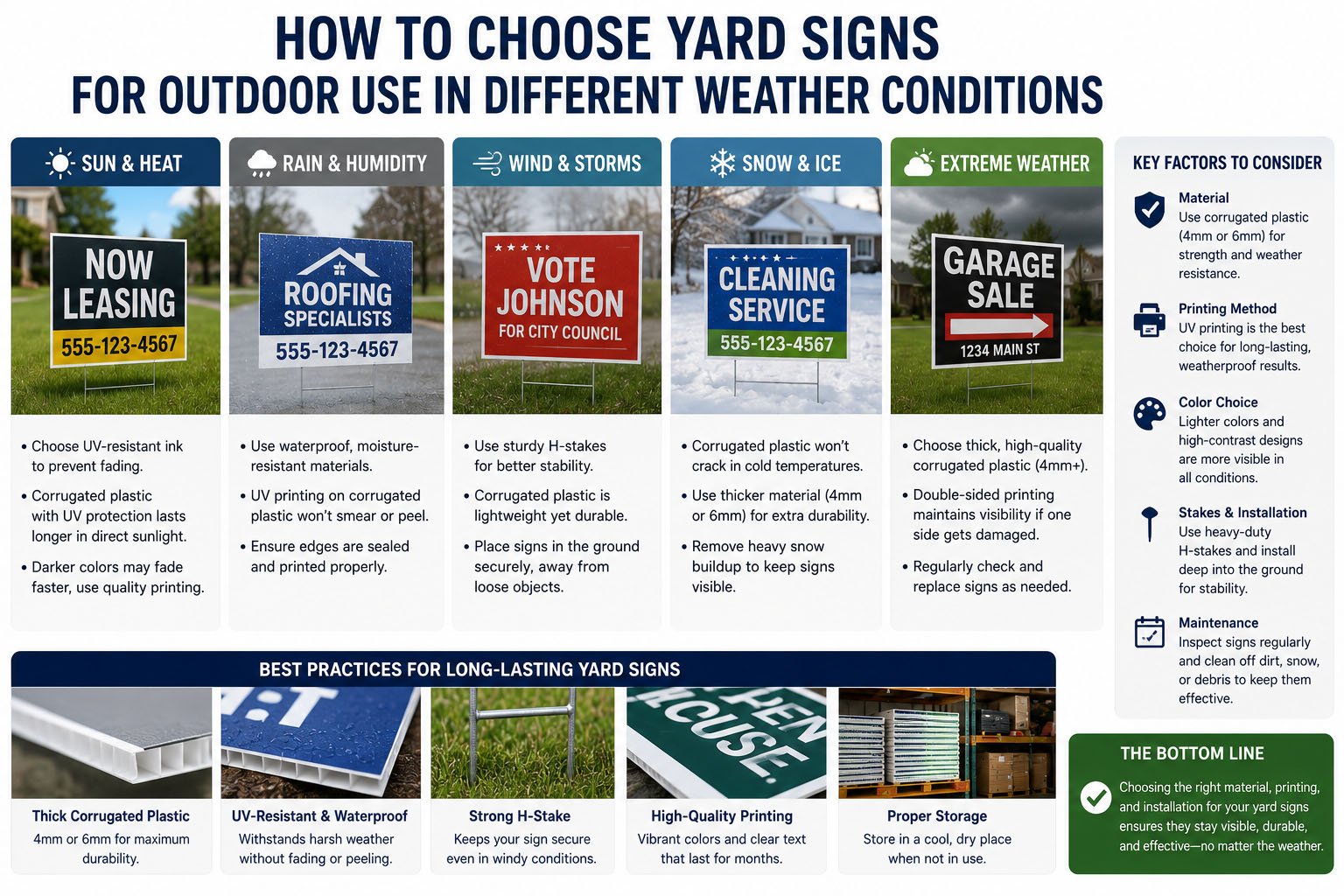
Corrugated plastic, also called coroplast, is one of the most popular materials for real estate yard signs. It is lightweight, water-resistant, affordable, and easy to install with H-stakes.
Coroplast signs are ideal for open houses, temporary listings, directional signs, and bulk real estate marketing campaigns.
For longer-term or premium displays, aluminum signs may be a better choice. Aluminum is stronger, more rigid, and more durable, but it usually costs more and may require a frame or posts instead of simple H-stakes.
H-Stakes, Frames, and Installation Options
Most standard coroplast real estate yard signs are installed with metal H-stakes. H-stakes slide into the vertical flutes of the sign and push into the ground, making setup fast and simple.
H-stakes are useful because they are:
- Affordable.
- Lightweight.
- Easy to install.
- Easy to remove after a listing or open house.
- Suitable for standard lawn signs.
For larger signs, long-term listings, premium properties, or windy locations, a metal frame or post system may be more secure.
Where to Place Real Estate Yard Signs
Placement affects how many people see your sign and how useful it is for generating leads. A good sign in a poor location may not perform well.
Good real estate sign locations include:
- The front lawn of the listed property.
- Near driveway entrances.
- Open house routes with directional arrows.
- Neighborhood entrances where signs are allowed.
- High-visibility corners on private property with permission.
- Commercial property frontage.
Always follow local sign rules, HOA guidelines, brokerage requirements, and property owner permission. Avoid blocking driver visibility, sidewalks, or public right-of-way areas where signs are not allowed.
How to Use QR Codes on Real Estate Signs
QR codes can make real estate signs more useful by connecting offline interest to online listing details. A buyer who sees the sign can scan the code to view photos, price, floor plans, appointment forms, or agent contact information.
For best results:
- Use a large QR code that can be scanned from a reasonable distance.
- Link directly to the property page or lead form.
- Test the QR code before printing.
- Keep enough blank space around the code.
- Add a short call to action, such as Scan for Details.
QR codes should support the sign, not replace readable contact information. Always include a phone number or website as well.
How to Track Leads From Real Estate Yard Signs
Real estate agents can track yard sign performance with simple tools. This helps you understand which listings, neighborhoods, and sign messages generate the most inquiries.
Tracking ideas include:
- Use a dedicated phone number for listing signs.
- Create a short URL for each property.
- Use QR codes with tracking links.
- Ask buyers how they found the property.
- Compare open house traffic by sign placement.
Better tracking helps agents improve future signs and make smarter marketing decisions.
Common Real Estate Yard Sign Mistakes
Even a simple real estate sign can lose impact if the design or placement is wrong. Avoid these common mistakes:
- Using text that is too small.
- Adding too much information to one sign.
- Using low-quality materials for outdoor display.
- Forgetting a clear phone number or website.
- Using a QR code that is too small to scan.
- Placing signs where they violate local rules.
- Leaving faded or damaged signs in front of properties.
- Using inconsistent branding across listings.
Your yard sign represents both the property and your professional brand. Keep it clean, durable, and easy to read.
Final Thoughts
Real estate yard signs remain one of the simplest and most effective ways for agents to get more local leads. They help promote listings, attract buyers, guide open house visitors, and build recognition in target neighborhoods.
For most agents, 18″ x 24″ coroplast signs with H-stakes are a practical and cost-effective choice. For premium listings or long-term displays, larger signs, aluminum panels, or framed signs may offer a more professional look.
At iYardSign, we help real estate agents create custom yard signs that are clear, durable, and ready for outdoor marketing. Whether you need For Sale signs, Open House signs, Sold signs, or bulk real estate signs, the right design can help you stand out and generate more leads.
FAQ
Do yard signs help real estate agents get leads?
Yes. Yard signs help real estate agents generate leads by increasing local visibility, attracting buyers near the property, and making it easy for prospects to call, scan, or visit a listing page.
What should a real estate yard sign include?
A real estate yard sign should include a clear message, agent name, brokerage or team branding, phone number, website, and optionally a QR code for listing details.
What size is best for real estate yard signs?
18″ x 24″ is the most common size for real estate yard signs. Larger sizes such as 24″ x 36″ can work better for high-traffic roads or premium listings.
What material is best for real estate yard signs?
Corrugated plastic is the most popular material for temporary real estate signs because it is affordable, lightweight, water-resistant, and easy to install with H-stakes. Aluminum is better for long-term or premium signs.
Are real estate signs better with QR codes?
QR codes can help buyers quickly access property details, photos, or contact forms. They work best when they are large, easy to scan, and paired with a phone number or website.
Where should real estate agents place yard signs?
Good locations include the front lawn of the property, open house routes, driveway entrances, and private high-visibility areas with permission. Always follow local rules and HOA guidelines.
Should real estate yard signs be double-sided?
Double-sided signs are usually better when people can approach from both directions, such as near roads, sidewalks, open houses, and property entrances.
Can yard signs build an agent’s personal brand?
Yes. Consistent yard sign branding helps buyers and sellers recognize the agent across multiple listings and neighborhoods, which can support long-term local lead generation.