Neighborhood Yard Sign Campaigns for Local Service Businesses

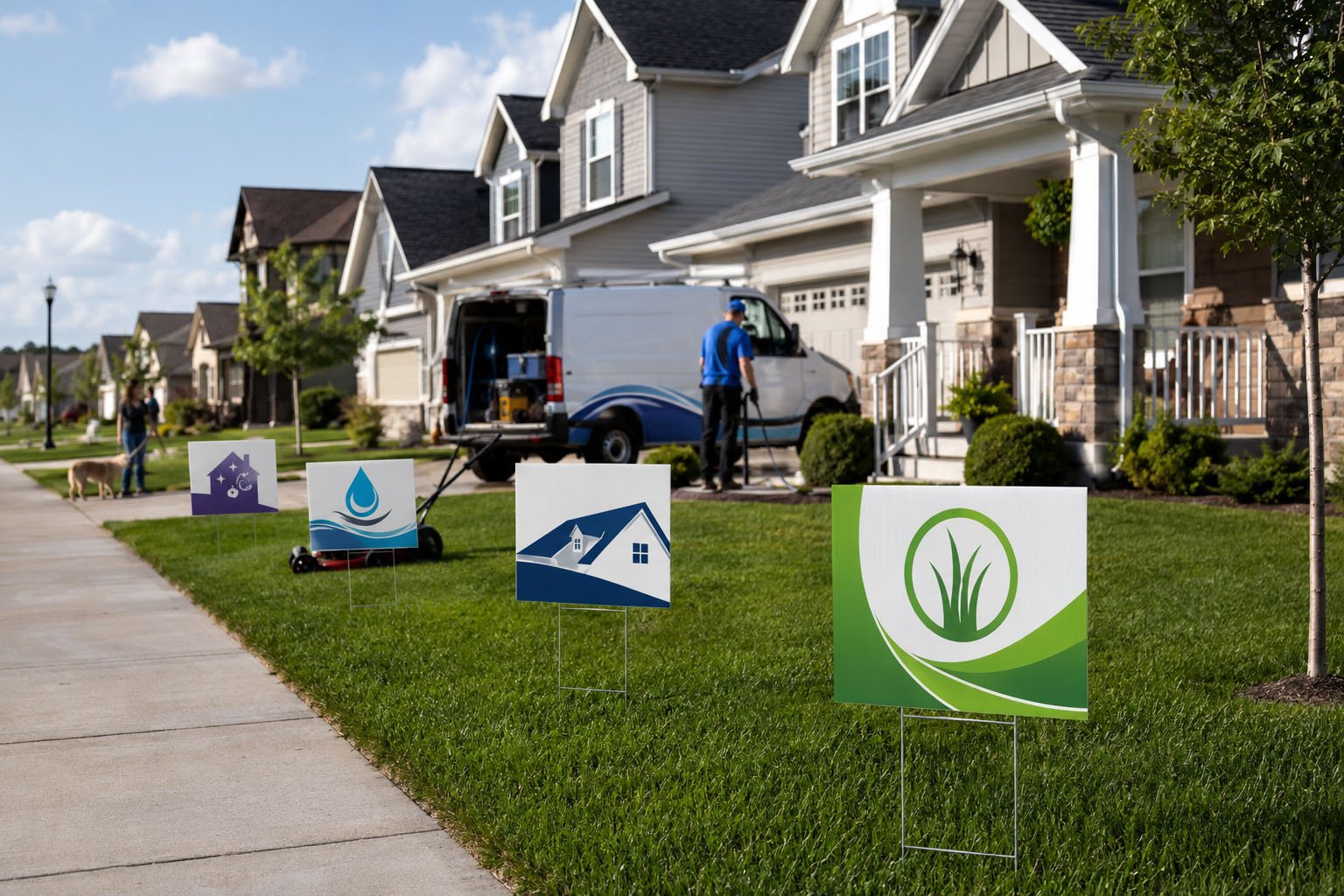
The challenge is making the campaign easy to manage. Different neighborhoods may need different phone numbers, landing pages, offers, quantities, or delivery instructions.
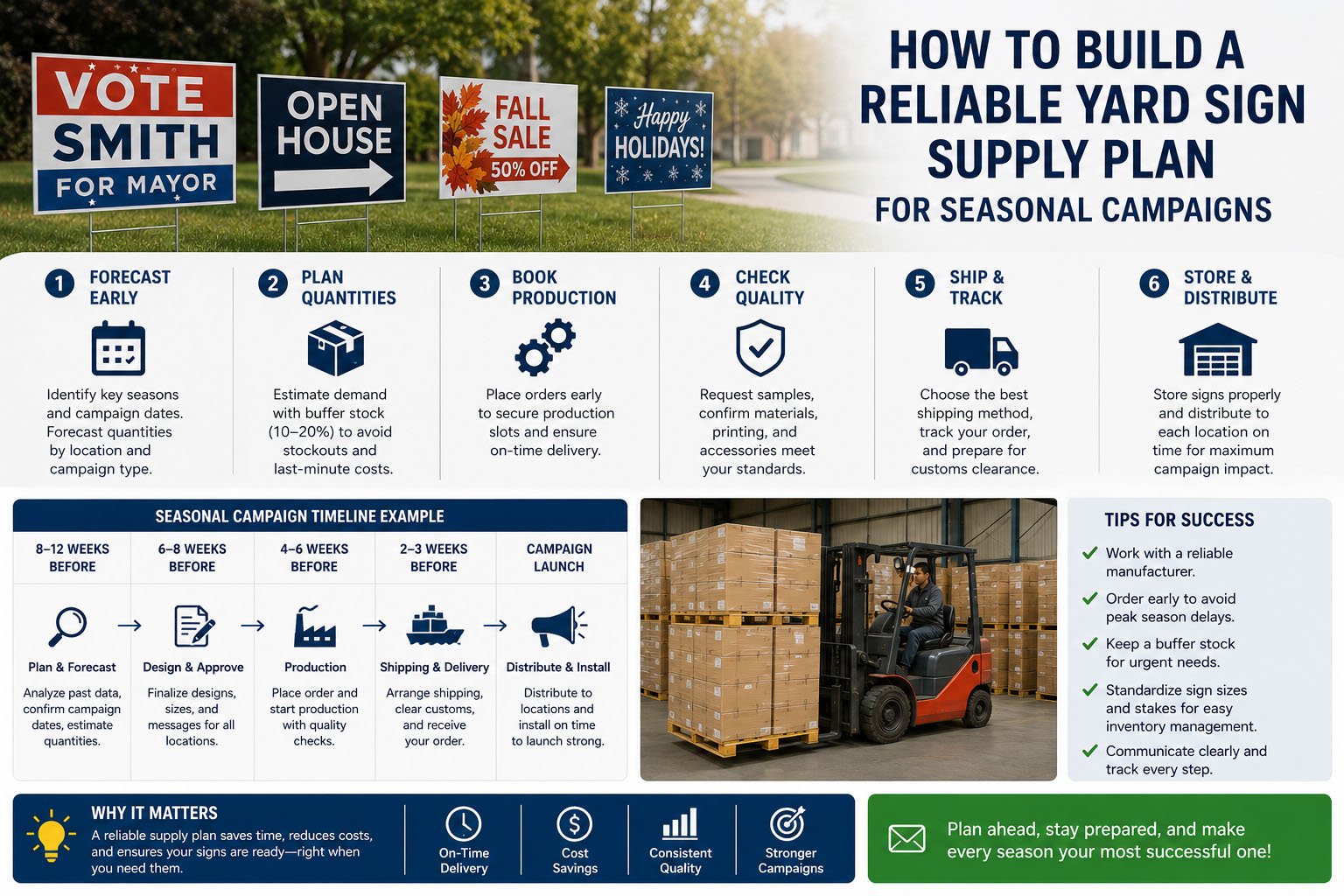
Quick answer: A neighborhood yard sign campaign should start with defined service areas, one approved brand template, a small number of local information versions, and quantities based on actual job locations. The signs should be easy to identify, install, remove, reorder, and connect to the correct local contact channel.
Why Local Service Companies Use Neighborhood Yard Signs
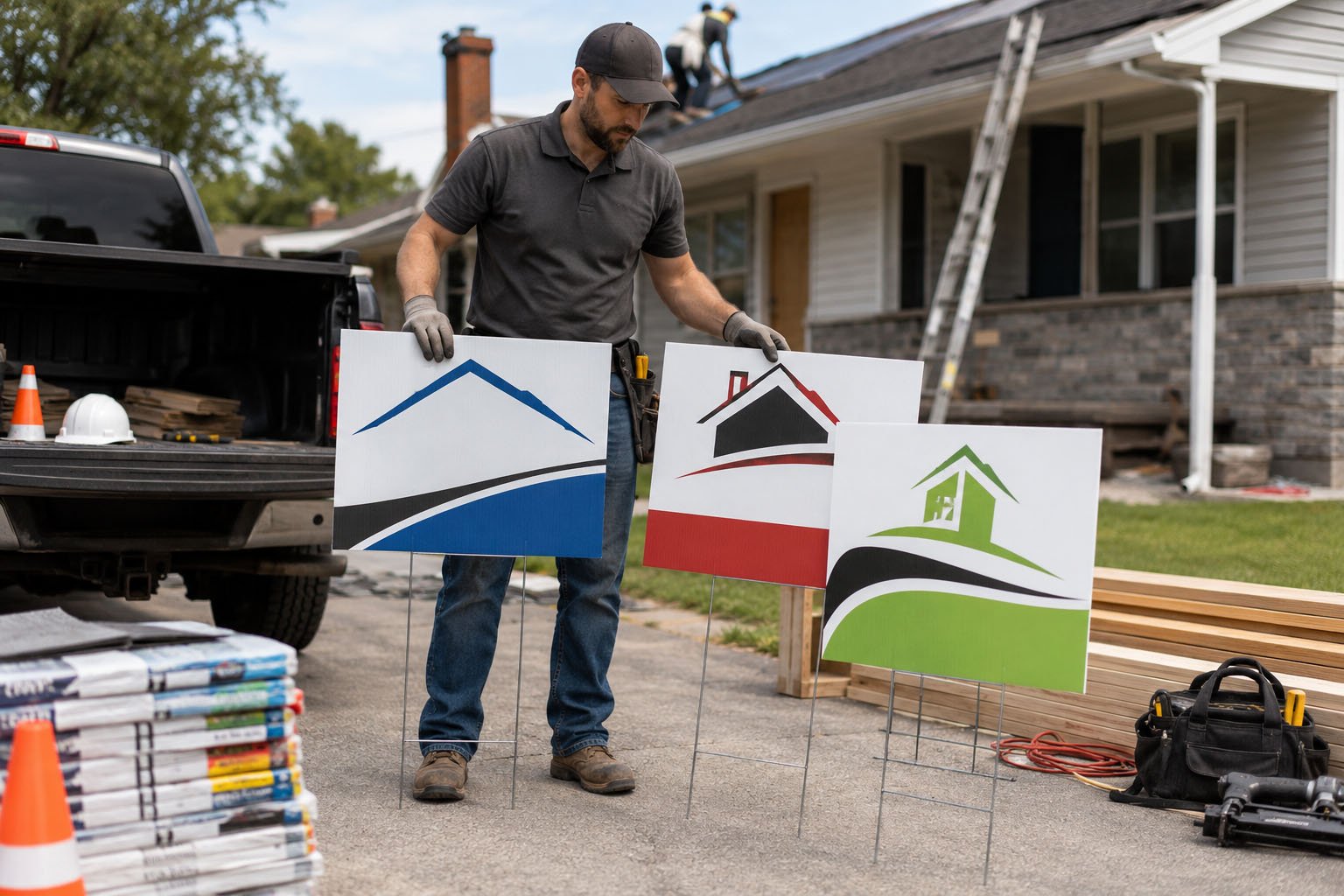
A yard sign placed at an active or recently completed job site can show potential customers that a service company is already working nearby.
This can be useful for:
- Lawn treatment and landscaping
- Residential cleaning
- Roof replacement and repair
- Pressure washing
- Tree care
- Painting and remodeling
- Pool maintenance
- Pest control
Neighborhood signs are different from broad billboard advertising because they appear close to the service location. The sign can support local recognition, but only when the message is simple and the contact information is accurate.
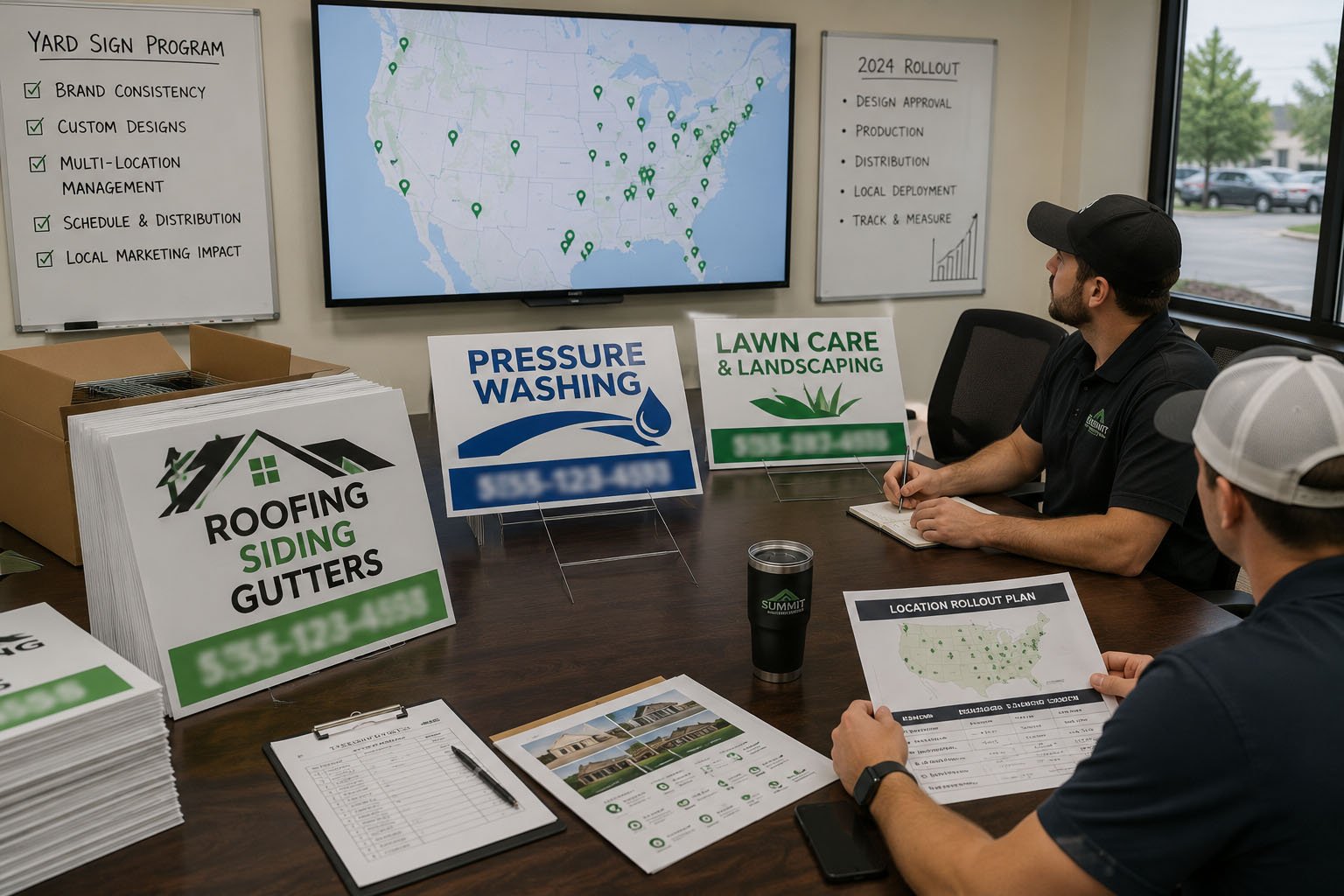
Divide the Campaign Into Service Zones
Before ordering signs, divide the target market into practical zones. A zone might be a city, ZIP code group, suburb, sales territory, or crew route.
For each zone, record:
- Number of expected job sites
- Average service period
- Primary contact number
- Landing page or QR code
- Local promotion
- Delivery location
- Expected sign replacement rate
This creates a better basis for ordering than simply asking for one large quantity. It also helps the print supplier or factory pack signs by location.
Use One Brand Template With Local Versions
Neighborhood campaigns should look consistent. If each crew creates a completely different design, the company may appear less established.
Keep the following elements consistent:
- Logo
- Brand colors
- Main service message
- Typography
- Sign size
- H-stake style
- General layout
Local information can change when necessary:
- Phone number
- Service area
- QR code
- Local offer
- Branch name
For multi-location programs, this structure keeps the brand unified without forcing every location to use the same contact information.
Choose Sign Quantities Based on Actual Job Locations
Ordering too many signs before the campaign is tested can create unnecessary inventory. Ordering too few can create repeated rush orders and inconsistent replacement signs.
Estimate quantity using:
- Expected weekly job locations
- Average time each sign remains installed
- Number of field crews
- Seasonal demand
- Expected sign loss or damage
- Number of service zones
- Replacement and expansion needs
For a new market, a controlled first order is often easier to evaluate than a very large campaign. After the team understands installation and removal rates, the next order can be adjusted.
Keep the Message Readable From the Street
A neighborhood yard sign may be seen by pedestrians, homeowners, delivery drivers, and passing vehicles. The layout should be understood quickly.
Prioritize:
- Company name
- Main service
- Phone number or website
- Short call to action
A sign does not need to list every service offered by the company. A short message such as “Professional Lawn Care” or “Roofing Estimate Available” is usually easier to understand than a crowded service list.
Review the yard sign size guide when choosing between standard panel sizes.
Track Local Campaigns With Separate Contact Paths
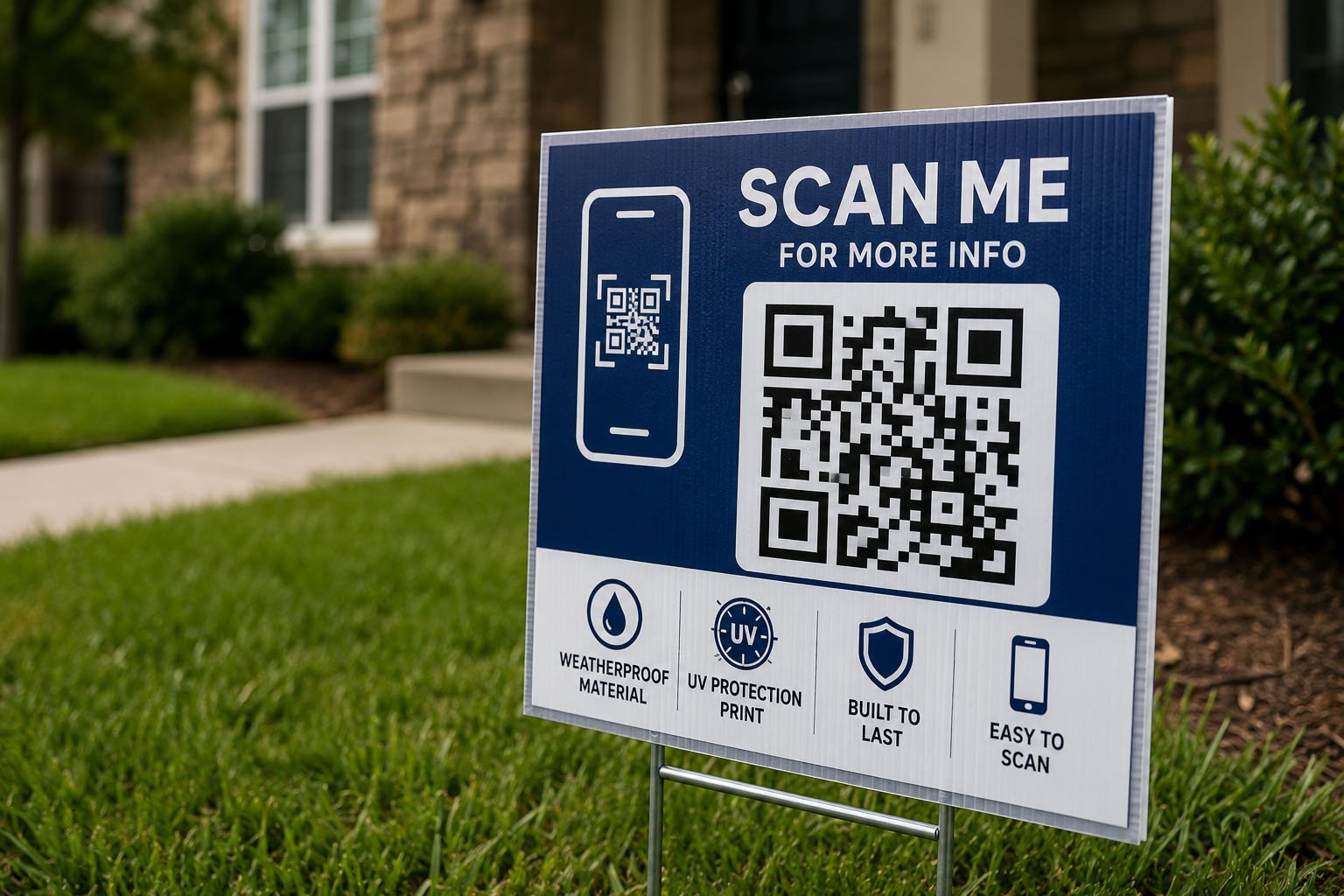
If the business wants to understand which neighborhoods generate inquiries, it can use separate phone extensions, landing pages, or QR codes. The method should be simple enough for the customer to use.
Possible approaches include:
- One landing page per service zone
- Different QR codes by branch
- Unique promotional codes
- Separate phone extensions
- Different website URLs for local campaigns
Do not make the tracking method so complicated that the sign becomes difficult to read. The primary service message and phone number should remain visible without requiring the customer to scan anything.
Plan Installation and Removal Instructions
Every crew should know where and when to install the signs. Without a simple field process, signs may be placed too close to roads, left after a job is complete, or installed in locations where permission has not been confirmed.
A field instruction sheet can include:
- Approved installation areas
- Recommended sign height
- Stake installation method
- Removal timing
- Storage after removal
- Damage reporting process
- Local permission requirements
Local regulations, homeowner association rules, property permissions, and municipal requirements should be checked before the campaign begins.
Pack Signs by Neighborhood or Crew
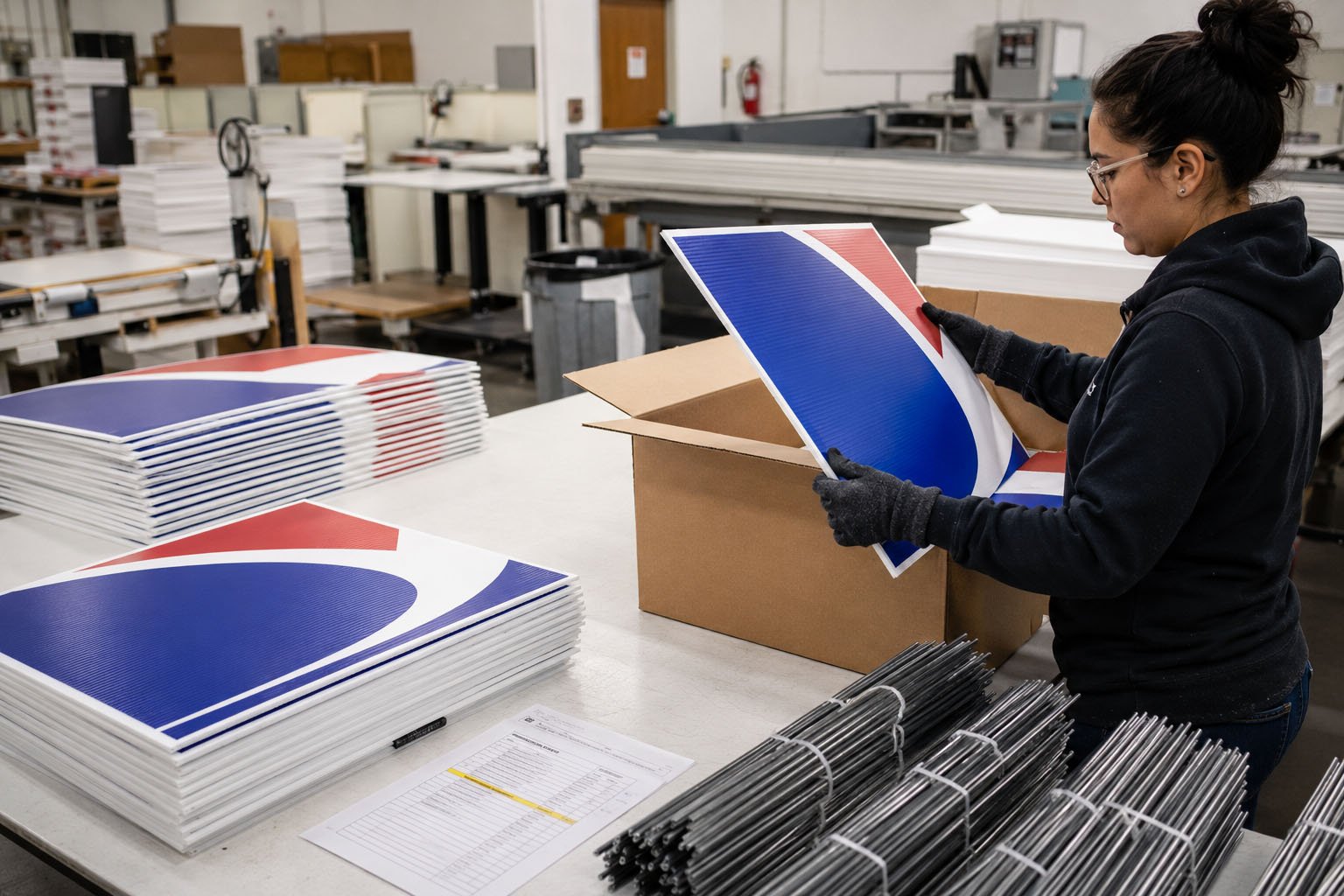
For a campaign with several service zones, packing by location can save time. Each bundle may be labeled with the zone, design code, quantity, and delivery team.
Ask the supplier whether the signs can be packed by:
- City or neighborhood
- Branch
- Service crew
- Design version
- Installation route
Clear packing reduces the chance that a crew receives signs with the wrong phone number or local promotion.
How iYardSign Supports Local Service Campaigns
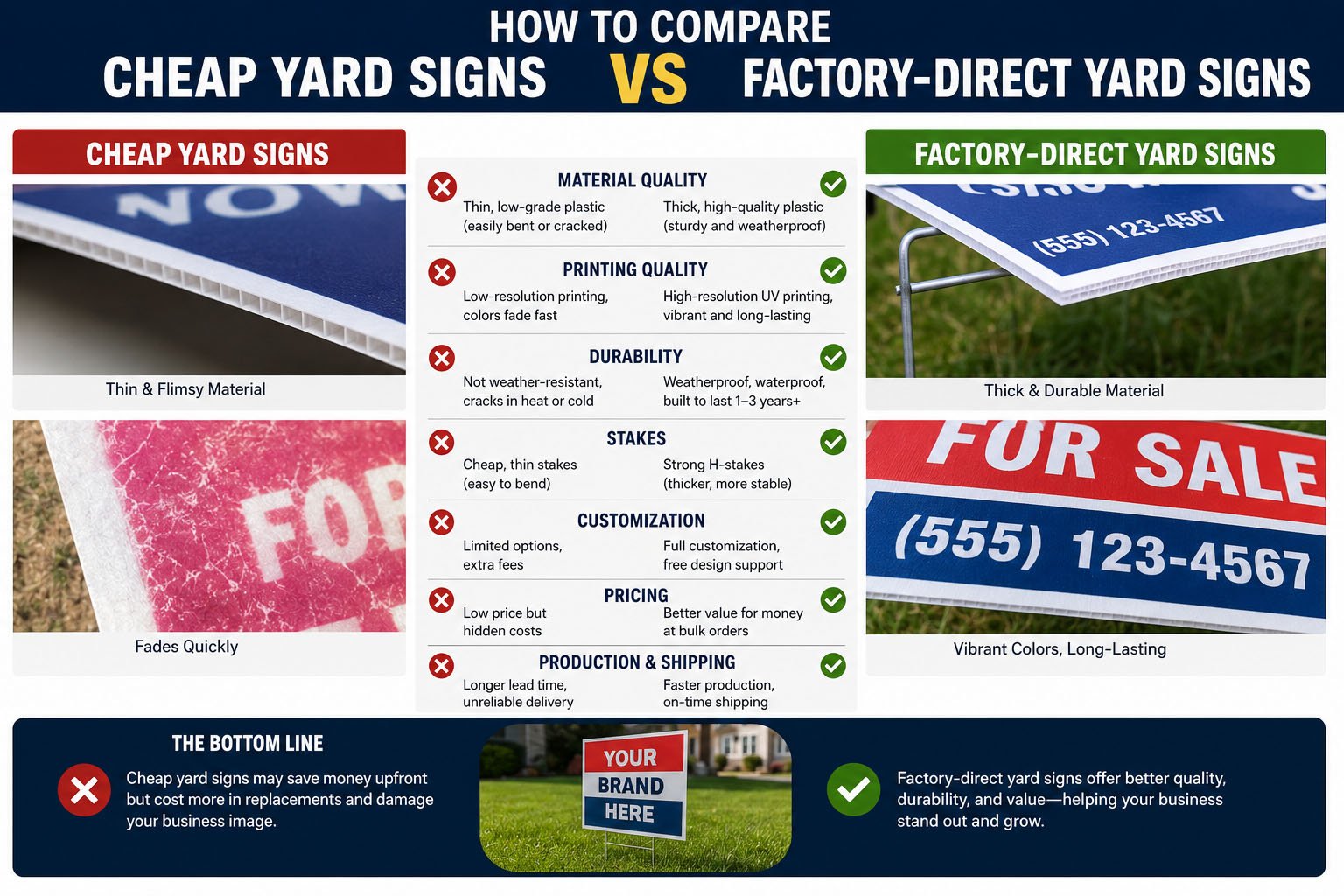
iYardSign is a China-based custom yard sign manufacturer supporting lawn care, cleaning, roofing, pressure washing, real estate, event, and other local service businesses.
Campaign orders can include:
- 18×24 or 24×36 corrugated plastic signs
- Multiple local contact versions
- Custom printed artwork
- Yard signs with H-stakes
- Different quantities by branch
- Design-based or location-based packing
- Artwork proofing before production
- Shipping coordination for US and Canadian buyers
For related multi-location planning, read how franchise networks can control yard sign orders.
Frequently Asked Questions
How many yard signs are needed for a neighborhood campaign?
The quantity depends on job-site volume, installation period, number of crews, seasonal demand, and replacement needs. A controlled test order can help establish a more accurate quantity.
Should each neighborhood use a different design?
Usually, the main brand design should remain consistent. Only local contact information, QR codes, service areas, or promotions should change unless there is a clear reason for a different layout.
Can signs be packed by branch?
Branch-based packing and labeling can often be planned with the supplier. Confirm the requirement before production begins.
Plan a Neighborhood Yard Sign Campaign
Send your service areas, sign size, artwork versions, quantities, H-stake requirements, and delivery locations. iYardSign can help prepare a practical bulk production plan.