How to Reduce Custom Yard Sign Complaints Before They Happen

How to Reduce Custom Yard Sign Complaints Before They Happen
For print shops, distributors, online print stores, agencies, and brands, customer complaints about yard signs usually begin before production starts. A customer may say the sign is too small, the color is different from the screen, the H-stakes were missing, or the packaging arrived damaged.
Many of these problems are not caused by one serious production mistake. They are often caused by unclear product information, incomplete order details, unapproved artwork, or a mismatch between what the seller promised and what the customer expected.
This guide explains how sellers can prevent common custom yard sign complaints before they become expensive replacements, refunds, or negative reviews. It also shows how a structured production process with a reliable factory partner can make bulk orders easier to manage.
iYardSign supports wholesale buyers with custom printed yard signs, corrugated plastic signs, H-stakes, artwork review, bulk production, packaging coordination, and international order support.
Why Custom Yard Sign Complaints Happen
A complaint is often the final result of several small information gaps. The buyer may assume that stakes are included, while the supplier quotes signs only. A customer may approve a design on a phone without checking the actual finished size. A reseller may use a product image that shows a complete kit even though the listed price includes only the printed sign.
The main causes usually include:
- Unclear finished size or viewing distance
- Unapproved artwork or low-resolution files
- Different expectations about color and print coverage
- Confusion about one-sided and double-sided printing
- H-stakes or frames not clearly included in the quotation
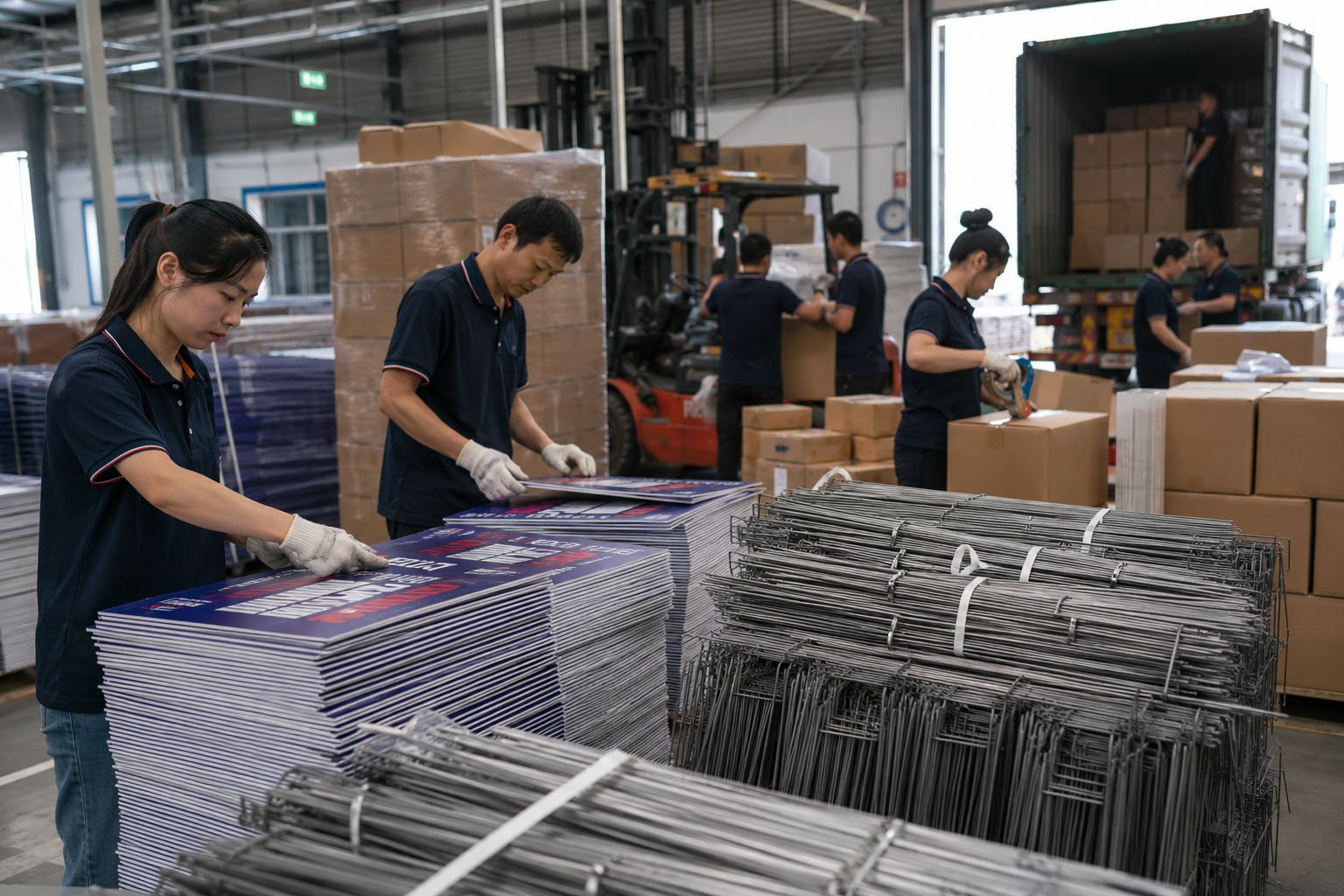
- Insufficient packaging for long-distance shipping
- No final inspection before shipment
- Product listings that do not explain limitations clearly
The best solution is not simply to handle complaints faster. It is to create a process that prevents misunderstandings at the quotation, proofing, production, and delivery stages.
1. Confirm the Product Specification Before Quoting
A price cannot be accurate if the product specification is incomplete. Before sending a quote to your customer, confirm the exact details with the factory and record them in one place.
At minimum, the specification should include:
- Finished sign width and height
- Corrugated plastic material and thickness
- One-sided or double-sided printing
- Number of colors or full-color printing requirement
- Flute direction
- Hole position and hole size
- H-stake or frame type
- Quantity for each design
- Packaging method
- Delivery destination
For a more complete starting point, sellers can use this
yard sign quote information checklist
when collecting requirements from customers.
This step prevents a common problem: quoting one product and producing another. For example, “18×24 yard sign” may refer only to the printed board, while the customer may expect a complete sign with a stake, retail packaging, and a specific hole layout.
2. Explain What Is Included in the Price
Customers should not have to guess whether the quotation includes H-stakes, individual bags, cartons, artwork setup, or shipping. Every quotation should clearly separate the product components.
| Item | What to Confirm |
|---|---|
| Printed sign | Size, thickness, printing sides, and design quantity |
| H-stakes | Included or separate, quantity, material, and compatibility |
| Packaging | Bulk cartons, individual bags, labels, and pallet requirements |
| Shipping | Shipping method, destination, estimated lead time, and delivery terms |
This information should appear consistently in the quotation, invoice, website listing, and customer confirmation email. Inconsistent descriptions are one of the easiest ways to create avoidable disputes.
3. Use a Proof Approval Process That Customers Can Understand
Artwork approval is not just a formality. It is the customer’s opportunity to confirm the layout, text, logo position, colors, and dimensions before production begins.
A useful proof should show:
- The actual finished sign size
- Artwork orientation
- Safe margins and bleed areas
- Hole and stake positions
- One-sided or double-sided artwork
- Important text and phone numbers
- Color expectations for the selected printing method
The approval record should identify the exact version that was approved. File names such as “final-new-2” are not reliable enough for a large order. Use a clear version number or approval date so the production team and seller are working from the same file.
Before mass production, review the
yard sign sample approval process
for designs where color, shape, or installation details are especially important.
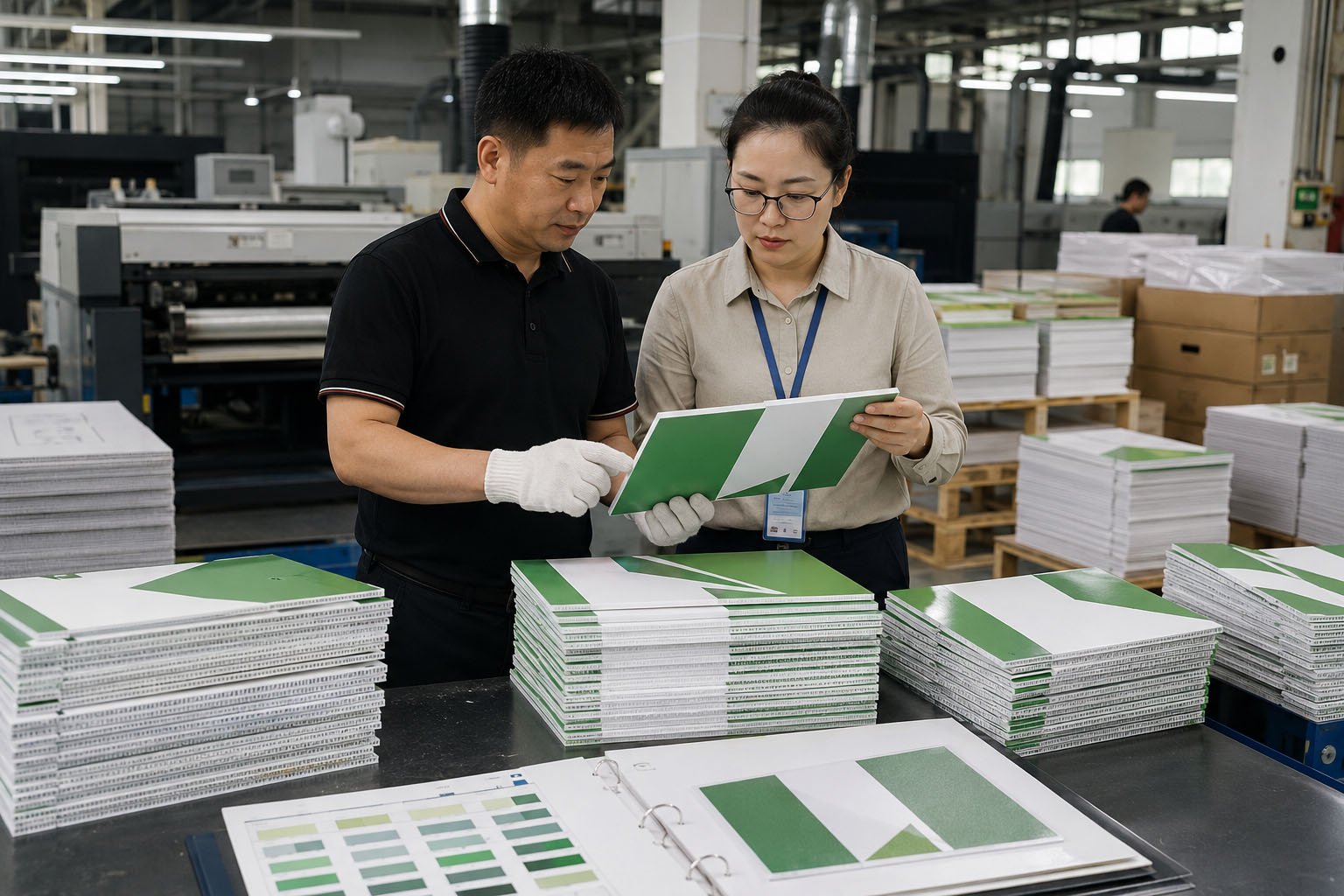
4. Set Realistic Expectations About Color
Color complaints are common when customers compare a printed sign with a phone, monitor, or digital proof. Screens use light to display color, while printed signs use ink or UV-curable printing on a physical surface. The result may look different even when the artwork file is correct.
To reduce disputes:
- Tell customers that screen colors are for reference only.
- Request brand colors in a recognized color system when needed.
- Use a physical sample for strict color requirements.
- Confirm whether the design contains gradients, fine details, or transparent effects.
- Check whether the customer expects a coated or uncoated appearance.
A professional seller should never promise that a printed sign will look exactly like a phone screen. Clear expectations are more useful than an overly confident color promise.
5. Make the Stake and Installation Details Clear
The customer may judge the whole product by how easily it installs in the ground. A printed board can be produced correctly, but complaints may still happen if the stake is incompatible, difficult to insert, or not included as expected.
Product descriptions should explain:
- Whether the H-stakes are included
- How many stakes are supplied per sign
- Whether the sign is pre-slotted or requires assembly
- Which installation environment is suitable
- Whether hard, frozen, rocky, or very dry ground may require extra care
- How the sign should be stored before installation
If a customer needs a complete kit, the quotation should state “printed sign plus H-stake” rather than using a vague phrase such as “yard sign set.”
For specifications involving stake compatibility and board construction, link customers to the relevant
custom yard sign product options
before the order is finalized.
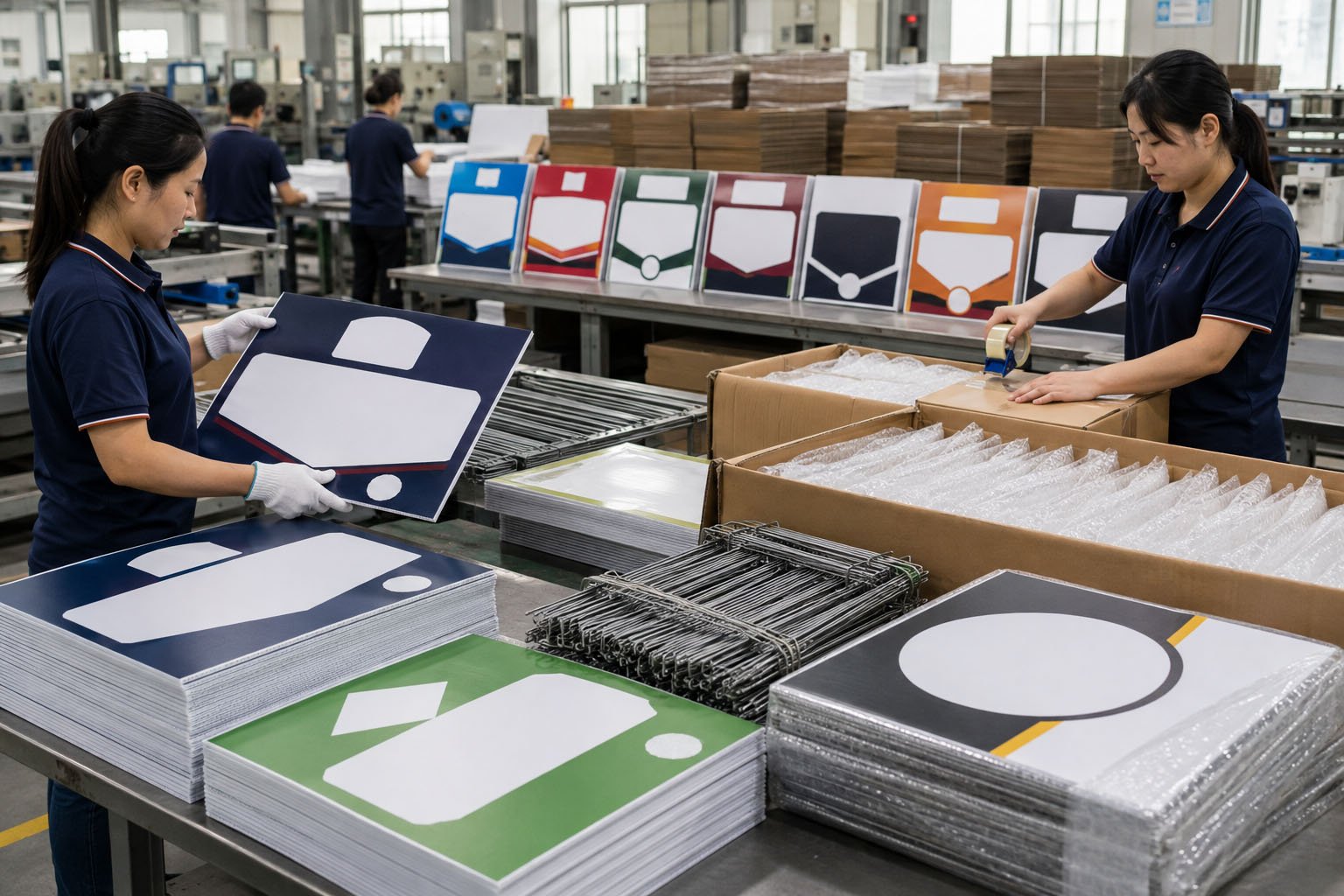
6. Treat Packaging as Part of Product Quality
Bulk yard signs are lightweight but large. Their size makes them vulnerable to bent corners, surface scratches, crushed cartons, and separated stakes during transportation. Packaging should therefore be discussed during the quotation stage, not after the signs are already produced.
Ask the factory to confirm:
- How many signs are packed in each carton
- Whether stakes are packed separately or together with signs
- Carton dimensions and estimated gross weight
- Protection for corners and printed surfaces
- Carton labels and design identification
- Pallet or container loading requirements
For larger orders, packaging by design can also reduce warehouse mistakes. If several designs are mixed in one carton without clear labels, the seller may later ship the wrong sign to a customer.
This
bulk yard sign packaging guide
covers the details that should be confirmed before production.
7. Check the Order Before It Leaves the Factory
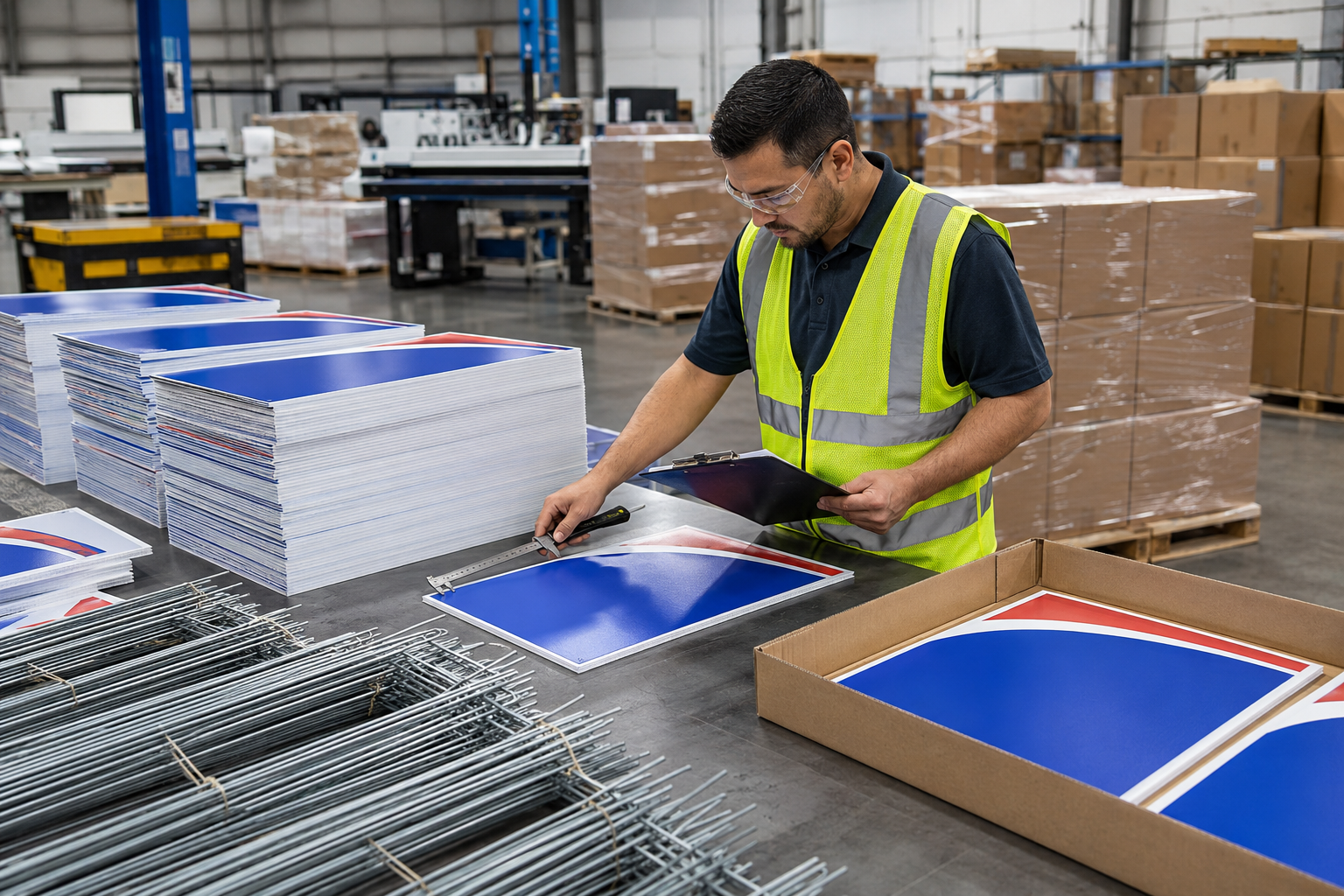
A final inspection should compare the finished order with the approved specification, not with memory. The inspection should cover both appearance and quantity.
A practical pre-shipment check includes:
- Randomly checking sign dimensions
- Reviewing print clarity and major color areas
- Checking artwork orientation and design versions
- Confirming holes, slots, and flute direction
- Counting signs and H-stakes
- Inspecting cartons for damage
- Checking labels and carton quantities
- Recording photos or videos for the order file
Sellers can use a structured
yard sign quality check before shipment
to create a consistent internal record.
8. Improve the Product Listing and Customer Instructions
Some complaints are created by the seller’s own product listing. A product photo may show stakes, but the text may not say whether stakes are included. A listing may say “weather resistant” without explaining that long-term exposure depends on sunlight, wind, installation, and storage conditions.
A useful listing should clearly state:
- Finished dimensions
- Material and thickness
- Printing method or print coverage
- Included accessories
- Packaging format
- Expected production time
- Installation guidance
- Limitations that customers should understand
For online sellers, these details should also be reflected in product photos, comparison charts, FAQs, and order confirmation emails. Clear information improves both customer satisfaction and the quality of incoming inquiries.
A Simple Complaint-Prevention Workflow
The following workflow works for print shops, distributors, agencies, brands, and ecommerce sellers:
- Collect the customer’s exact use case and quantity.
- Confirm size, material, printing, stakes, packaging, and delivery details.
- Send a complete quotation with included and excluded items.
- Review and approve the artwork version.
- Approve a physical sample when the project has strict visual requirements.
- Confirm the production schedule and packaging method.
- Complete a pre-shipment inspection.
- Send installation and storage instructions with the finished order.
- Save the approved specification for future reorders.
This process may add a few minutes at the beginning of an order, but it can save much more time later. It also gives the seller a clear record when a customer asks about a specification months after delivery.
How iYardSign Helps Reduce Order Risk
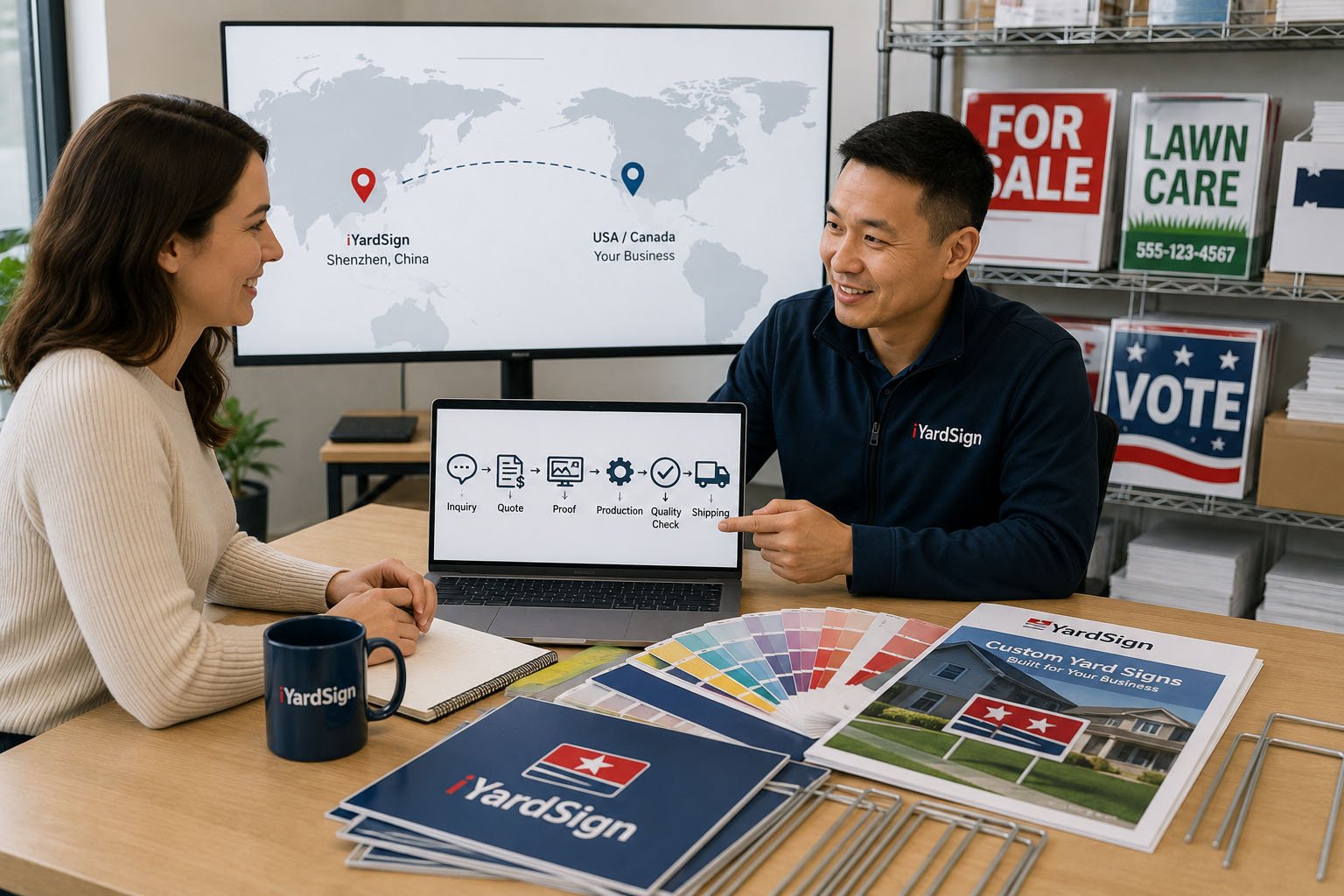
For overseas buyers, complaint prevention depends on communication as much as printing equipment. A factory should be able to understand the buyer’s final application, identify missing specifications, review artwork, confirm accessories, and organize the order for production and shipping.
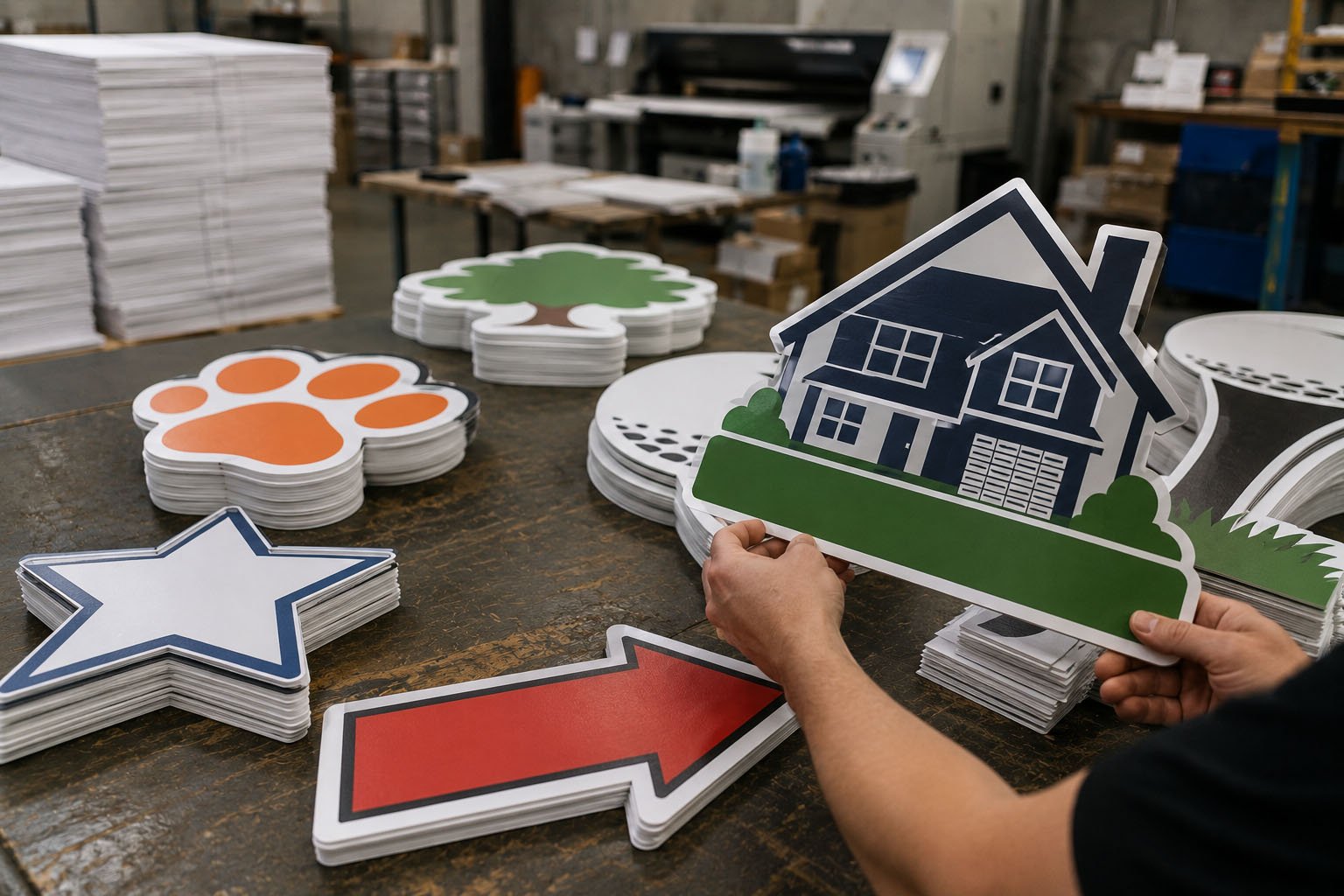
iYardSign is a China-based custom yard sign manufacturer serving bulk buyers, print businesses, distributors, brands, agencies, and online sellers. The factory can support custom corrugated plastic yard signs, H-stakes, multiple designs, artwork review, bulk production, and packaging coordination.
Buyers can review the
custom yard sign service
to prepare the information needed for a more accurate project discussion.
Frequently Asked Questions
What is the most common cause of custom yard sign complaints?
The most common causes are unclear product specifications, incorrect expectations about included accessories, artwork approval problems, color misunderstandings, and shipping damage. These issues can usually be reduced with a written specification and final inspection.
Should H-stakes be included in the yard sign quotation?
If the customer needs a complete installation-ready product, H-stakes should be listed clearly in the quotation. The quote should state the stake type, quantity, material, and whether the stakes are packed together with the signs or separately.
Can a physical sample prevent all complaints?
A sample cannot eliminate every possible problem, but it can reveal major issues with size, color, hole position, material, and installation before mass production. It is especially useful for new designs, strict brand colors, and large orders.
How can an overseas buyer protect a bulk yard sign order?
The buyer should use a complete specification, approve the artwork version, confirm the packaging plan, request production updates, and complete a pre-shipment inspection. Keeping the approved files and order records also makes future reorders easier.
Need Help Preventing Problems on Your Next Yard Sign Order?
Send iYardSign your sign size, material, artwork, quantity, H-stake requirement, packaging needs, and delivery country. A clear specification helps us review the project and prepare a more useful quotation.