How to Approve a Yard Sign Sample Before Mass Production

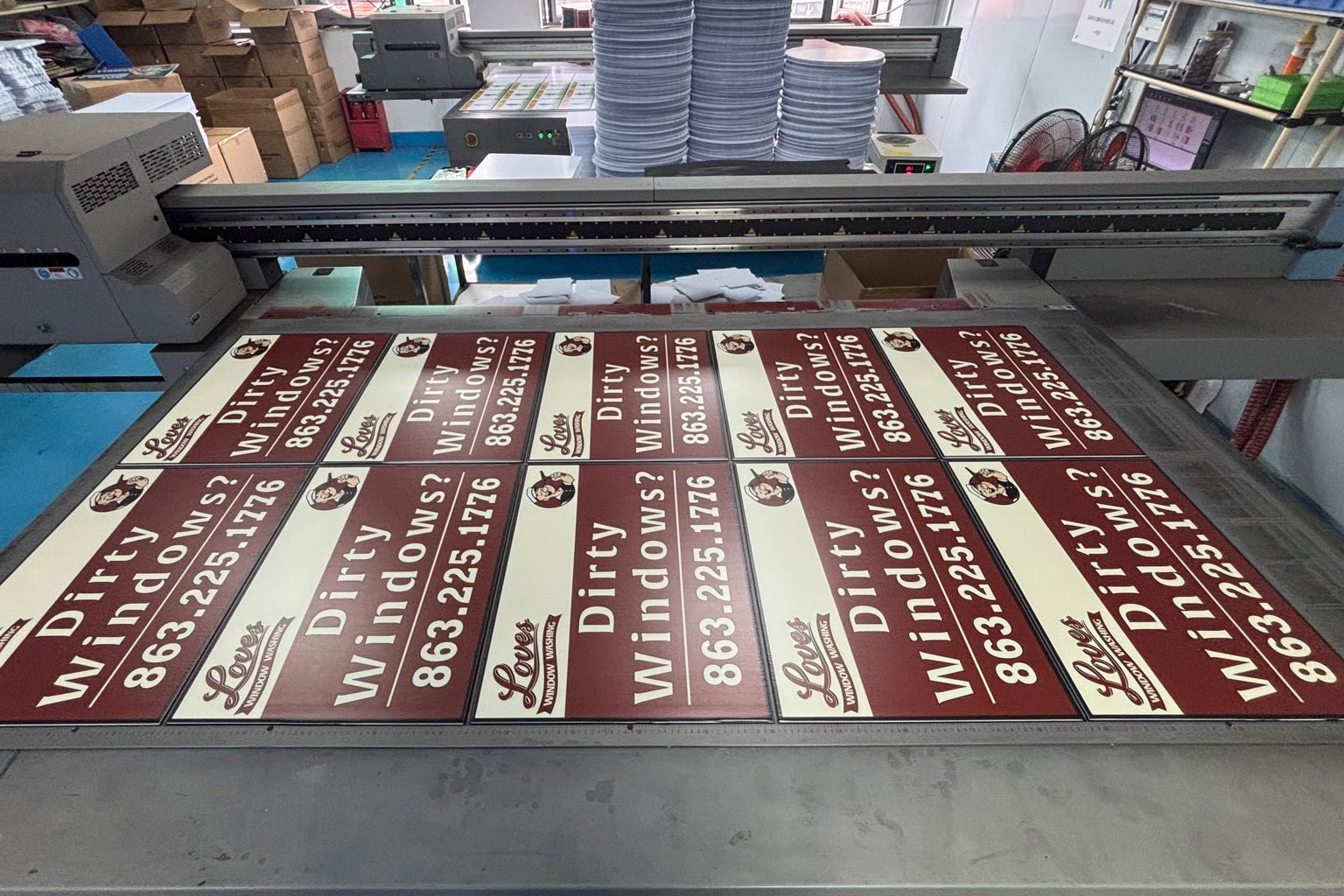
As a China-based custom yard sign manufacturer, iYardSign supports artwork review, sample evaluation, custom printing, H-stake selection, packaging, and bulk production for overseas buyers.
Quick Answer: How Should You Approve a Yard Sign Sample?
Approve a custom yard sign sample only after confirming that it matches the written order specifications. Check the artwork, text, dimensions, material, printing sides, color, flute direction, stake fit, cutting, surface condition, and packaging.
The approved sample or proof should then become the production reference. If any change is requested, it should be documented and approved again before the factory starts the complete order.
What Is a Pre-Production Yard Sign Sample?
A pre-production sample is a sign produced or prepared before mass production. Its purpose is to confirm that the buyer and manufacturer have the same understanding of the finished product.
Depending on the project, approval may involve one or more of the following:
- A digital artwork proof
- A printed color sample
- A full-size physical sign
- A corrugated plastic material sample
- An H-stake compatibility test
- A custom packaging sample
- A finished sample shipped by courier
These approval methods are not interchangeable. A digital proof can confirm layout and spelling, but it cannot fully demonstrate material stiffness, printed color, physical dimensions, stake fit, or packaging strength.
Digital Proof vs Physical Sample
| Approval method | What it can confirm | What it cannot fully confirm |
|---|---|---|
| Digital artwork proof | Layout, text, logo position, size, bleed, orientation, and quantity breakdown | Physical material, printed color, stiffness, stake fit, and packaging |
| Printed color sample | General print appearance, color relationships, and image quality | Complete sign construction if the sample is not full size |
| Full-size physical sample | Dimensions, material, printing, cutting, flute direction, and hardware compatibility | Consistency across the entire production run |
| Production sample | A product made using the intended production process | Final bulk consistency unless production inspection is also completed |
When Is a Physical Sample Recommended?
A physical sample is particularly useful when:
- You are working with a new manufacturer
- The order quantity or value is substantial
- The signs use a custom size or contour
- Brand color consistency is important
- The signs require a special material or thickness
- H-stake compatibility must be confirmed
- The design contains small text, QR codes, or detailed graphics
- The signs will be packed as retail kits
- The order includes multiple designs or locations
- The signs have a fixed event or campaign deadline
A physical sample may add time and courier cost, but it can prevent a much larger loss when an important specification has been misunderstood.
1. Check the Written Order Specifications
Do not inspect the sample from memory. Compare it with the quotation, purchase order, artwork proof, or approved specification sheet.
The written specification should identify:
- Finished width and height
- Material type and thickness
- Single-sided or double-sided printing
- Same or different artwork on each side
- Flute direction
- Standard rectangle or custom shape
- H-stake or frame requirements
- Quantity for each design
- Packaging and carton labeling
- Delivery destination and deadline
If any of these details are missing, resolve them before approving the sample.
2. Verify All Artwork and Text
Artwork errors are among the easiest problems to prevent and the most frustrating to discover after production.
Check every visible element, including:
- Company name and logo
- Phone number
- Email address
- Website address
- QR code
- Street address
- Promotional offer
- Directional arrows
- License numbers or disclaimers
- Dates and event information
Ask someone who did not prepare the original design to proofread it. A second reviewer is more likely to notice a missing digit, incorrect URL, duplicated word, or outdated contact detail.
Test QR Codes on the Printed Sample
Do not approve a QR code only because it works on the original computer file. Scan it from the printed sample using more than one phone and from a realistic distance.
- Confirm that it opens the correct destination
- Check that the destination page works on mobile devices
- Confirm sufficient contrast
- Check for clear space around the code
- Make sure the printed code is not blurred or distorted
3. Measure the Finished Sign
Confirm the physical width and height of the sample. For a custom shape, compare the finished contour with the approved cut line.
Also check:
- Whether important content is too close to the edge
- Whether the sign orientation is correct
- Whether corners and cut edges are clean
- Whether holes or mounting points are positioned correctly
- Whether the size fits the intended packaging and display location
A sign can match the artwork file while still being impractical in its actual installation environment. If possible, place the sample at the expected viewing distance before approval.
4. Confirm the Corrugated Plastic Material
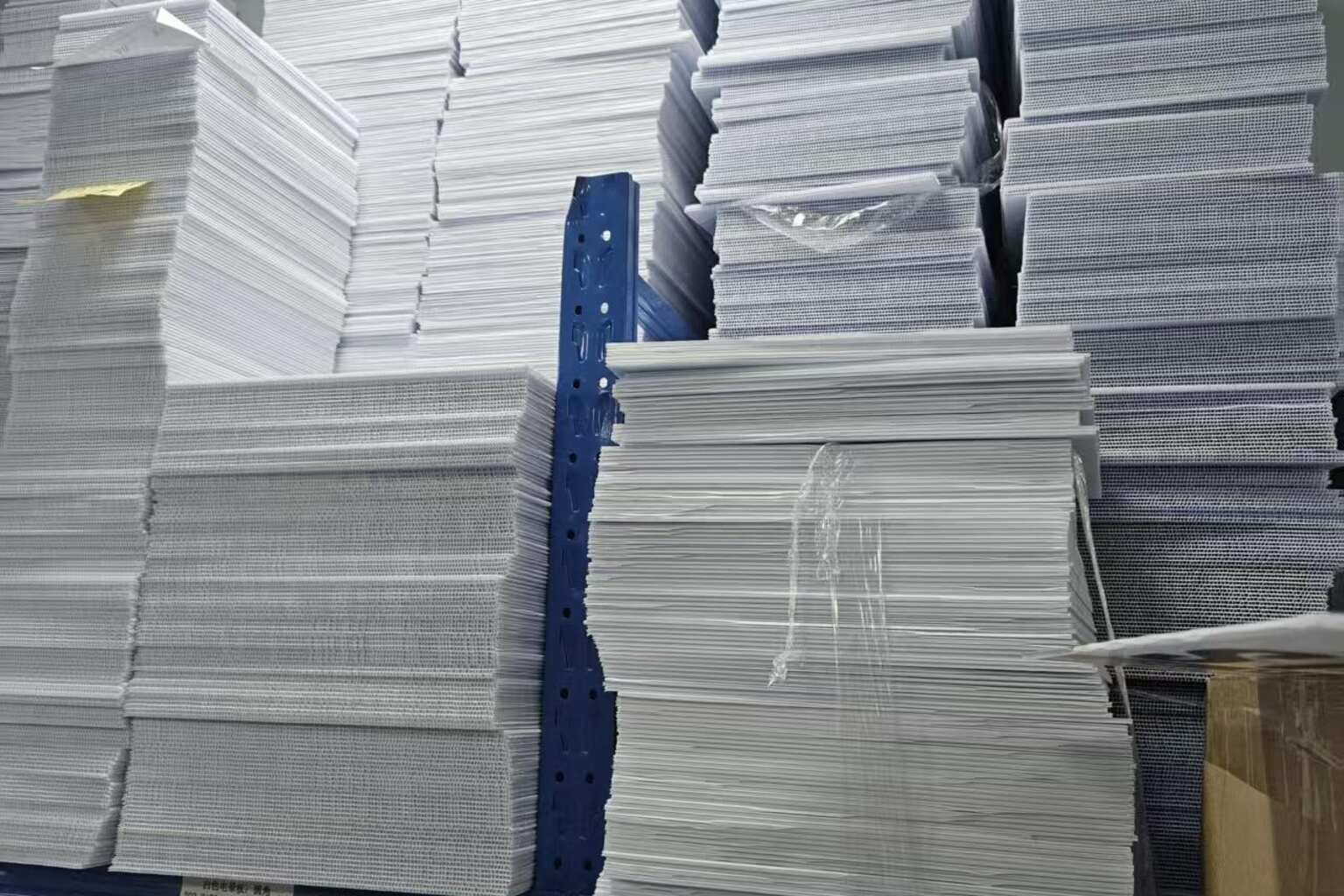
Corrugated plastic, often called coroplast, is commonly used for yard signs because it is lightweight, water-resistant, printable, and compatible with wire stakes.
Material approval should consider:
- Thickness or agreed material specification
- Sheet stiffness
- Surface condition
- Flute construction
- Color and opacity of the sheet
- Suitability for the expected outdoor use
- Compatibility with the selected hardware
Read the custom coroplast yard sign material guide to understand which material details should be confirmed before production.
5. Check the Flute Direction
Corrugated plastic contains internal channels called flutes. When a sign is installed with an H-stake, these channels need to run in the correct direction so the upper wires can enter through the bottom edge.
- Identify the top and bottom of the sign
- Confirm that the flutes run in the required direction
- Insert the actual H-stake into the sample
- Check that the stake enters without damaging the print
- Confirm that the installed sign faces the correct direction
This check is especially important for custom dimensions and artwork that could be rotated during material cutting or printing.
6. Test the H-Stake or Sign Frame
A printed sign and its hardware should be tested together as one finished system.
For H-stakes, check:
- Overall stake dimensions
- Wire fit inside the flutes
- Ease of installation
- Sign height after installation
- Whether the sign remains reasonably straight
- Whether the stake scratches or punctures the printed surface
Buyers should also confirm whether stakes are included in the quotation and how they will be packed. See the bulk yard signs with H-stakes buyer guide for a more complete hardware checklist.
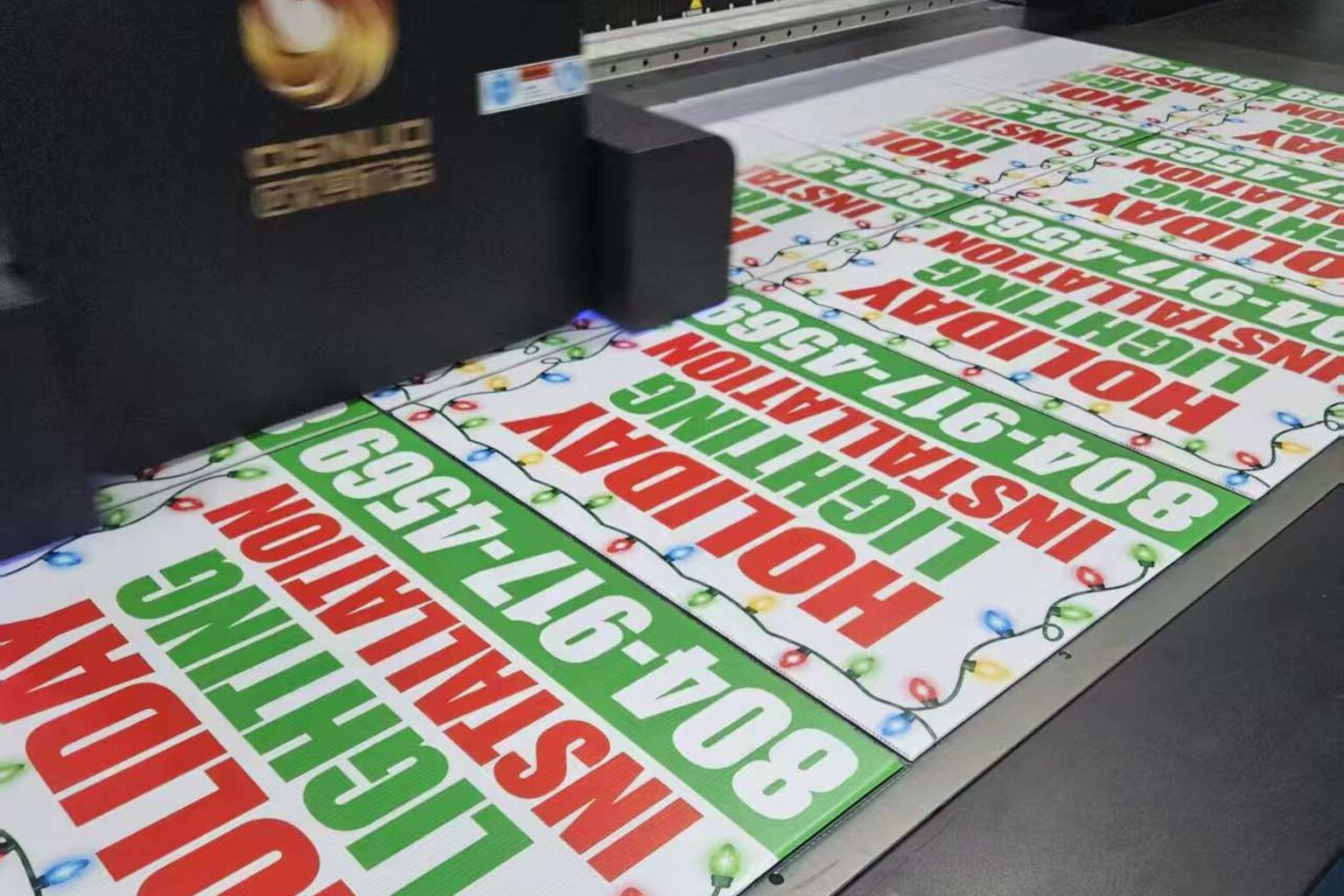
7. Inspect Print Quality
Review the sample under normal lighting and from both close range and the expected viewing distance.
- Check for sharp text and clean logo edges
- Confirm that small print is readable
- Inspect photographs and graphics
- Look for consistent ink coverage
- Check for banding or unintended lines
- Look for scratches, stains, or fingerprints
- Confirm complete printing near the edges
- Check orientation on both sides
Yard signs are generally viewed from a distance. The headline, company name, phone number, and primary call to action should be easy to identify quickly.
8. Evaluate Printed Color Correctly
Colors displayed on a phone or computer monitor are not a reliable final print standard. Screens produce light, while printed signs reflect light. Monitor brightness, color profiles, ink, material, and lighting can all affect the result.
If brand color is important:
- Provide a recognized color reference when available
- Send an approved physical sample from a previous order if practical
- Review printed color under consistent lighting
- Identify which colors are critical
- Keep the approved sample for repeat orders
Avoid instructions such as “make it brighter” or “use a stronger blue.” A documented reference gives the production team a clearer target.
9. Check Double-Sided Printing
For double-sided signs, inspect both sides independently.
- Confirm that both sides contain the approved artwork
- Make sure neither side is upside down
- Check print position on both surfaces
- Verify the direction of every arrow
- Look for ink or handling damage
- Confirm the intended viewing direction
If each side uses different artwork, label the files clearly before production. File names such as “Front-Approved” and “Back-Approved” are safer than several files containing the word “Final.”
10. Review Cutting and Finishing
Rectangular yard signs should have straight cutting, consistent dimensions, clean corners, and undamaged flutes.
For custom contour signs, inspect:
- Cut-line accuracy
- Small curves and narrow sections
- Spacing between artwork and the cut edge
- Strength of narrow extensions
- Compatibility with the mounting method
Detailed contours may look attractive in the artwork but become vulnerable during packaging, shipping, or outdoor use.
11. Approve Packaging Before Production
The product is not complete until it can arrive in usable condition.
Packaging approval should confirm:
- Number of signs per carton
- Placement of protective material
- Separate packing of metal stakes
- Protection against scratching and punctures
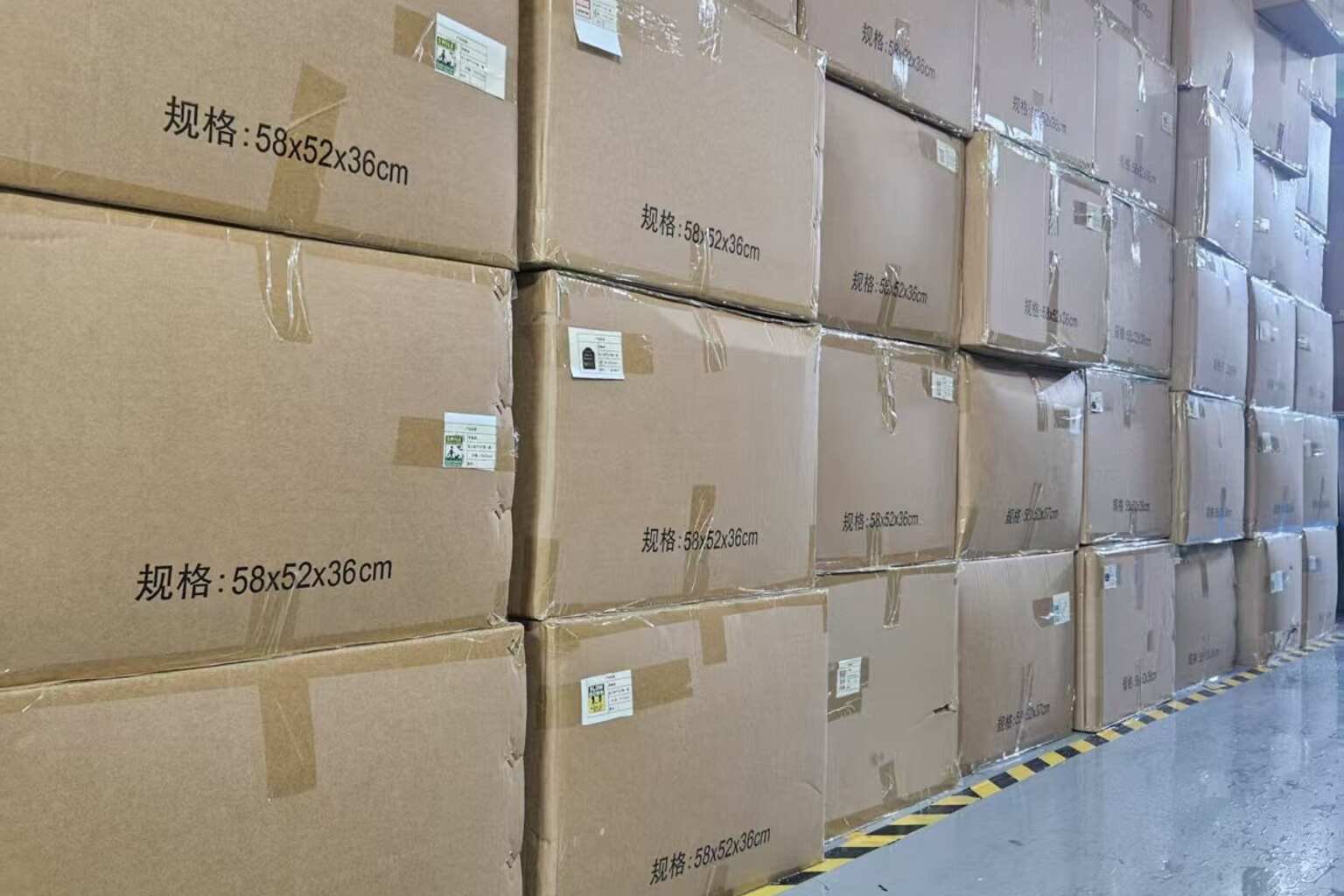
- Carton strength
- Carton dimensions and weight
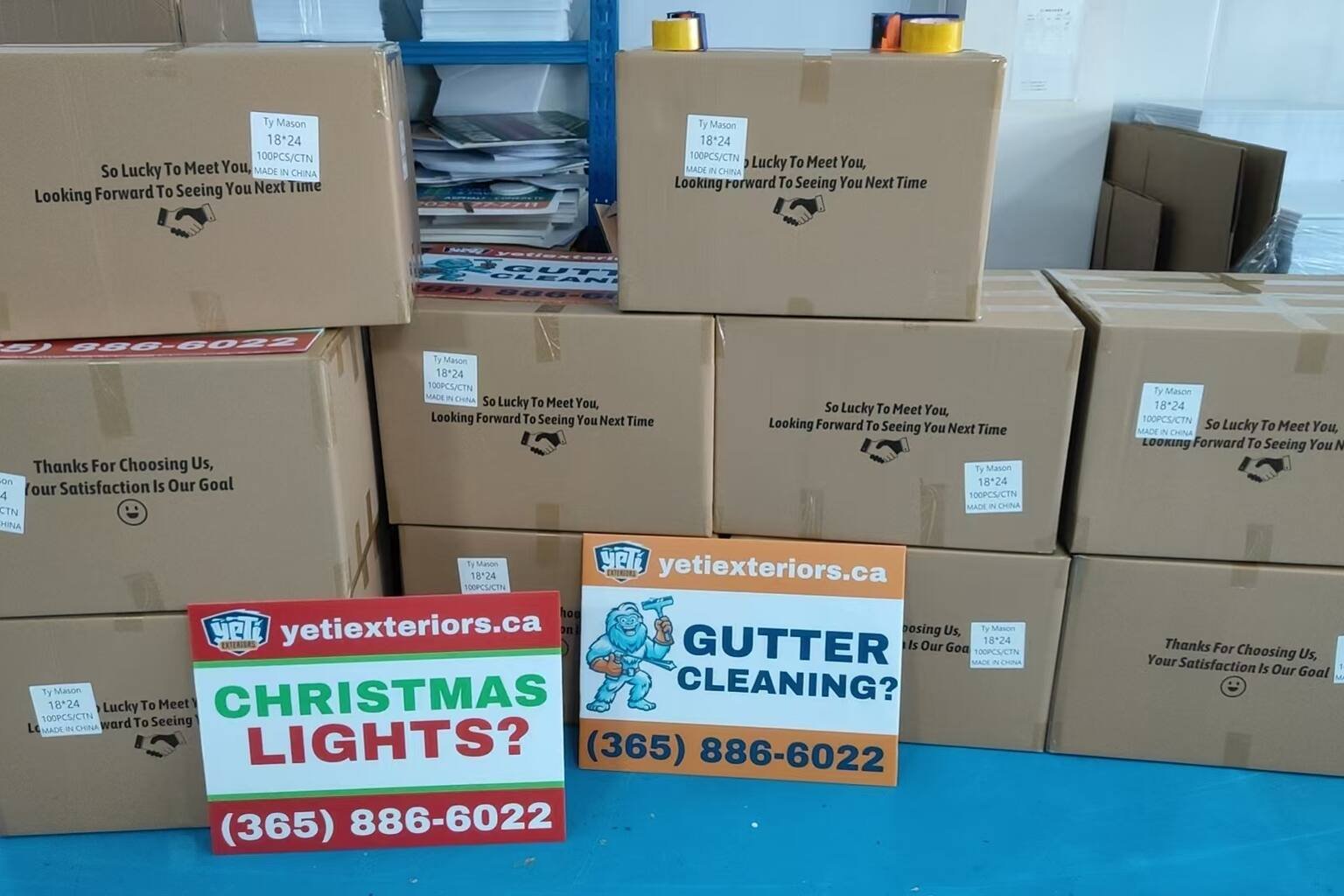
- Design labels and shipping marks
- Barcode or retail labeling when required
For multiple designs, request a packing breakdown showing the designs and quantities inside each carton. The wholesale yard sign packaging guide explains how buyers can reduce damage and missing hardware.
12. Confirm the Quantity for Every Design
Sample approval should include the complete production quantity, especially when the order contains multiple designs.
| Design | Printing | Quantity | Hardware |
|---|---|---|---|
| Design A | Double-sided | 200 signs | 200 H-stakes |
| Design B | Double-sided | 150 signs | 150 H-stakes |
| Design C | Single-sided | 150 signs | 150 H-stakes |
A written breakdown reduces the risk of receiving the correct total quantity but the wrong quantities for individual designs.
What Should a Sample Approval Record Include?
- Project or purchase order number
- Artwork file name and version
- Sample photographs
- Finished dimensions
- Material specification
- Printing sides
- Flute direction
- Hardware specification
- Packaging method
- Quantity by design
- Approved changes
- Approval date
- Name of the person giving approval
Approval should be written rather than given only through a phone call. An email or approved proof document creates a clear production reference.
What If the Sample Needs Changes?
Do not approve the sample while expecting the factory to remember an informal list of corrections.
- List every required change clearly.
- Mark the changes on the proof or photographs.
- Send corrected artwork when necessary.
- Ask the manufacturer to confirm the revisions.
- Review the revised proof or sample.
- Approve the final version in writing.
The production team should work from one clearly approved version. Sending several different “final” files increases the risk of printing outdated artwork.
Common Sample Approval Mistakes
- Approving the layout without checking contact information
- Checking a screen proof but not the physical material
- Forgetting to test the H-stake
- Ignoring flute direction
- Assuming metal stakes are included
- Approving colors from a bright phone screen
- Failing to inspect both sides
- Not testing printed QR codes
- Not confirming quantities for each design
- Approving the product but not its packaging
- Sending changes after mass production begins
Yard Sign Sample Approval Checklist
- □ Correct artwork version
- □ Company name and logo verified
- □ Phone number and website verified
- □ Printed QR code tested
- □ Finished dimensions measured
- □ Material specification confirmed
- □ Flute direction confirmed
- □ Printing sides confirmed
- □ Printed color reviewed
- □ Print quality inspected
- □ H-stake or frame tested
- □ Cutting and edges inspected
- □ Packaging approved
- □ Quantity by design confirmed
- □ Production and delivery schedule confirmed
- □ Final approval recorded in writing
Frequently Asked Questions
Is a digital proof enough for custom yard sign production?
A digital proof may be sufficient for a straightforward or repeat order when material and production specifications are already established. A physical sample is more useful for new suppliers, custom products, critical colors, special hardware, or large orders.
What should I check on a coroplast yard sign sample?
Check dimensions, material, artwork, print quality, color, cutting, flute direction, H-stake fit, printing sides, surface condition, and packaging.
Can printed colors match my computer screen exactly?
Not necessarily. Screens and printed materials reproduce color differently. Buyers with critical brand colors should provide a clear color reference and approve a printed sample.
Should I test an H-stake before production?
Yes. Insert the selected H-stake into the actual sample to confirm flute direction, fit, sign orientation, and installation height.
Does approving one sample guarantee every sign will be identical?
A sample establishes the approved reference, but bulk production should still include process control and quality inspection. Buyers should agree on important acceptance criteria before production.
Can iYardSign provide yard sign sample support?
iYardSign can review the project requirements and discuss appropriate proofing or sample options based on the product, quantity, customization, hardware, destination, and production schedule.
Approve Your Sample Before Bulk Production
A clear sample approval process protects both the buyer and manufacturer. It replaces assumptions with documented specifications and gives the production team a reliable reference for artwork, material, printing, hardware, and packaging.
iYardSign provides custom yard sign manufacturing services for business promotions, real estate companies, events, campaigns, distributors, and other bulk sign projects.
Contact iYardSign to discuss your yard sign sample and bulk production requirements.