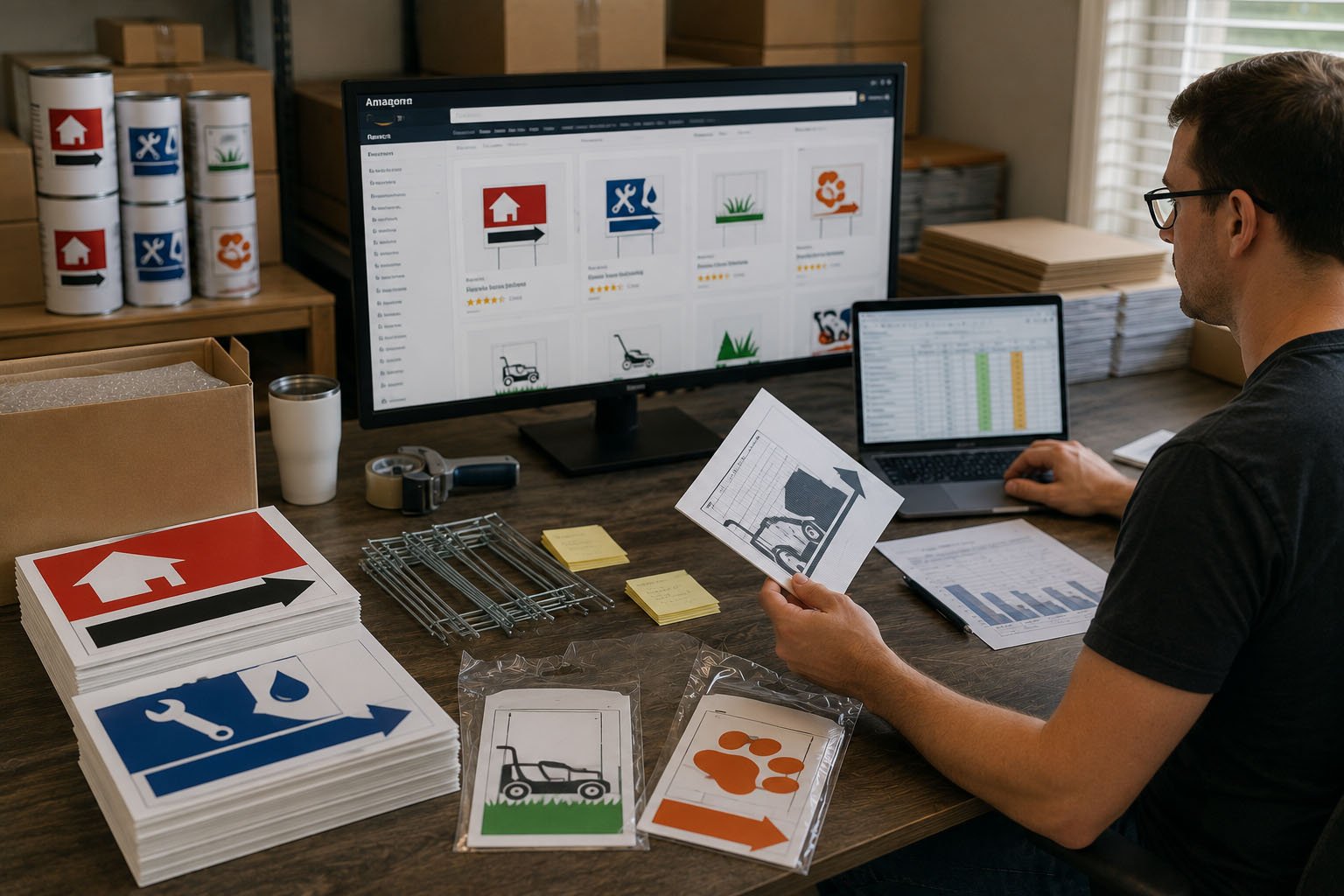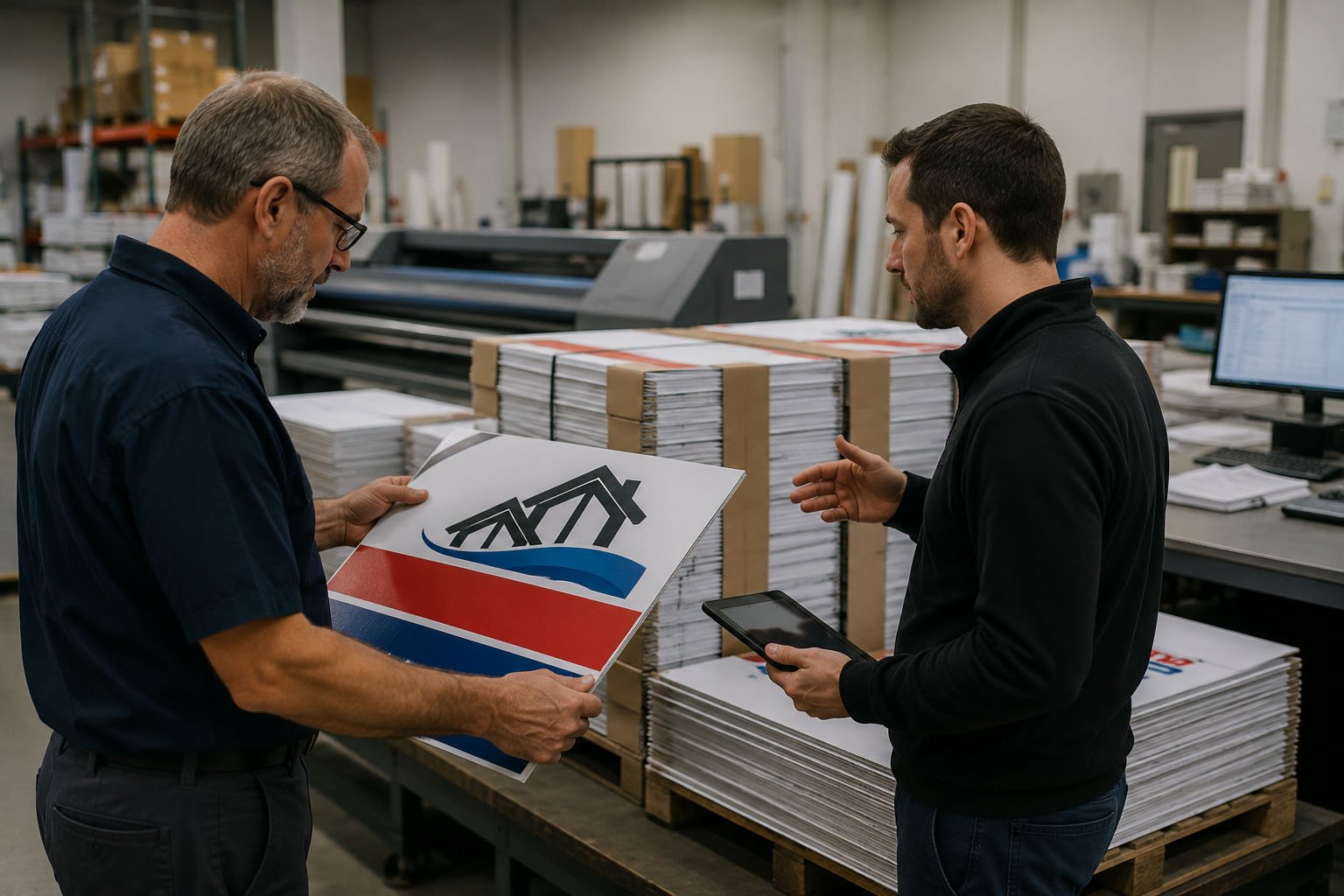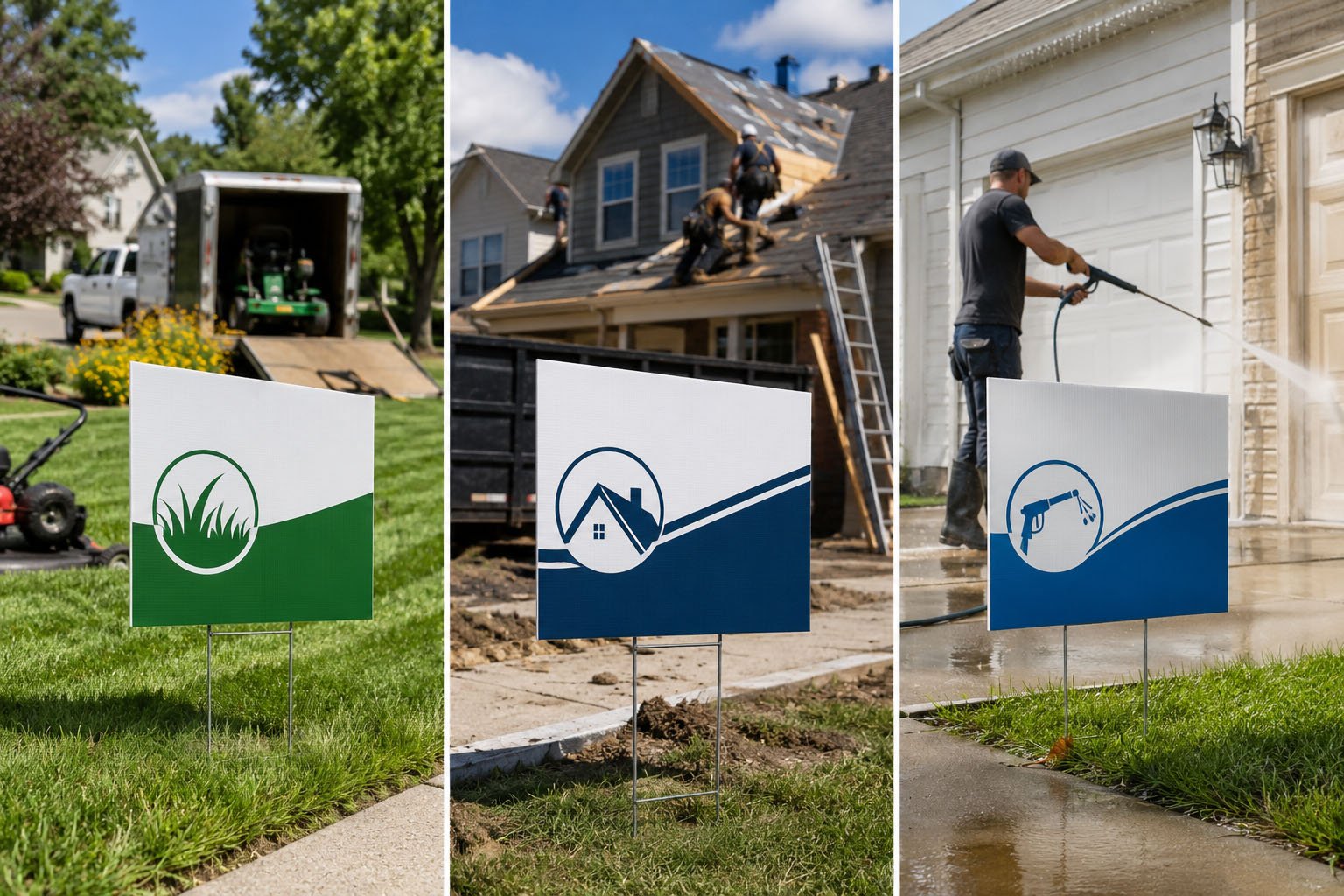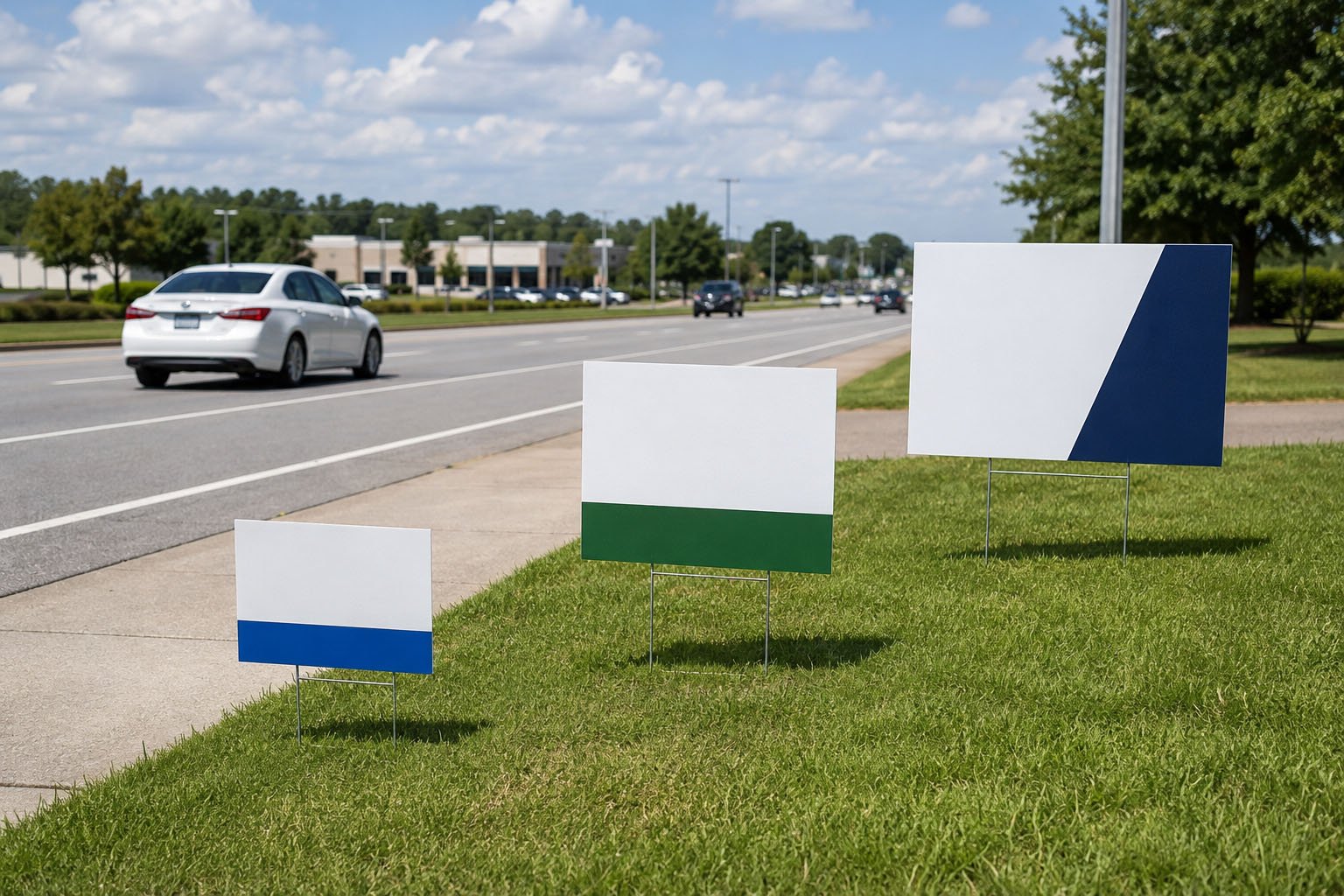
Private-Label Yard Signs for Online Printers: What to Confirm Before Listing Them

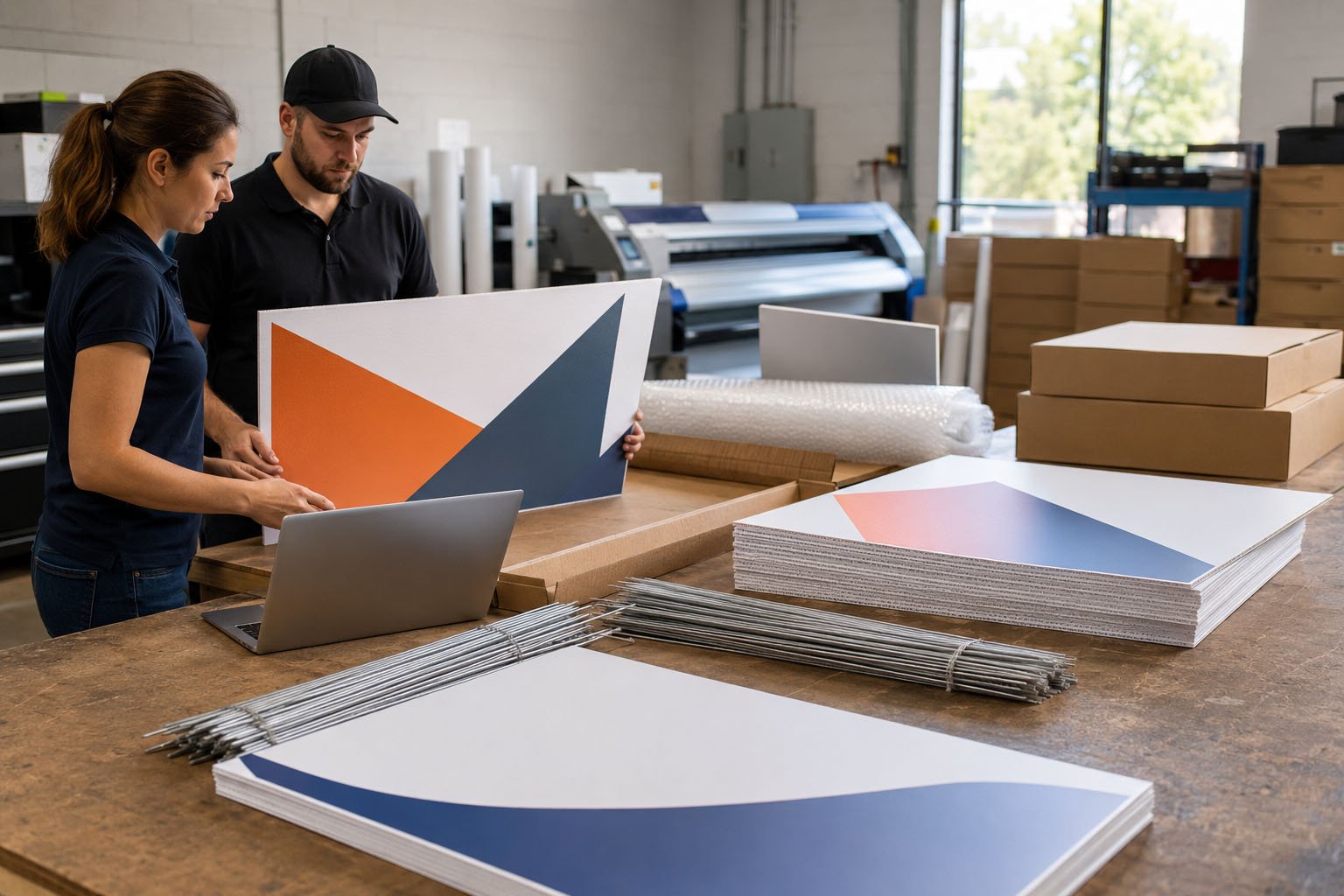
Before publishing a product page, an online printer should confirm the actual sign specification, artwork process, packaging, lead time, shipping method, customer support arrangement, and replacement policy. These details affect the customer experience long after the first order is placed.
Quick answer: Before listing private-label yard signs, confirm the finished size, corrugated plastic specification, printing sides, H-stakes, artwork proofing, sample quality, packaging, lead time, shipping cost, and supplier communication rules. Your online product page should promise only what the supplier can consistently deliver.
What Private-Label Yard Signs Mean
Private-label yard signs are manufactured by one company and sold under another company’s brand or store name. The online printer may own the product page, customer relationship, pricing, artwork workflow, and marketing, while the factory handles production.
Depending on the agreement, private-label support may include:
- Neutral cartons without the factory’s marketing materials
- Custom labels or packaging instructions
- Product specifications for the online catalog
- Artwork proofing before production
- Multiple sizes and designs
- H-stakes packed with the signs
- Direct shipment to the reseller or end customer
These services are not automatically included in every factory quotation. The online printer should confirm the exact arrangement before using the term “private label” on its internal purchasing documents.
Why Online Printers Need More Than a Unit Price
A low factory price can look attractive until the online printer calculates the complete product cost.
The final cost may also include:
- Printing charges
- H-stakes or frame costs
- Artwork preparation
- Sample fees
- Packaging
- Carton labels
- International freight
- Destination charges
- Storage and handling
- Replacement or remake costs
Online printers should calculate the cost of a finished, sellable product rather than comparing only the sign panel price.
For a more complete procurement review, see the guide to sourcing custom yard signs from China without hidden costs.
Confirm the Product Specification Before Creating the Listing
The product page should describe the exact item the customer will receive. Avoid creating a listing from an incomplete quotation or a general factory catalog.
Confirm:
- Finished sign dimensions
- Panel orientation
- Corrugated plastic material
- Available thickness options
- Single-sided or double-sided printing
- Color and print coverage
- H-stake or frame options
- Packaging unit
- Quantity per carton
- Approximate carton dimensions and weight
Make sure the way dimensions are written is consistent. Some suppliers describe the same panel using width by height, while others use height by width. The listing, artwork template, quotation, and production proof should use the same orientation.
Decide Which SKU to List First
Online printers do not need to list every possible size and shape on the first day. A smaller catalog can be easier to explain, produce, pack, and support.
A first product range may include:
- One common residential size
- One larger roadside or job-site size
- Single-sided printing
- Double-sided printing as a separate option
- Signs with H-stakes
- Signs without stakes
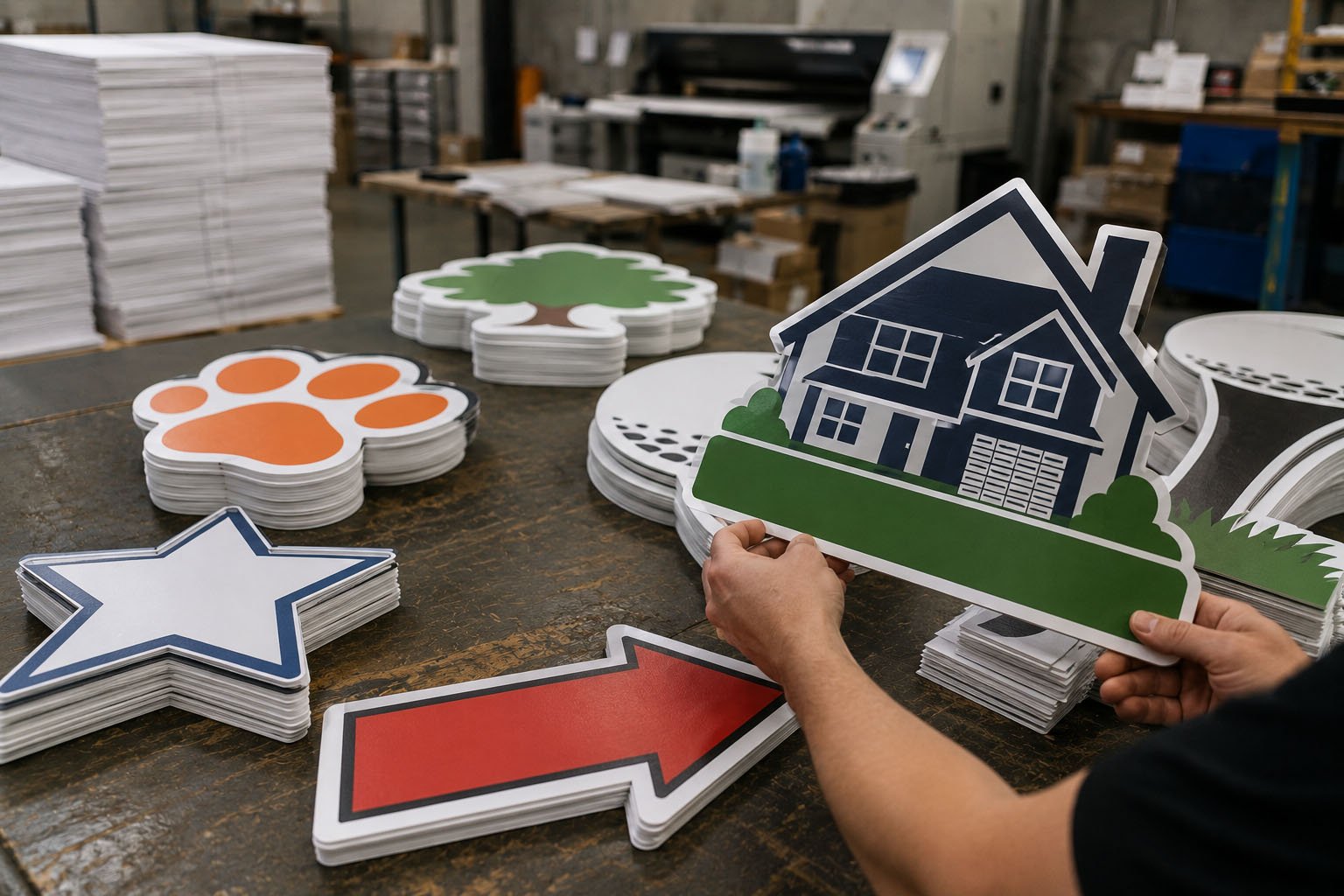
- A limited group of standard shapes
After receiving customer feedback, the online printer can add additional sizes, custom shapes, or packaging options.
Too many combinations can create confusion in the shopping cart and increase the chance of incorrect orders. Product options should be added only when the fulfillment team can manage them reliably.
Build a Clear Artwork Workflow
Custom yard signs are different from standard products because the customer’s artwork affects the final result. The online printer should explain what happens after an order is placed.
The workflow should answer:
- What file formats are accepted?
- Can customers upload artwork during checkout?
- Can the team adjust artwork files?
- Will the customer receive a proof?
- How many proof revisions are included?
- When does production begin?
- What happens if the customer does not approve the proof?
A clear proofing process protects both the online printer and the end customer. It also gives the factory an approved reference before production starts.
Do not promise “same-day production” or “instant printing” unless the complete artwork and approval process supports that promise.
Use Accurate Product Images and Claims
Product images should represent the actual item, not a generic sign that uses a different material, size, stake, or print process.
Images should show:
- Front and back printing when applicable
- Actual panel thickness
- H-stake installation
- Sign scale in an outdoor setting
- Edge and corner details
- Packaging format when relevant
- Different size comparisons
Product descriptions should also avoid unsupported claims such as “indestructible,” “permanent,” or “guaranteed for every climate.” Outdoor performance depends on sunlight, wind, moisture, handling, installation, and the printed surface.
Precise wording creates more trust than exaggerated wording.
Confirm Private-Label Packaging Requirements
Private-label packaging should be discussed before the order is placed. Some online printers want neutral cartons. Others want a custom label, branch label, packing slip, or barcode.
Confirm:
- Whether the carton contains factory marketing materials
- Whether the supplier name appears on the outer packaging
- Whether custom carton labels are available
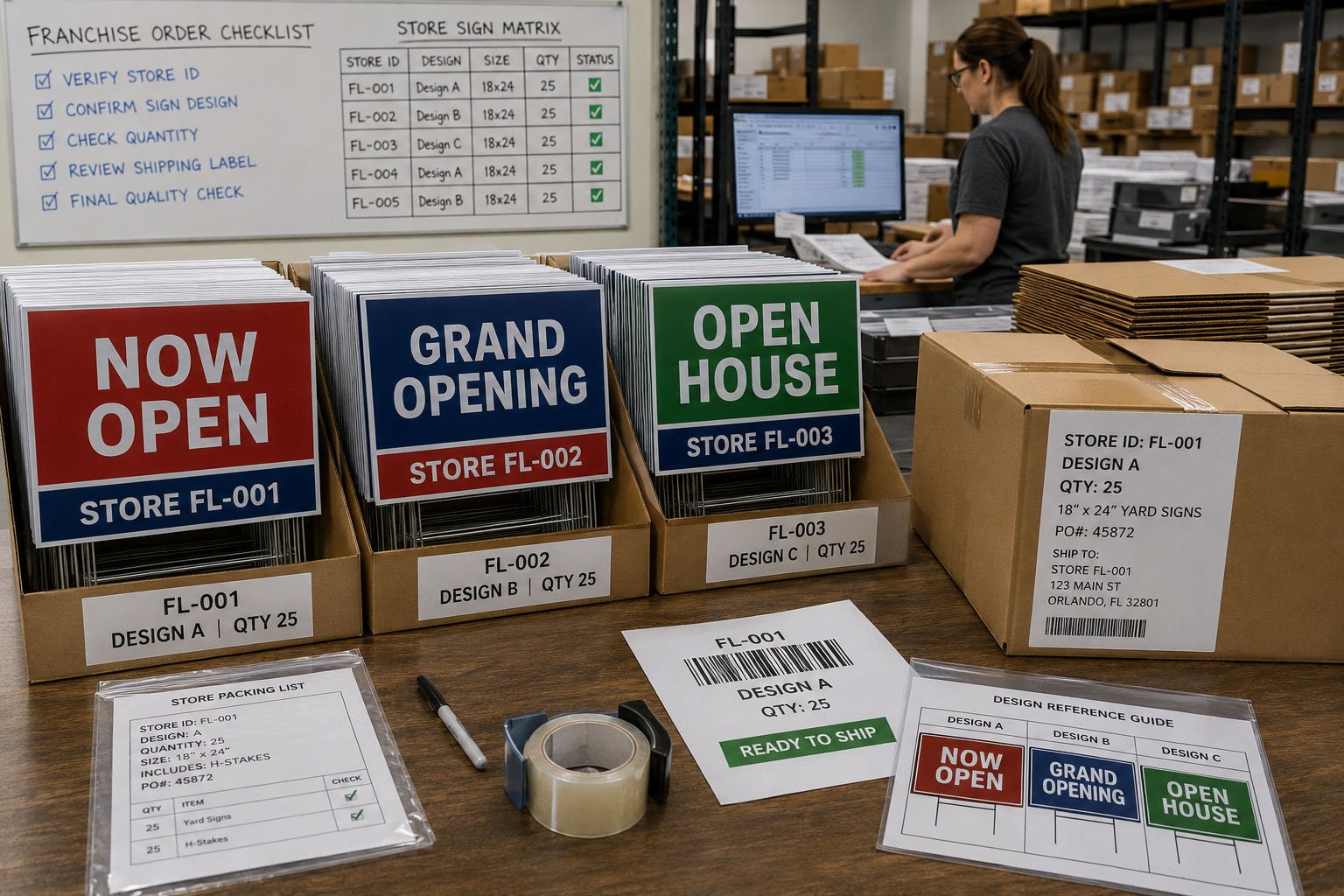
- Whether signs can be packed by SKU or design
- Whether stakes are packed together or separately
- Whether the end customer can receive direct shipment
- Which documents accompany the shipment
Packaging is part of the customer’s impression of the online printer. A product sold under one brand should not arrive with unrelated supplier information unless that arrangement has been agreed in advance.
Plan Shipping Before Publishing Delivery Times
An online product page may show a production time, shipping time, or estimated delivery date. These numbers should be based on the complete order process rather than only the factory production schedule.
Consider:
- Artwork review time
- Customer proof approval time
- Production time
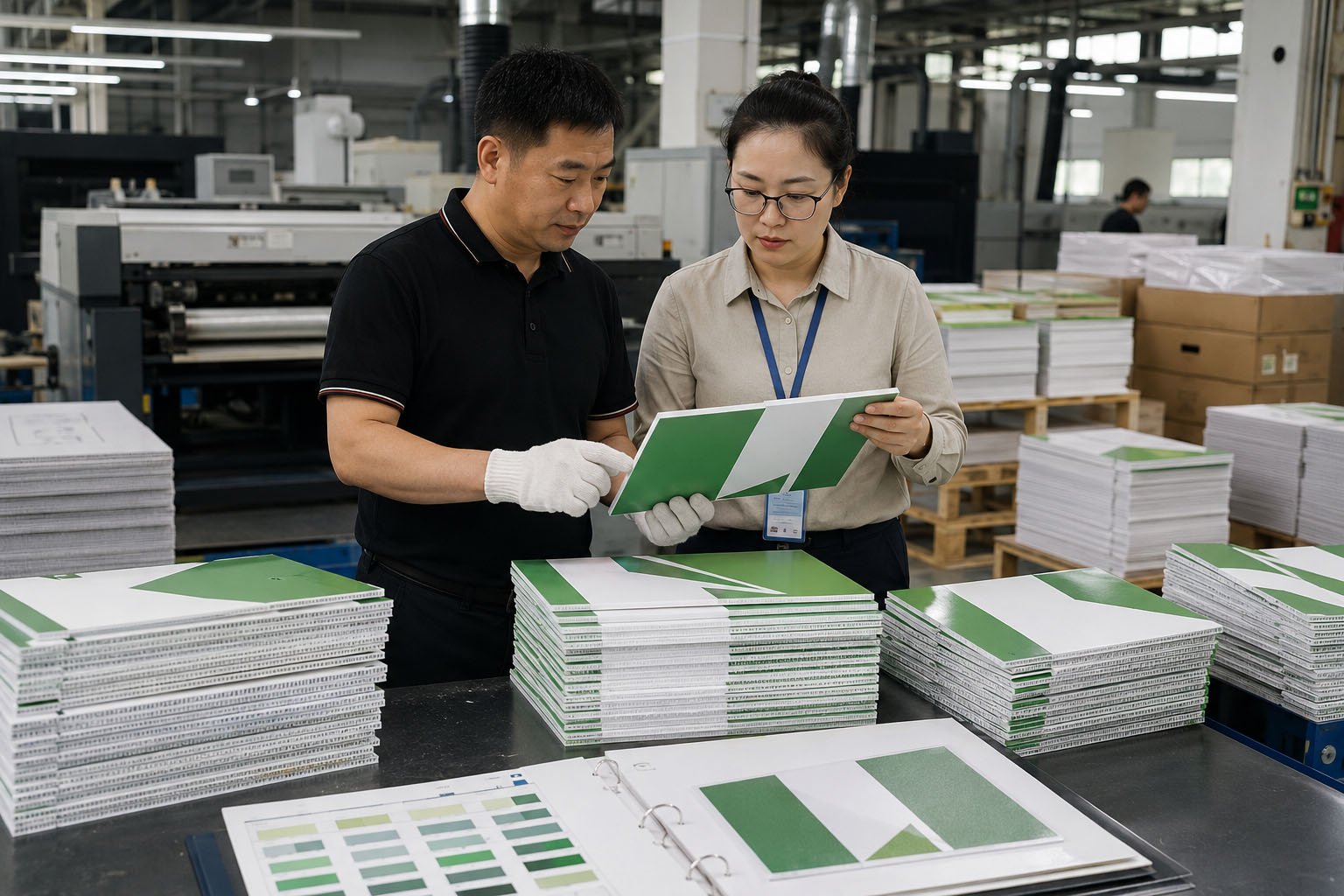
- Quality inspection
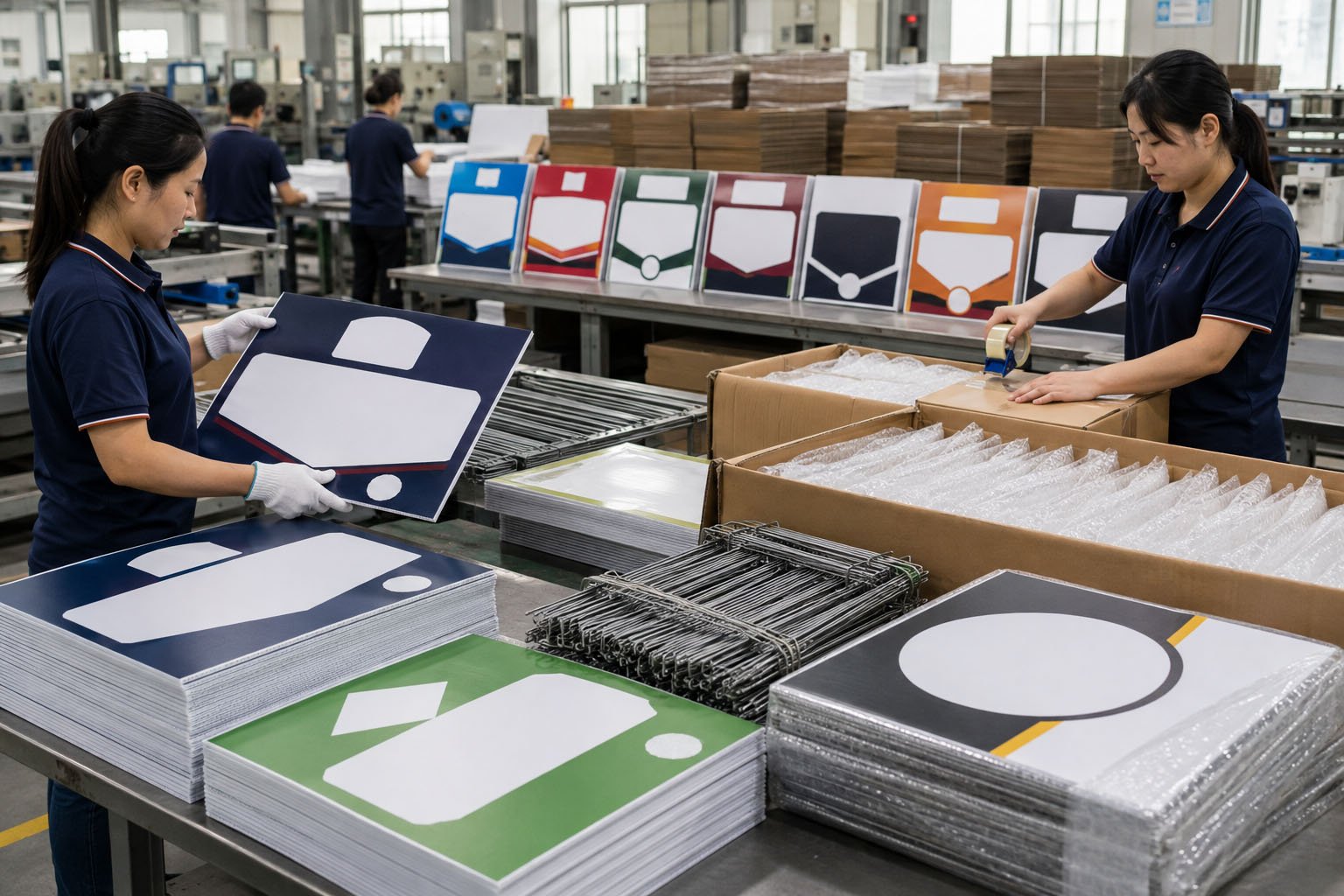
- Packing and carton preparation
- Export handling
- International transit
- Destination delivery
- Customs or carrier delays
For large or oversized panels, packaging dimensions may affect freight cost and available shipping methods. Review the bulk yard sign shipping and packaging guide before setting delivery promises on the product page.
Test the Product Before Launching It
A sample order is useful before adding private-label yard signs to a public catalog. The test should evaluate the full experience rather than only the printed panel.
Check:
- Actual sign dimensions
- Panel stiffness
- Print clarity and color
- Small text readability
- H-stake fit
- Carton condition
- Label accuracy
- Packaging protection
- Delivery time
- Communication during production
If possible, place a sample order using the same artwork upload and proofing process that customers will use on the website. This can reveal problems that are not visible during a factory email discussion.
Protect Customer Information and Communication
An online printer should clarify how customer information is handled when orders are produced by an outside factory.
Agree in advance:
- Who receives the artwork files
- Who communicates proof changes
- Whether the factory contacts the end customer
- Who handles delivery questions
- Who receives damage or shortage reports
- How replacement requests are processed
- Whether customer information is used only for production
Clear communication rules reduce confusion and help the online printer remain responsible for the customer experience.
Set a Realistic Customer Service Policy
Before listing the product, decide how the online printer will handle common issues.
Possible customer questions include:
- Can I change my artwork after ordering?
- Can I order several designs together?
- Are H-stakes included?
- Can I order signs without stakes?
- Can the sign be printed on both sides?
- How long will production take?
- What happens if a carton arrives damaged?
- Can I reorder the same design later?
The answers on the website should match the factory’s actual production and fulfillment capabilities. A clear policy is usually more valuable than a broad promise that is difficult to maintain.
How iYardSign Supports Online Print Resellers
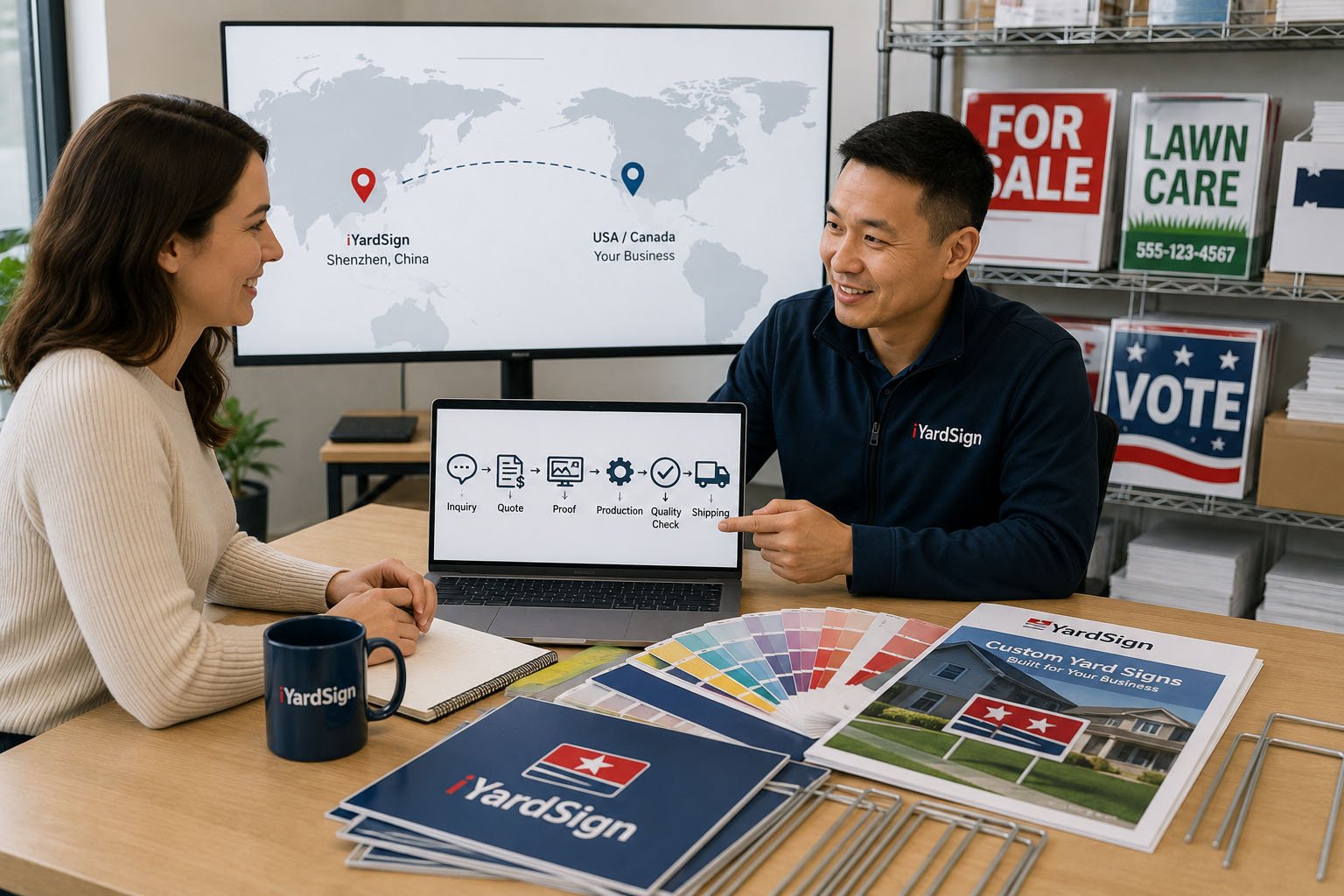
iYardSign is a China-based custom yard sign manufacturer supporting online printers, local print shops, resellers, service businesses, real estate teams, events, campaigns, and other bulk buyers.
An online printer can discuss:
- Corrugated plastic yard sign specifications
- 18×24 and 24×36 product options
- Custom shapes and sizes
- Single-sided and double-sided printing
- H-stake compatibility
- Artwork proofing
- Multiple design orders
- Neutral or customized packaging
- Carton labels and SKU separation
- Shipping to US and Canadian customers
For product selection, visit the custom yard signs product category.
Private-Label Yard Sign Launch Checklist
- Choose the first sizes and product options.
- Confirm panel material and thickness.
- Confirm printing sides and color requirements.
- Confirm H-stake availability and compatibility.
- Create the artwork upload and proofing workflow.
- Request a physical sample.
- Confirm packaging and label requirements.
- Calculate the complete delivered cost.
- Set realistic production and delivery times.
- Define customer service and replacement procedures.
- Publish only specifications that the supplier can consistently deliver.
Frequently Asked Questions
Can an online printer sell yard signs under its own brand?
Yes. The online printer can manage the storefront, pricing, customer service, and artwork workflow while a factory produces the signs. Packaging and communication arrangements should be confirmed before the first order.
What is the difference between private-label and ordinary wholesale yard signs?
Ordinary wholesale signs may arrive with standard supplier packaging and product information. Private-label orders are planned so the reseller can sell the product under its own brand or storefront, subject to the agreed packaging and fulfillment arrangement.
Should private-label yard signs include H-stakes?
That depends on the target customer and product listing. If the sign is marketed as ready for outdoor installation, the listing should clearly state whether H-stakes are included, optional, or sold separately.
Can one order include several private-label sign designs?
Many factories can produce several designs in one order, but each design should have a clear file name, quantity, proof, and packing instruction.
Should online printers test samples before listing the product?
Yes. A sample helps confirm the actual material, print quality, stake fit, packaging, and delivery experience before the product is promoted to customers.
Prepare Your Private-Label Yard Sign Program
Share your planned product sizes, artwork workflow, packaging requirements, quantity, and delivery model. iYardSign can help you review the production details before listing the product online.