Yard Sign Materials for Lawn Care, Roofing, and Pressure Washing Companies

Quick answer: Corrugated plastic is a practical material for many temporary and repeat-use yard signs because it is lightweight, easy to transport, and suitable for outdoor promotional applications. The final specification should also consider printing method, panel thickness, wind exposure, moisture, reuse, stake compatibility, and expected service period.
Why Different Service Businesses Need Different Yard Sign Materials
A yard sign is exposed to more than sunlight. Depending on the job site, it may also encounter rain, irrigation water, pressure spray, mud, dust, lawn equipment, wind, vehicle loading, and repeated installation.
For bulk buyers, the real question is not simply “Which yard sign material is cheapest?” A better question is:
What material and construction will give the sign enough performance for the expected use without creating unnecessary production, storage, or shipping costs?
Before selecting a material, evaluate:
- How long the sign will remain outdoors
- Whether the sign will be moved between locations
- Whether it will be exposed to direct sun
- Whether water or cleaning chemicals may contact the sign
- How much wind the installation area receives
- Whether the sign will be reused by different crews
- Whether the sign needs an H-stake or another support system
Corrugated Plastic Yard Signs: Why They Are Commonly Used
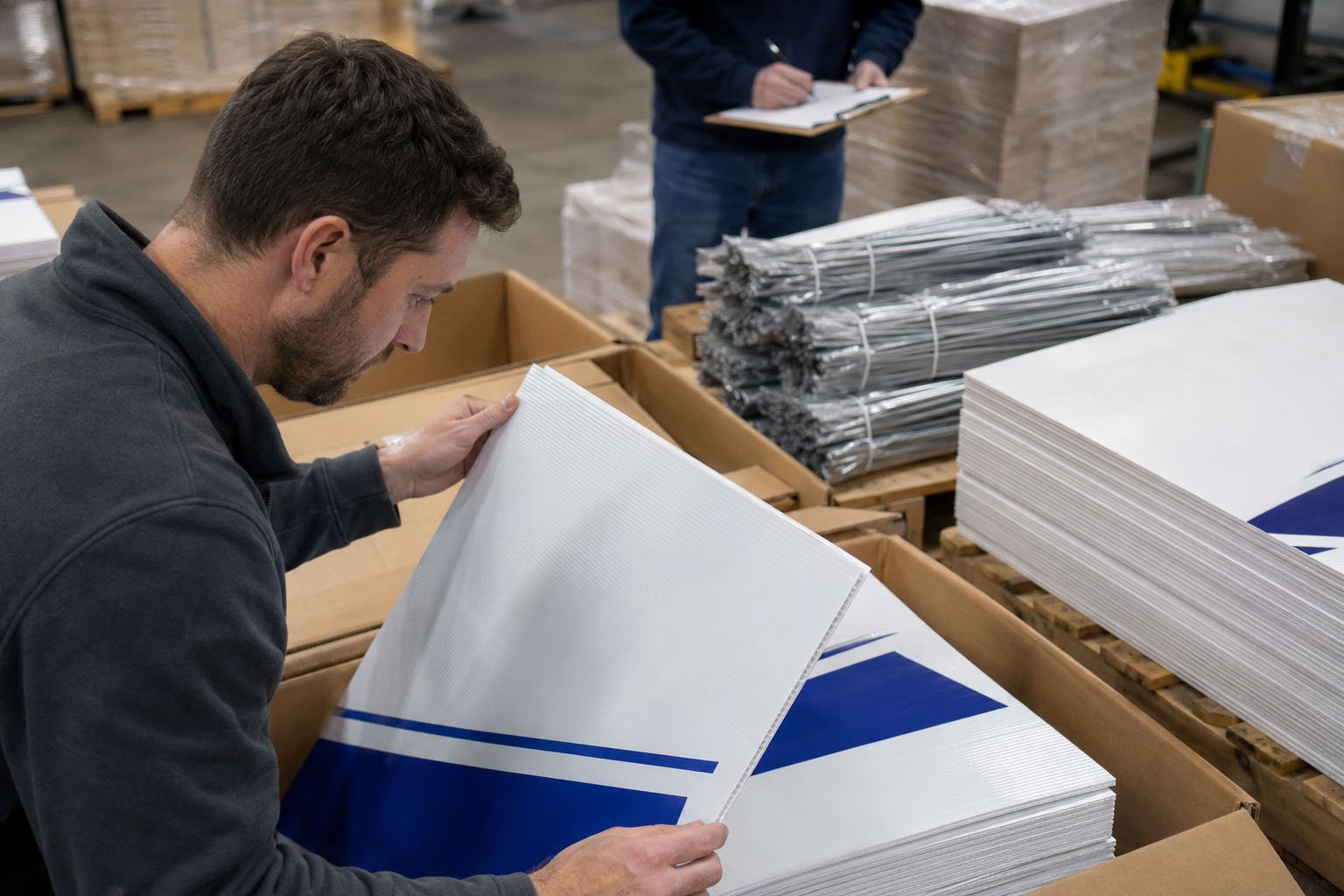
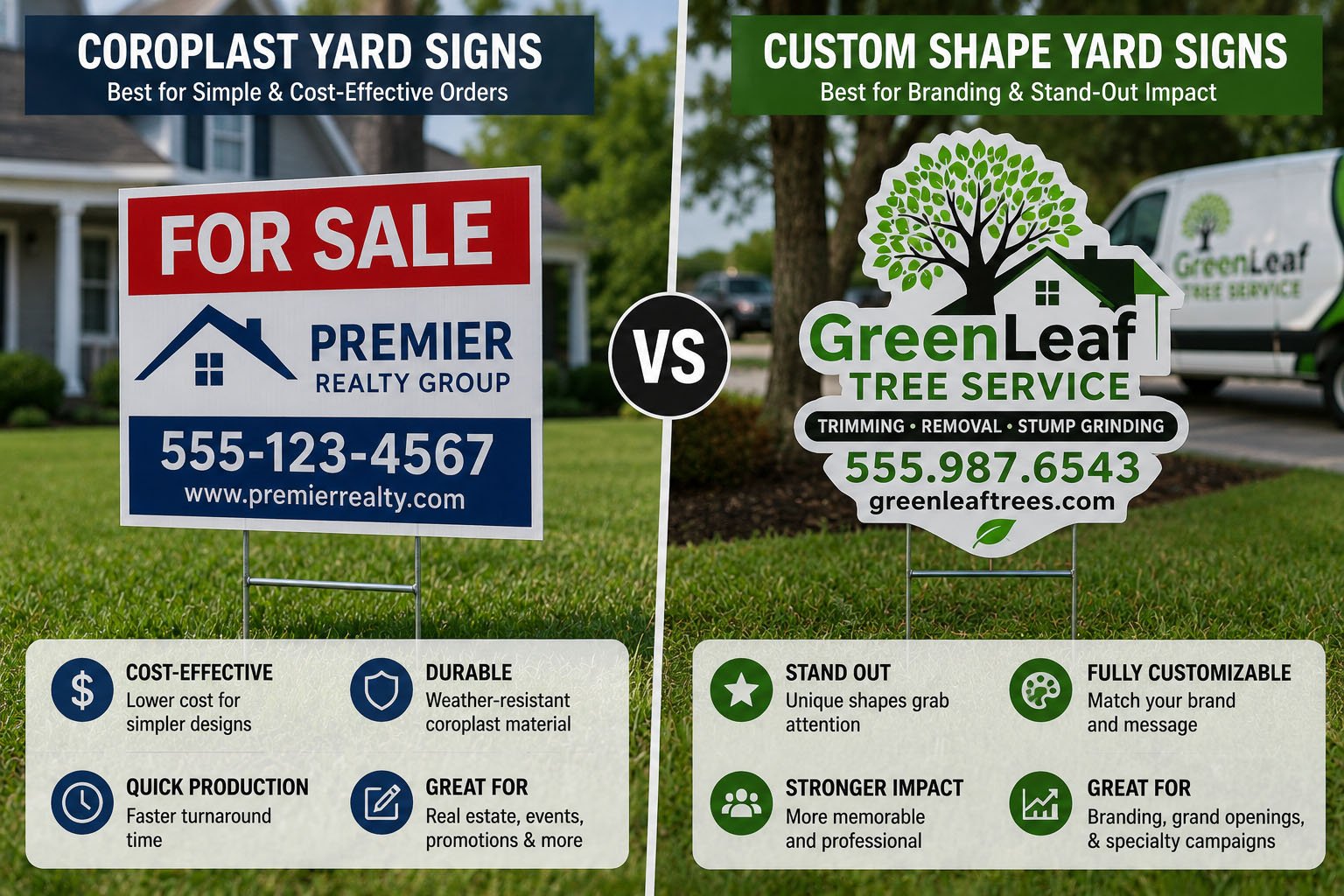
Corrugated plastic, often called coroplast in the North American sign industry, is widely used for temporary and promotional yard signs.
It is often considered for bulk programs because it can offer a useful balance of:
- Light weight
- Easy handling
- Practical outdoor use
- Efficient stacking and storage
- Compatibility with common sign stakes
- Suitability for multiple designs
- Relatively simple replacement and distribution
However, corrugated plastic is not a single universal specification. Buyers should confirm the actual panel thickness, flute structure, printing process, color quality, edge finish, and stake compatibility with the supplier.
For a broader comparison of size and material decisions, review our guide to choosing the right yard sign size and material.
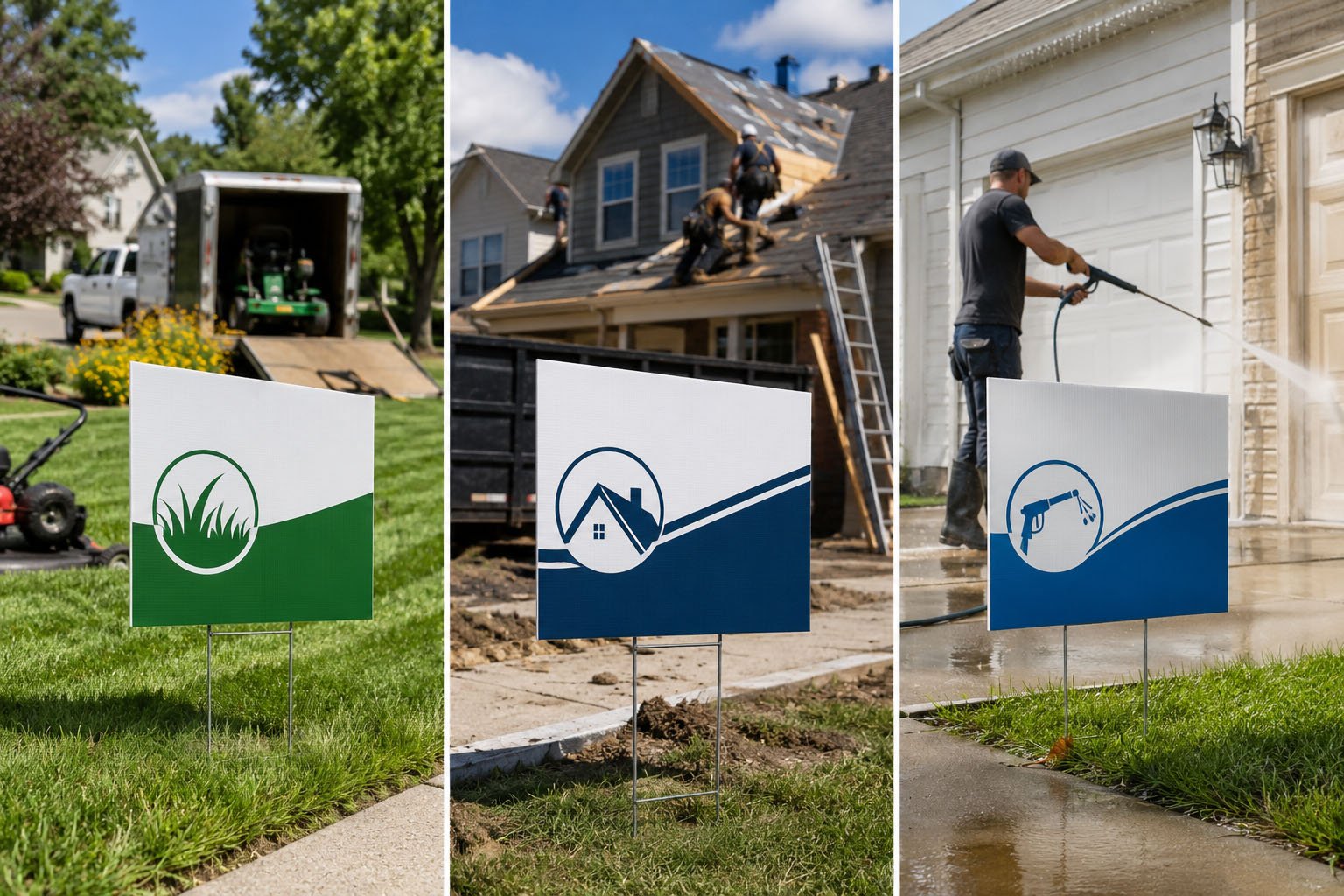
Yard Sign Material for Lawn Care Companies
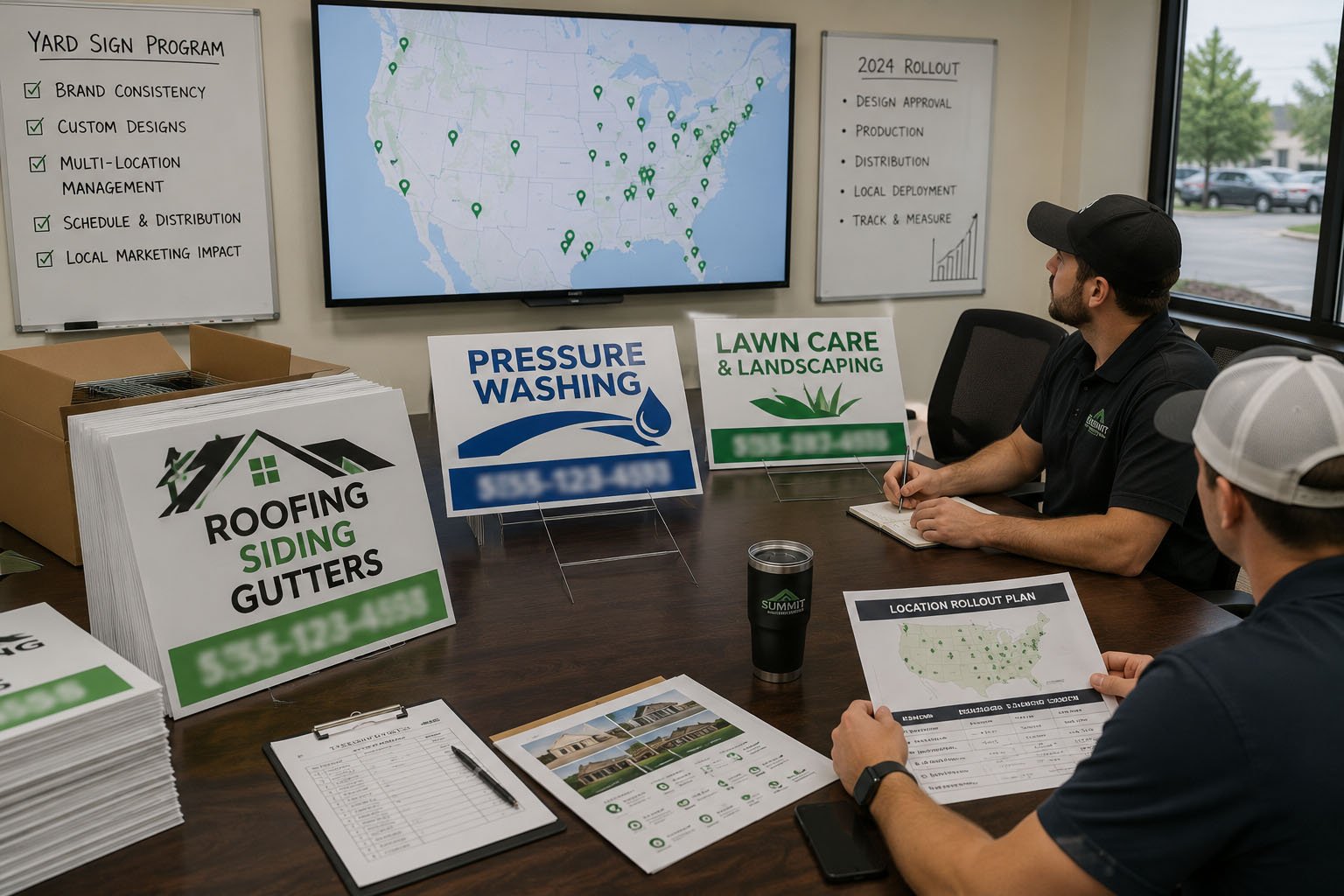
Lawn care and landscaping companies often use signs at active job sites, completed properties, seasonal service locations, and neighborhood routes.
The signs may need to be:
- Light enough for crews to carry in quantity
- Easy to install in residential soil
- Resistant to normal outdoor moisture
- Clear enough to identify the company from the street
- Easy to remove and reuse at another property
For many lawn care programs, a corrugated plastic panel with a compatible H-stake is a practical starting point. The best size depends on the distance from the road and the amount of information on the sign.
A lawn care sign usually performs better when it focuses on one primary message, such as:
- Lawn treatment in progress
- Landscape design and maintenance
- Organic lawn care
- Free lawn evaluation
- Seasonal service promotion
Long service lists can make a sign harder to read. For a mobile crew program, it is usually more useful to create a clear reusable design than to place every available service on one panel.
Yard Sign Material for Roofing Companies
Roofing signs are often installed at active residential or commercial projects. They may remain in place longer than a typical lawn care sign and may need to be visible from a greater distance.
Roofing companies should review:
- Required visibility from the road
- Expected installation period
- Exposure to wind around open properties
- Panel size and support method
- Whether a phone number or website must be readable from moving vehicles
- Whether the sign will be reused on several job sites
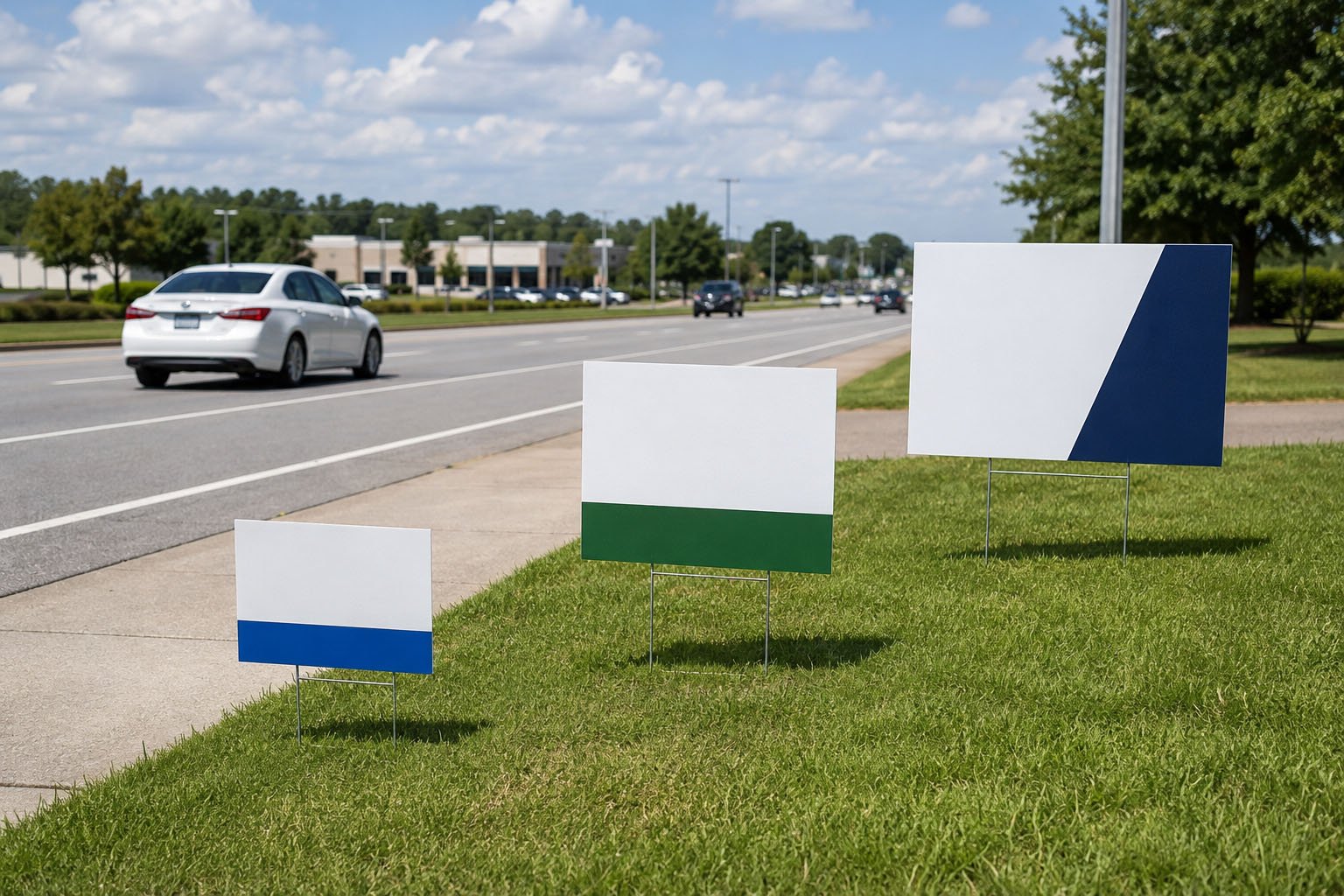
For a roadside roofing project, a larger panel may provide more usable space for the company name, service message, and contact information. However, increasing the panel size can also increase wind load, carton dimensions, and freight costs.
Do not select a larger sign only because it looks more impressive in a product photo. First confirm the installation distance, expected use period, and available support method.
Yard Sign Material for Pressure Washing Companies
Pressure washing signs are often used around driveways, sidewalks, fences, commercial properties, and residential exteriors. These locations may involve water spray, wet ground, mud, detergents, and repeated handling by crews.
For pressure washing companies, material planning should consider:
- Contact with water during or after the service
- Whether the sign is placed near a driveway or walkway
- How quickly the sign must be removed after the job
- Whether wet signs will be stacked in a vehicle
- Whether the printed surface needs to be wiped or cleaned
- Whether the sign will be used for one job or multiple jobs
A water-resistant sign panel does not automatically mean that every printed surface will remain unchanged under every condition. Buyers should ask about the printing process, ink performance, surface handling, and recommended cleaning method.
It is also important to allow wet signs to dry before tightly packing them for storage. This helps reduce the risk of trapped moisture, surface marks, and packaging problems during repeated use.
Material Performance Depends on Printing as Well
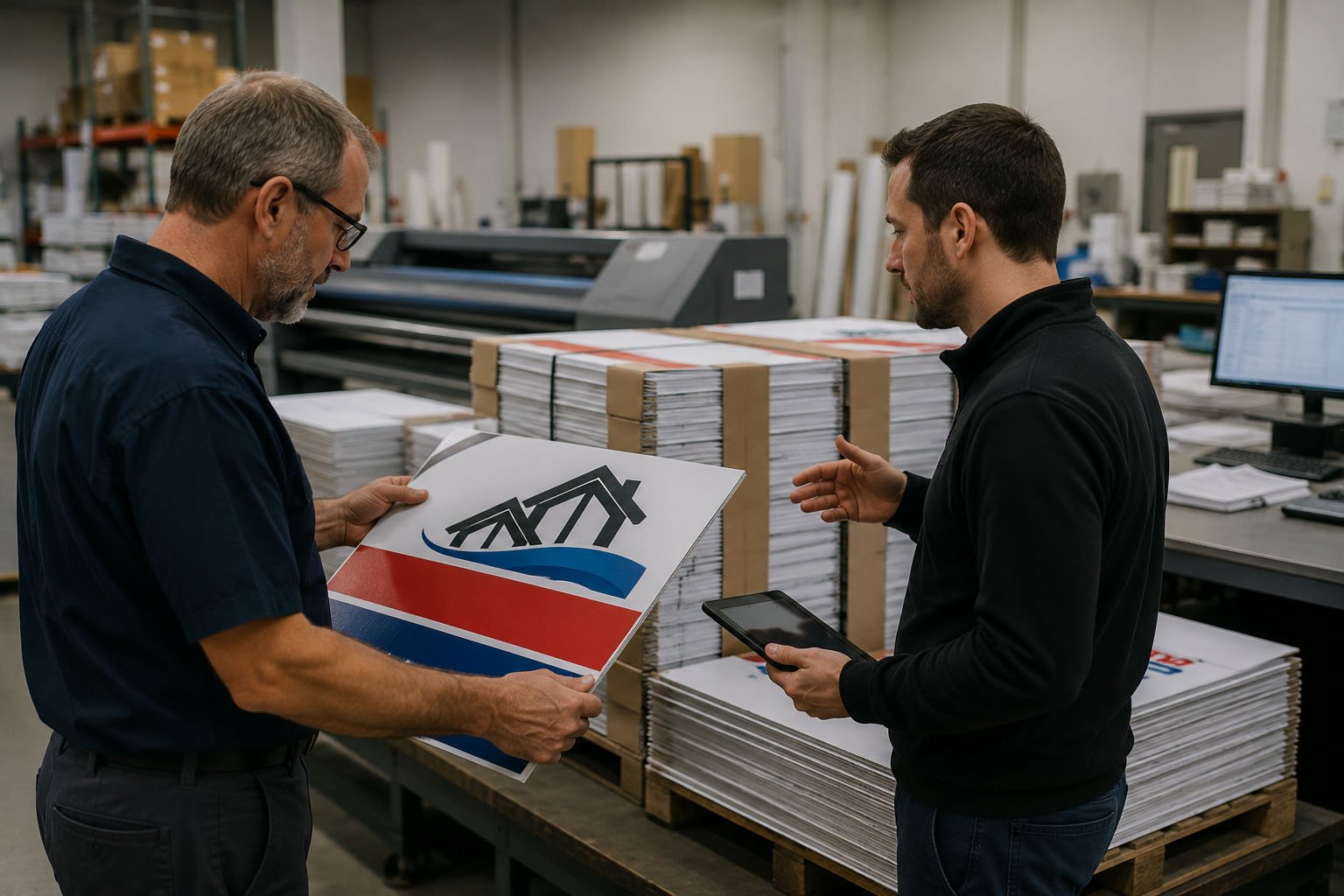
Outdoor performance is determined by the combination of the panel material and the printed surface. A strong panel with a poorly prepared print specification may still create customer complaints.
When approving a custom yard sign, review:
- Color consistency between the proof and production sample
- Small text readability
- Logo edges and fine details
- Print coverage near the panel edges
- Single-sided or double-sided printing
- Surface marks, scratches, or uneven areas
- Whether the artwork contains gradients or very fine lines
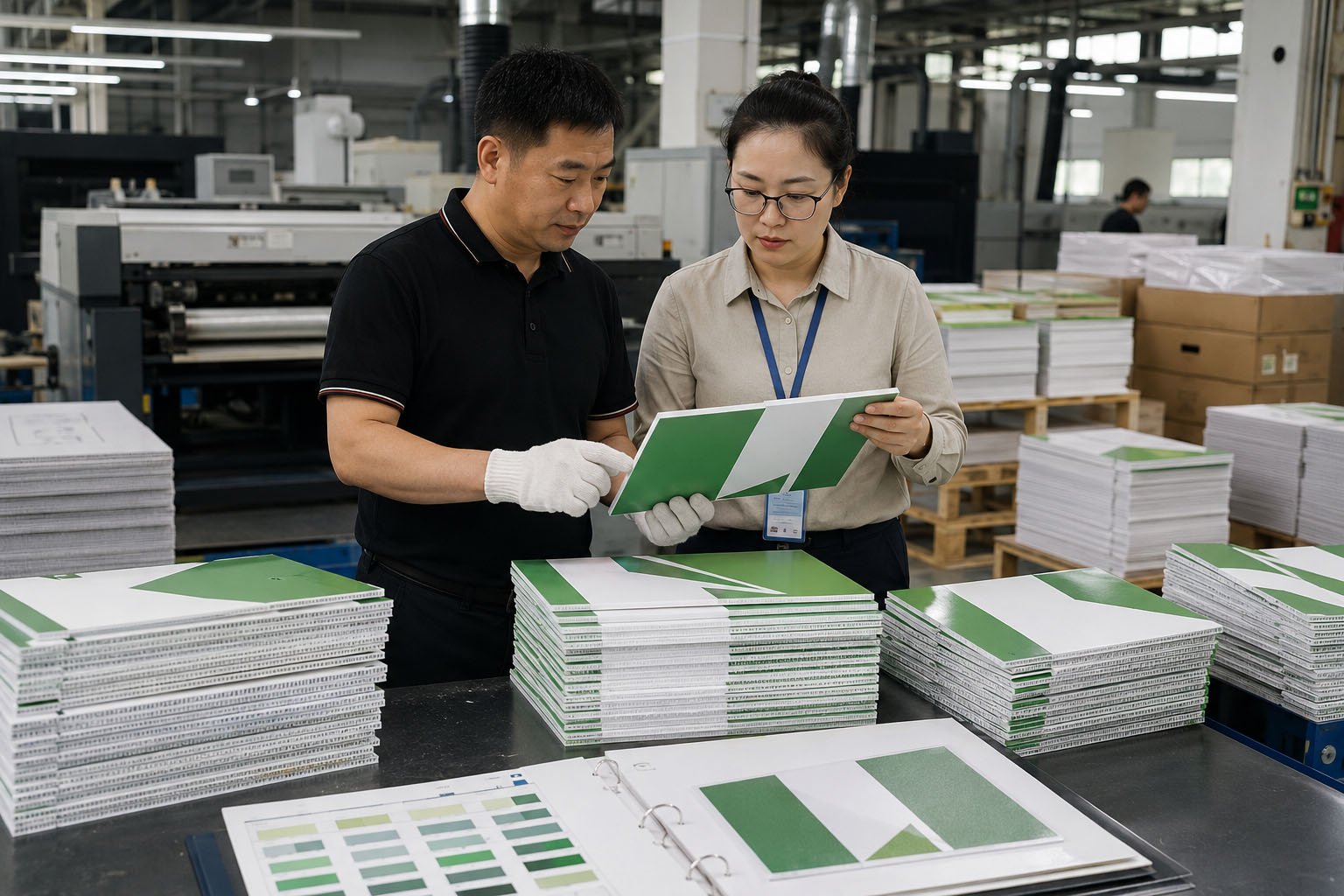
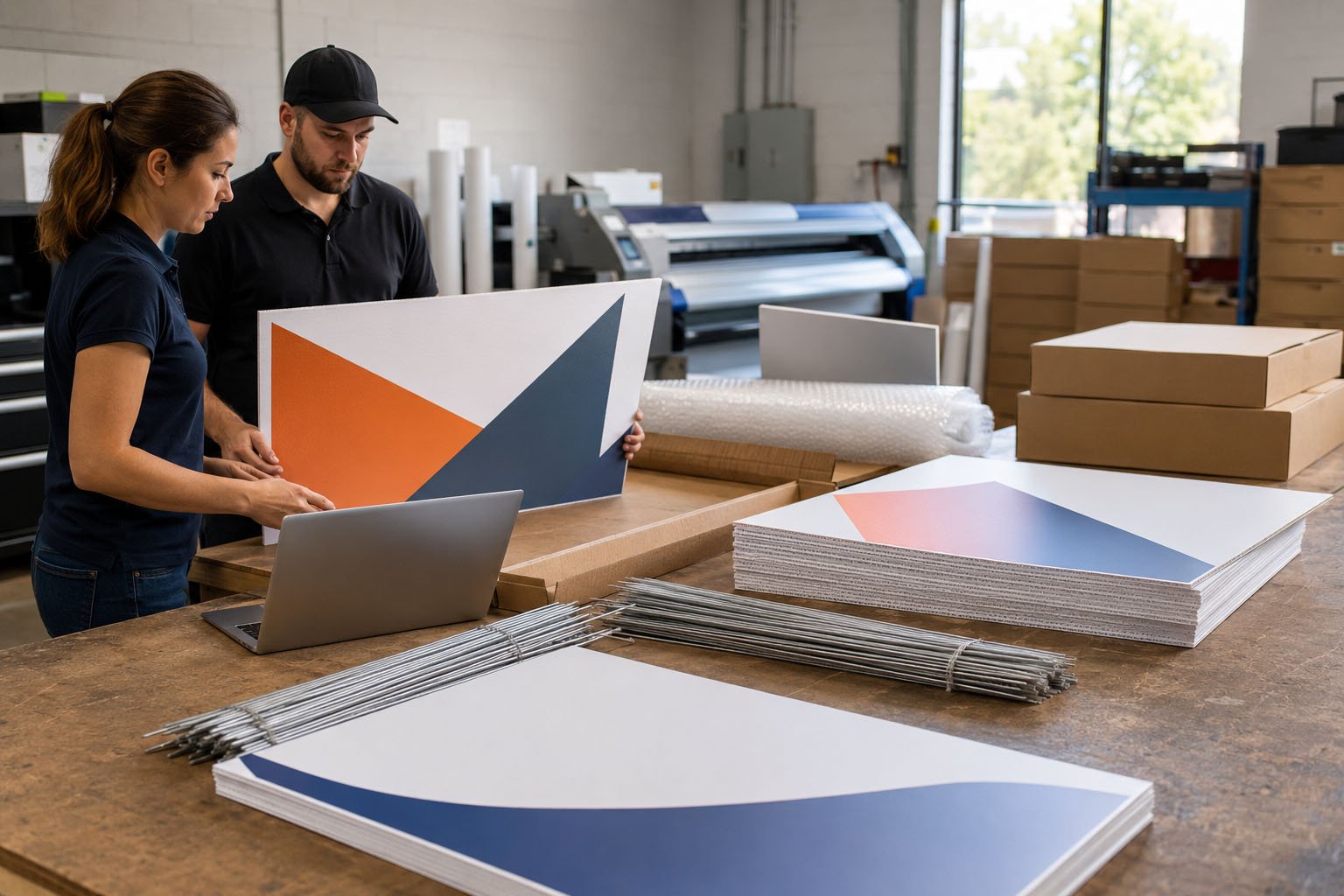
For signs used outdoors, buyers should not evaluate only the digital artwork. A physical sample can reveal details that are difficult to judge on a screen, especially color contrast, small text, surface finish, and panel stiffness.
How to Choose Panel Thickness
Panel thickness should be selected according to the size, use period, installation method, and expected handling conditions.
A thin and lightweight panel may be suitable for a short-term neighborhood promotion. A larger sign that remains outside in a windy location may require a different thickness or support configuration.
When comparing thickness options, ask the supplier:
- What thickness options are available?
- How does thickness affect stiffness and weight?
- Is the panel compatible with the selected H-stake?
- Does the larger size require additional support?
- How does the thickness affect carton quantity and shipping cost?
- Can the supplier provide a physical sample?
There is no single thickness that is best for every lawn care, roofing, or pressure washing order. The correct choice is the one that matches the actual installation conditions.
H-Stakes and Material Compatibility
The sign panel and H-stake should be treated as one installation system. A material specification that looks suitable on paper may not work properly if the stake does not fit the panel or if the sign is too large for the support method.
Confirm the following before production:
- H-stake dimensions
- Panel slot or insertion position
- Stake material and wire diameter
- Compatibility with the panel thickness
- Installation depth
- Expected soil and wind conditions
- Whether the stakes are packed with the signs
For additional information about sign and stake combinations, see how H-stakes work with corrugated plastic yard signs.
A Practical Material Comparison by Industry
| Business Type | Typical Use | Material Focus | Main Risk to Check |
|---|---|---|---|
| Lawn care | Short-term residential job sites and route-based promotion | Lightweight corrugated plastic with practical stake compatibility | Repeated installation, muddy ground, and vehicle handling |
| Roofing | Longer job-site display and roadside visibility | Panel stiffness, visibility, size, and support method | Wind exposure, sign size, and extended outdoor use |
| Pressure washing | Wet driveways, sidewalks, and short-term service locations | Water-resistant panel and suitable printed surface | Water, detergent, wet storage, and surface handling |
What to Include in a Bulk Yard Sign Material Request
To receive a useful factory quotation, provide more than the required quantity. Include the operating conditions so the supplier can review the complete specification.
- Business type and typical installation location
- Expected outdoor use period
- Finished panel size
- Material and thickness preference, if known
- Single-sided or double-sided printing
- Number of designs
- Quantity per design
- H-stake or frame requirements
- Whether signs will be reused by field crews
- Packaging, delivery country, and postal code
For example, “2,000 yard signs” is not enough information for an accurate comparison. “2,000 single-sided 18×24 corrugated plastic signs for lawn care job sites, with H-stakes, packed by design and shipped to Ontario” gives the supplier a much clearer basis for pricing and production planning.
How iYardSign Supports Outdoor Service Businesses
iYardSign is a China-based custom yard sign manufacturer serving businesses that need printed signs for outdoor promotion, job sites, events, real estate, and reseller programs.
For lawn care, roofing, and pressure washing companies, the production discussion can include:
- Corrugated plastic panel options
- Custom sizes and layouts
- Single-sided or double-sided printing
- H-stake compatibility
- Artwork review before production
- Physical sample confirmation
- Bulk packing by design or location
- Shipping coordination for US and Canadian orders
The goal is not to sell the largest or thickest sign to every buyer. The goal is to match the material, printing, support, packaging, and quantity to the way the signs will actually be used.
Buyers can also review the outdoor yard sign weather guide when planning longer outdoor campaigns.
Frequently Asked Questions
What is the best material for lawn care yard signs?
Corrugated plastic is a practical option for many lawn care signs because it is lightweight, easy to install, and suitable for repeated distribution between residential properties. The final choice should consider the expected use period, printing, size, and stake.
Are corrugated plastic yard signs weatherproof?
Corrugated plastic is commonly used for outdoor signage, but outdoor performance depends on the panel specification, printing process, installation, sunlight, wind, and handling. Buyers should ask for material and print details rather than relying only on the word “weatherproof.”
Do roofing companies need thicker yard signs?
Not always. Roofing signs may need a larger panel or stronger support because they are often visible from farther away or remain at a job site longer. The appropriate thickness should be matched to the sign size and installation conditions.
Can pressure washing signs be used near water?
They can be used in many wet outdoor service locations, but buyers should confirm the panel, print surface, and recommended cleaning or handling method. Wet signs should also be dried before tightly packing them for storage.
Should I order a sample before a large yard sign order?
For a new material, size, design, or stake combination, a sample is a practical way to check color, readability, panel stiffness, stake fit, and packing before mass production.
Request a Material Recommendation
Share your business type, sign size, expected outdoor use, quantity, artwork, and delivery location. iYardSign can help you compare a practical material and installation specification for your project.
For shipping and carton planning, buyers can also review the bulk yard sign shipping and packaging guide before confirming the final order.