How to Choose the Right Yard Sign Size & Material

Why Yard Sign Size and Material Matter
Choosing the right yard sign size and material can make a big difference in how well your sign performs outdoors. A sign that is too small may be hard to read from the road. A sign that is too large may cost more than necessary or need stronger support. A material that works well for a weekend event may not be the best choice for a long-term business display.
Whether you are ordering custom yard signs for real estate, political campaigns, contractors, local services, schools, churches, retail promotions, or community events, the goal is simple: your sign should be visible, durable, easy to install, and cost-effective.
This guide will help you choose the right yard sign size and material before placing your order.
What Is the Most Popular Yard Sign Size?
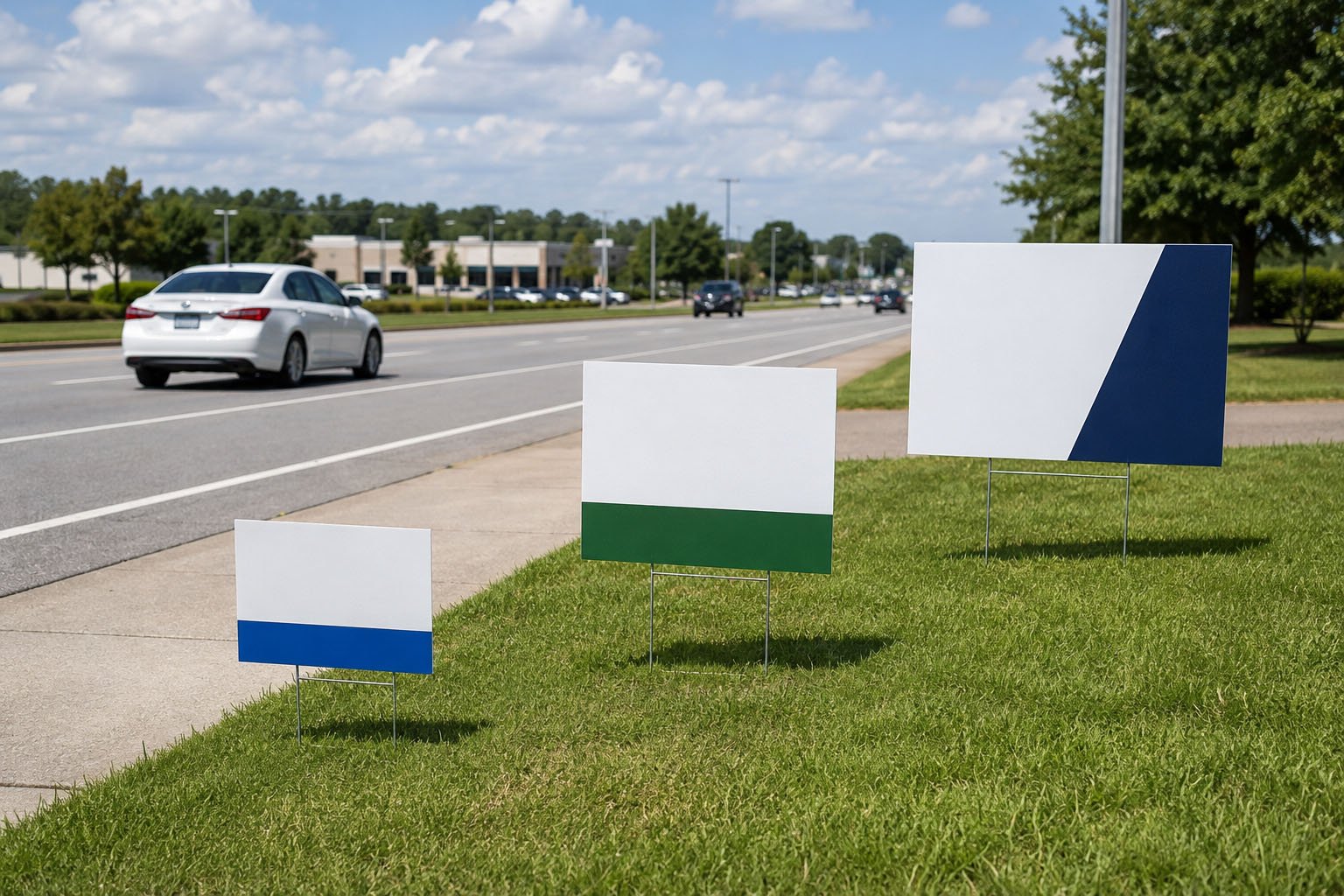
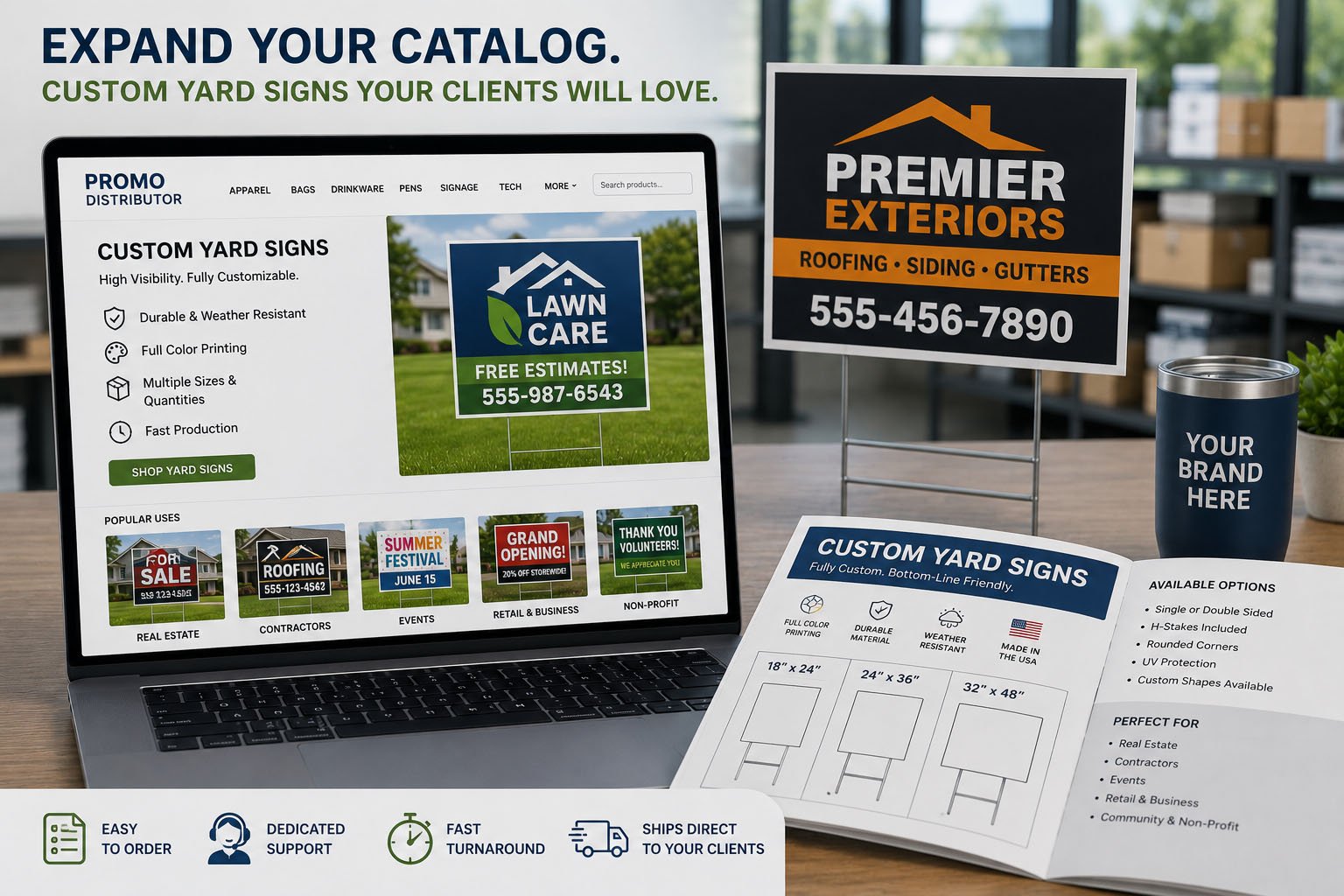
The most popular yard sign size is 18″ x 24″. This size is widely used because it offers a practical balance of visibility, price, and easy installation. It is large enough for a clear message, logo, phone number, website, or QR code, but still compact enough to install with standard H-stakes.
An 18″ x 24″ yard sign works well for:
- Real estate open houses.
- Political campaign signs.
- Contractor job site signs.
- Lawn care and cleaning service signs.
- Graduation yard signs.
- School and church events.
- Local business promotions.
If you are not sure which size to choose, 18″ x 24″ is usually the safest starting point for standard outdoor lawn signs.
Common Yard Sign Sizes and Best Uses
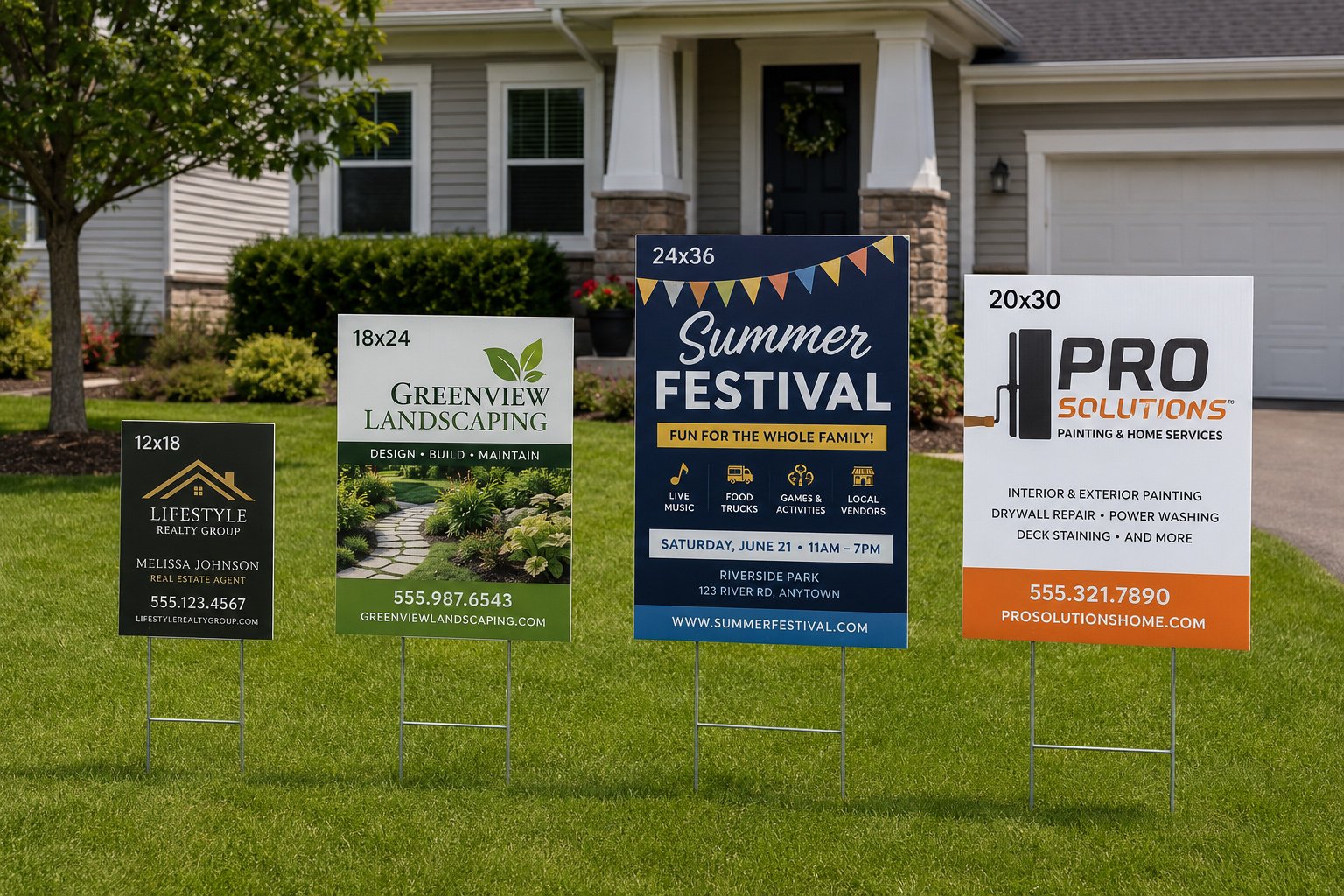
Different sign sizes work better for different locations and viewing distances. Before choosing a size, think about where the sign will be placed and how quickly people need to read it.
12″ x 18″ Yard Signs
A 12″ x 18″ yard sign is compact and affordable. It is best for close-range viewing, small lawns, directional signs, parking signs, table displays, or short messages.
This size is not ideal for busy roads because drivers may not have enough time to read small text.
18″ x 24″ Yard Signs
An 18″ x 24″ yard sign is the standard size for most lawn and roadside advertising. It provides enough space for a bold headline, simple graphic, logo, and contact information.
This size is easy to print, ship, install, and store. It is also compatible with standard metal H-stakes when printed on corrugated plastic.
24″ x 36″ Yard Signs
A 24″ x 36″ yard sign offers more visibility and space for larger designs. It is useful for higher-traffic areas, business entrances, construction sites, event entrances, and real estate listings that need stronger visual impact.
Because larger signs catch more wind, they may need stronger stakes, a frame, or a different mounting method.
4′ x 4′ and 4′ x 8′ Signs
Large signs such as 4′ x 4′ or 4′ x 8′ are often used for construction sites, property development, large political campaigns, business advertising, and roadside visibility.
These signs usually require heavier material, posts, frames, or professional installation. They are not the same as standard lawn signs and should be planned carefully.
How to Choose the Right Yard Sign Size
The best yard sign size depends on your message, location, traffic speed, and budget.
Use these questions before ordering:
- Will people view the sign while walking or driving?
- How far away will people be when they see it?
- How fast will traffic move past the sign?
- How much text do you need to include?
- Will the sign be single-sided or double-sided?
- Will the sign be displayed for days, weeks, or months?
- Will the location be windy or exposed?
For fast-moving traffic, choose a larger sign with fewer words. For close-range viewing, a smaller sign may work well if the design is clean and readable.
Keep Your Yard Sign Message Simple
One of the biggest mistakes in yard sign design is trying to include too much information. A yard sign is not a brochure. Most people will only see it for a few seconds.
A strong yard sign usually includes:
- A short headline or service name.
- One clear call to action.
- A phone number, website, or QR code.
- A logo or simple brand mark.
- High contrast colors.
- Large, readable text.
If your sign needs to be read from the road, use fewer words and bigger text. The more crowded the design becomes, the less effective the sign will be.
What Is the Best Material for Yard Signs?
The best material depends on how long the sign will be used, where it will be displayed, and how much durability you need. The most common yard sign materials include corrugated plastic, aluminum, PVC, and foam board.
For most temporary outdoor yard signs, corrugated plastic is the best value. For long-term outdoor display, aluminum or another rigid material may be a better choice.
Corrugated Plastic Yard Signs
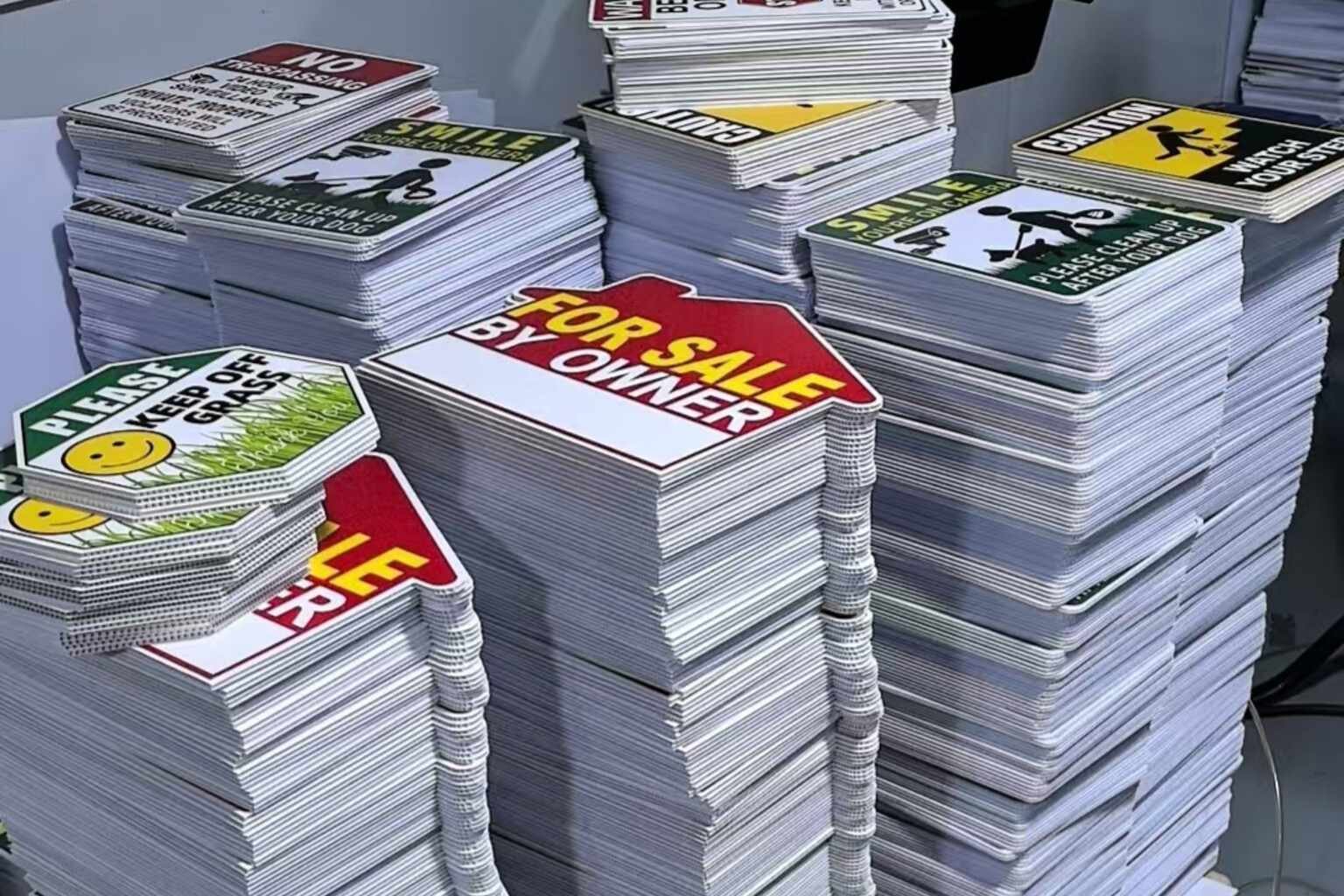
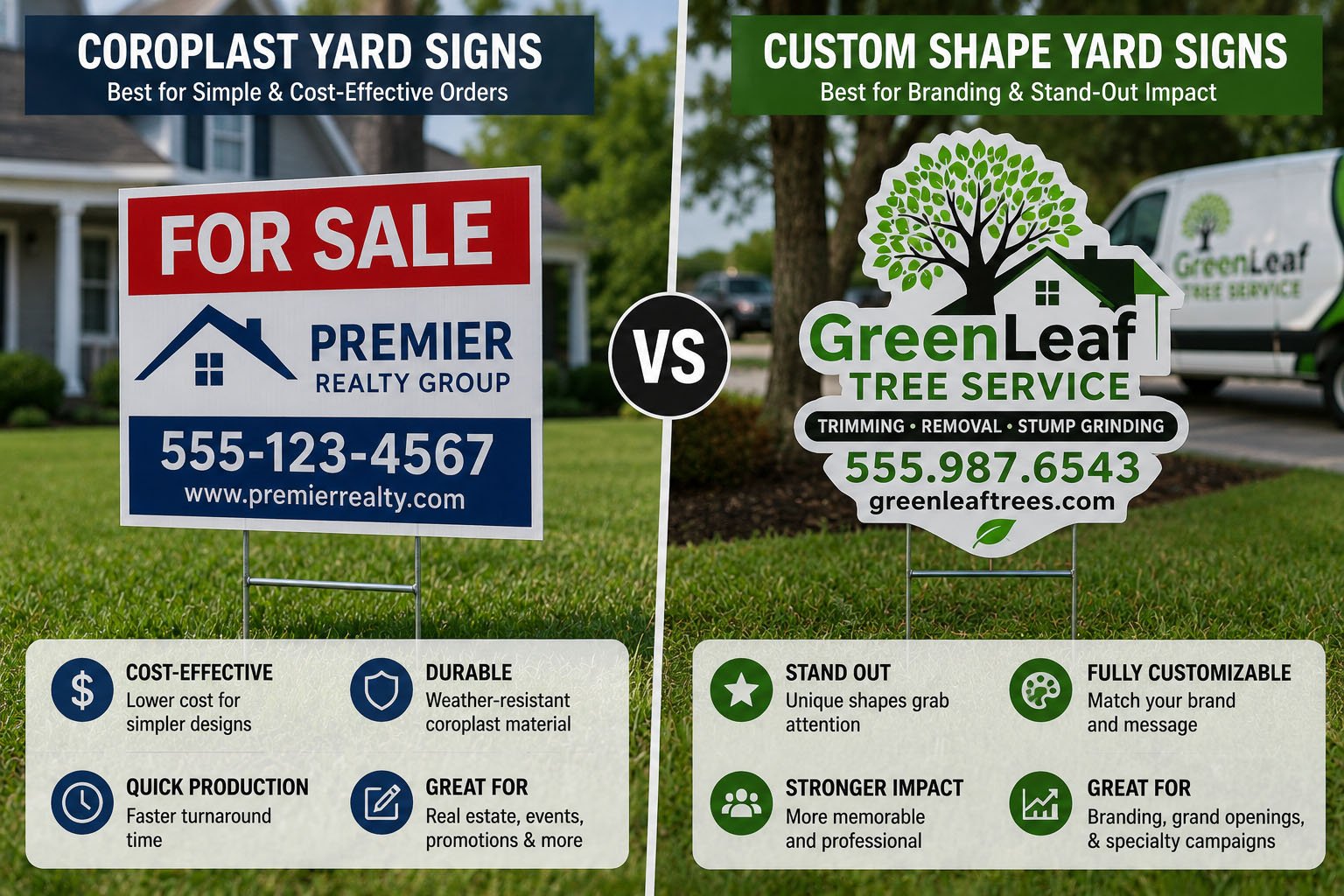
Corrugated plastic, often called coroplast, is the most popular material for custom yard signs. It is lightweight, waterproof, affordable, and easy to install with metal H-stakes.
Coroplast is commonly used for:
- Political campaign signs.
- Real estate signs.
- Contractor yard signs.
- Cleaning, roofing, and lawn care signs.
- School and graduation signs.
- Event and directional signs.
- Temporary business promotions.
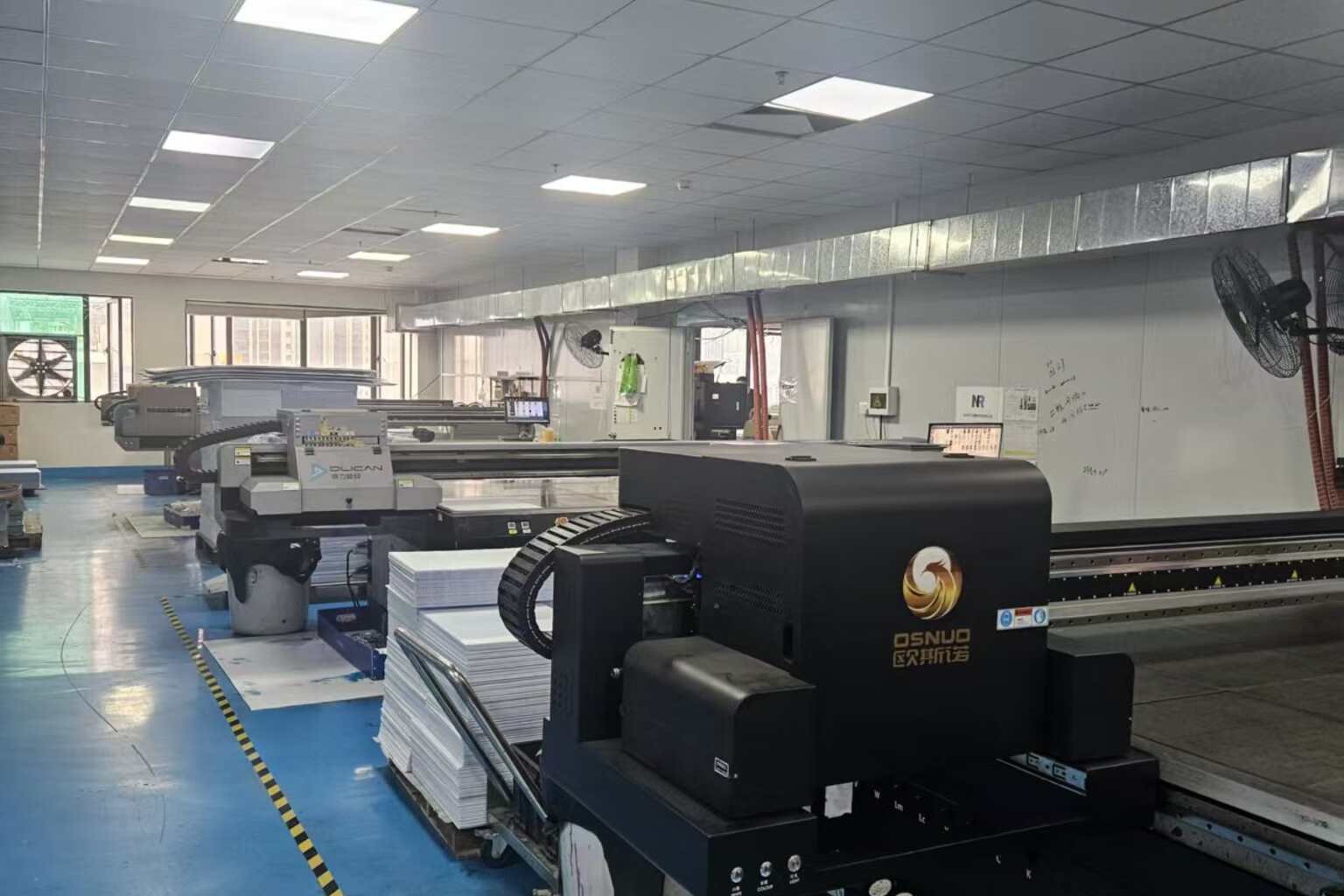
Corrugated plastic works well outdoors because it does not absorb water like paper or cardboard. When printed with outdoor-grade UV ink, it can handle rain, sunlight, and normal lawn conditions.
When Should You Choose Coroplast?
Choose corrugated plastic yard signs when you need an affordable, lightweight, temporary outdoor sign. Coroplast is ideal for short-term and medium-term campaigns where easy installation and bulk pricing matter.
Coroplast is a smart choice if:
- You need many signs at a reasonable price.
- The signs will be placed in grass or soil.
- You want to use H-stakes.
- The signs are for events, campaigns, or local advertising.
- You need fast production and easy shipping.
For most standard yard sign orders, coroplast is the most practical material.
Aluminum Yard Signs
Aluminum signs are stronger and more durable than corrugated plastic signs. They are better for long-term outdoor display, business identification, parking areas, property signs, and locations where the sign needs to look more permanent.
Aluminum is weather resistant, rigid, and professional-looking. However, it costs more than coroplast and usually requires posts, screws, frames, or wall mounting instead of standard H-stakes.
Choose aluminum if you need a sign that will stay outside for months or years.
PVC Yard Signs
PVC signs have a smooth, clean surface and a more rigid feel than corrugated plastic. They can work well for indoor signs, trade shows, short-term displays, and certain outdoor uses.
However, PVC is usually not the first choice for standard lawn signs with H-stakes. It may require different mounting hardware and may not perform as well as aluminum for long-term outdoor use.
Choose PVC when you want a clean, smooth display panel and the installation method fits the project.
Foam Board Signs
Foam board is lightweight and affordable, but it is generally better for indoor use. It is not the best material for outdoor yard signs because it can be damaged by rain, moisture, and rough handling.
If your sign will be placed outdoors, choose corrugated plastic, aluminum, or another weather-resistant material instead.
Single-Sided or Double-Sided Yard Signs?
After choosing your size and material, decide whether your sign should be single-sided or double-sided.
Single-sided signs are useful when the sign will be placed against a wall, fence, building, or area where people only see one side.
Double-sided signs are better for lawns, roadsides, sidewalks, driveways, open houses, job sites, and event entrances. If people can approach from both directions, double-sided printing gives your message more visibility.
For most outdoor advertising, double-sided yard signs are worth considering.
Do Yard Signs Need Stakes or Frames?
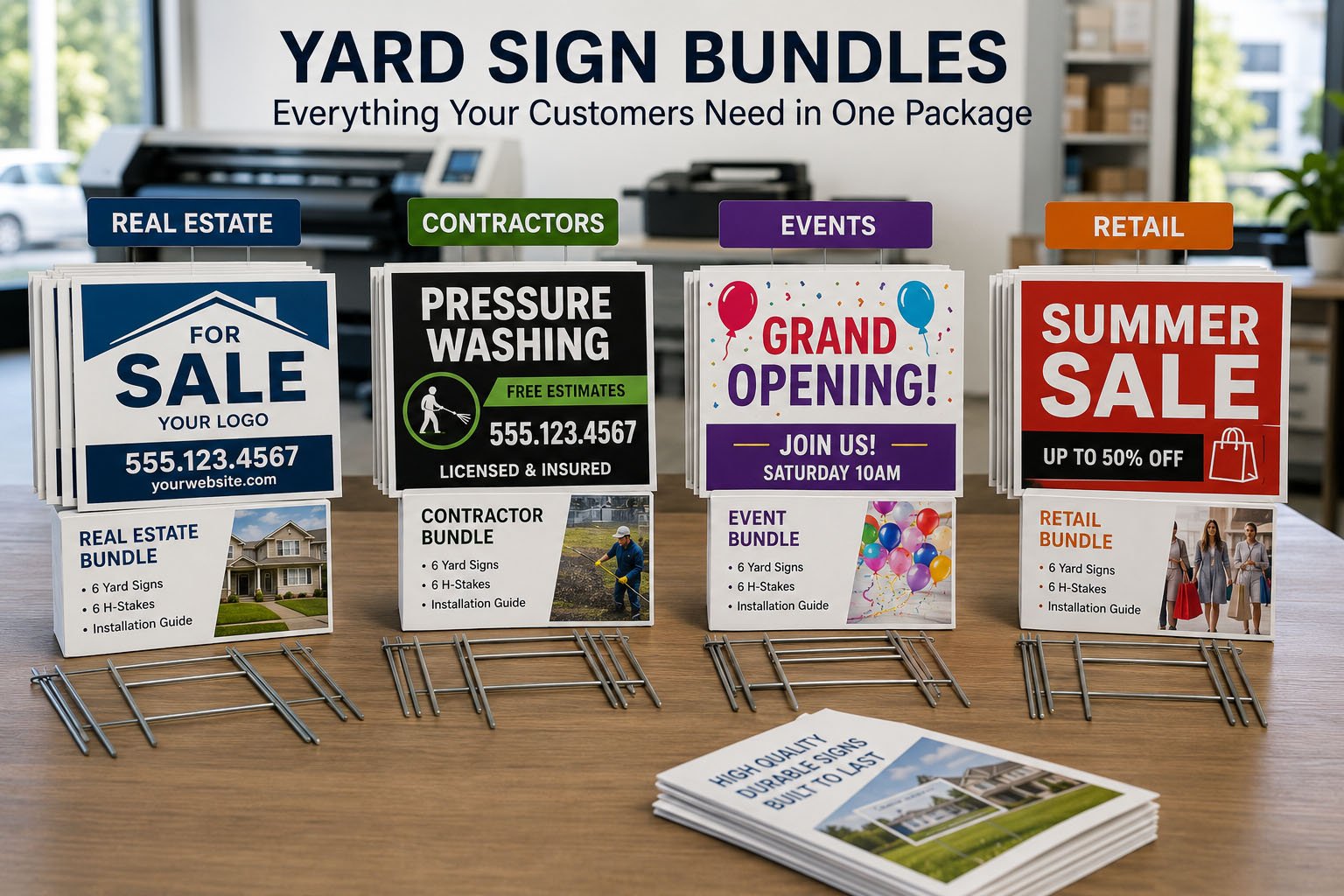
Most corrugated plastic yard signs are installed with metal H-stakes. These stakes slide into the vertical flutes of the sign and push into the ground. H-stakes are simple, affordable, and easy to use for standard lawn placement.
Larger signs, heavier materials, or windy locations may require stronger frames or posts. Aluminum signs, large coroplast signs, and long-term displays often need a more secure mounting system.
Before ordering, confirm whether stakes or frames are included, sold separately, or recommended for your sign size and material.
Best Size and Material by Use Case
Real Estate Yard Signs
For open houses and temporary listings, 18″ x 24″ coroplast signs with H-stakes are a popular choice. For premium property signs or long-term listings, aluminum or framed signs may be better.
Contractor Yard Signs
Roofers, cleaners, lawn care companies, pressure washing businesses, and remodelers often use 18″ x 24″ or 24″ x 36″ coroplast signs. These signs are affordable, easy to place at job sites, and useful for local lead generation.
Political Campaign Signs
Political yard signs are commonly printed on corrugated plastic because campaigns often need large quantities at a competitive price. 18″ x 24″ is the standard size, while larger signs can be used for high-traffic areas.
Event Yard Signs
For school events, church events, fundraisers, graduations, festivals, and directional signage, coroplast is usually the best material. Choose 18″ x 24″ for general signs and smaller sizes for directional signs.
Business Advertising Signs
For temporary promotions, coroplast yard signs are cost-effective and easy to install. For long-term business signs, aluminum or a framed display may look more professional and last longer.
How Weather Affects Your Material Choice
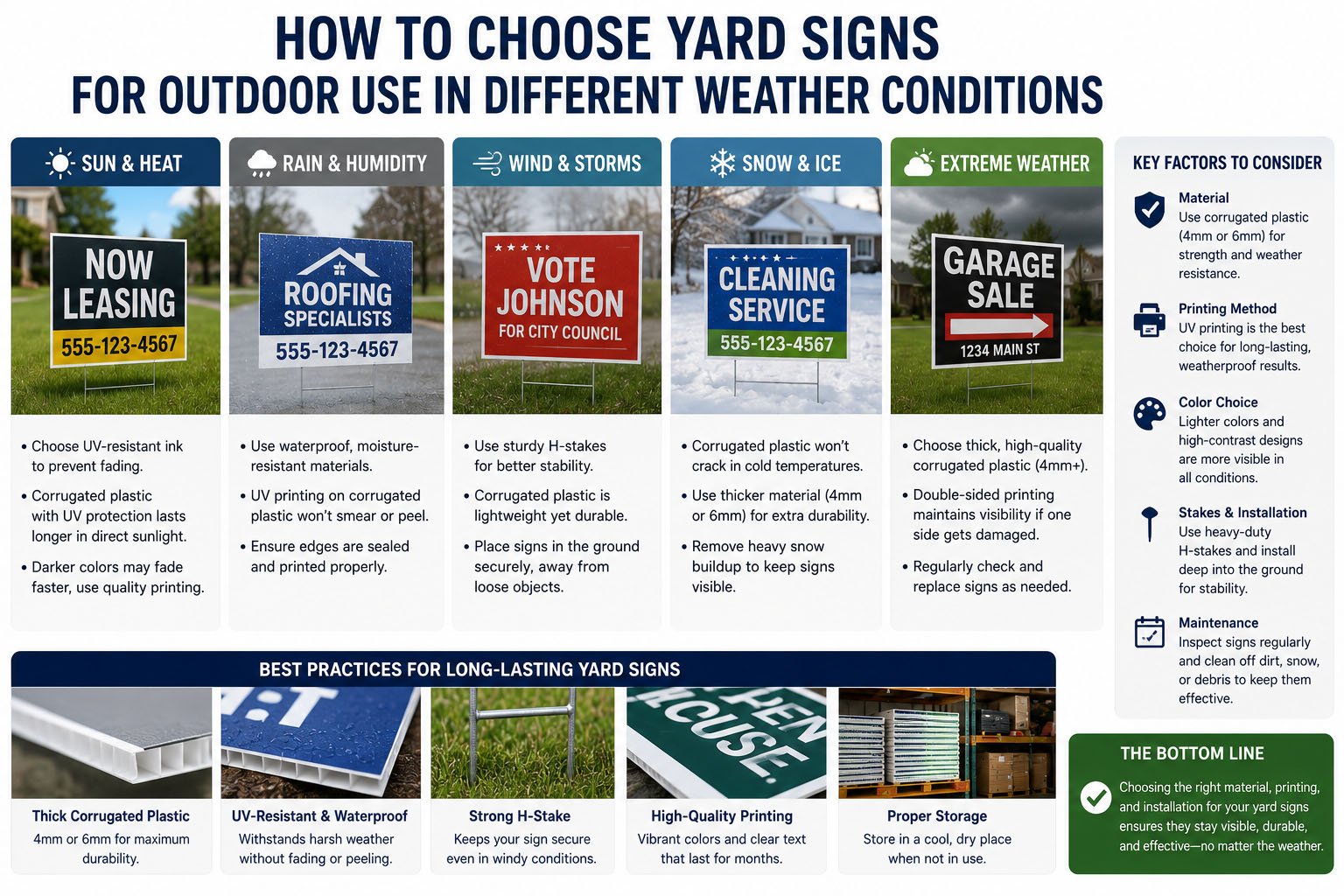
Outdoor signs need to handle rain, sunlight, wind, and temperature changes. Coroplast is water-resistant and works well for many outdoor campaigns, but it is still a temporary sign material.
If your sign will be exposed to strong wind or harsh weather for a long time, consider thicker material, a stronger frame, or a more durable option like aluminum.
For short-term outdoor use, UV-printed coroplast is usually enough. For long-term outdoor use, durability should be a bigger priority than the lowest price.
How to Avoid Choosing the Wrong Yard Sign
Before placing your order, avoid these common mistakes:
- Choosing a sign that is too small for roadside visibility.
- Putting too much text on the sign.
- Using indoor material for outdoor display.
- Forgetting to order stakes or frames.
- Choosing single-sided printing when traffic comes from both directions.
- Ignoring wind and installation conditions.
- Uploading low-resolution artwork.
A successful yard sign is not just printed well. It also needs to be sized correctly, made from the right material, and installed in the right place.
Final Thoughts
The right yard sign size and material depend on your message, budget, location, and display time. For most temporary outdoor signs, 18″ x 24″ corrugated plastic is the best starting point. It is affordable, weather resistant, easy to install, and suitable for many business, real estate, campaign, event, and community uses.
If you need stronger visibility, choose a larger size. If you need long-term durability, consider aluminum or a more rigid material. If your sign will be viewed from both directions, double-sided printing can help you get more value from every placement.
At iYardSign, we help customers choose custom yard signs that match their real use case, from small lawn signs to bulk outdoor advertising signs. The right size and material will help your signs look better, last longer, and work harder for your message.
FAQ
What is the standard yard sign size?
The most common yard sign size is 18″ x 24″. It is widely used for real estate, campaigns, contractors, events, schools, and local business advertising.
What material is best for yard signs?
Corrugated plastic, also called coroplast, is the most popular material for temporary outdoor yard signs because it is lightweight, affordable, waterproof, and easy to install with H-stakes.
Are coroplast yard signs weatherproof?
Coroplast yard signs are weather resistant and suitable for rain, sunlight, and normal outdoor conditions. However, extreme wind or long-term exposure may require stronger materials or frames.
Should yard signs be single-sided or double-sided?
Double-sided yard signs are better when people can see the sign from both directions, such as near roads, sidewalks, driveways, open houses, and event entrances.
What size yard sign is best for contractors?
Many contractors use 18″ x 24″ or 24″ x 36″ coroplast signs. The best size depends on the viewing distance, job site location, and how much information needs to be shown.
What is better: coroplast or aluminum?
Coroplast is better for affordable temporary yard signs. Aluminum is better for long-term outdoor signs that need more strength, rigidity, and a premium appearance.
Do yard signs need stakes?
Most corrugated plastic yard signs use metal H-stakes for lawn installation. Larger signs or rigid materials may require frames, posts, or other mounting hardware.
How much text should be on a yard sign?
Keep the message short. Use a bold headline, one call to action, and one contact method. Large text and strong contrast are more important than adding many details.