How to Create a Yard Sign Specification Sheet for Bulk Orders

Without a written specification, important requirements can remain scattered across emails, chat messages, quotations, and artwork files. This increases the risk of incorrect quantities, unsuitable material, missing stakes, packaging mistakes, and unexpected costs.
iYardSign provides custom yard sign manufacturing services for overseas businesses, distributors, real estate companies, events, campaigns, franchises, and local service providers.
Quick Answer: What Should a Yard Sign Specification Sheet Include?
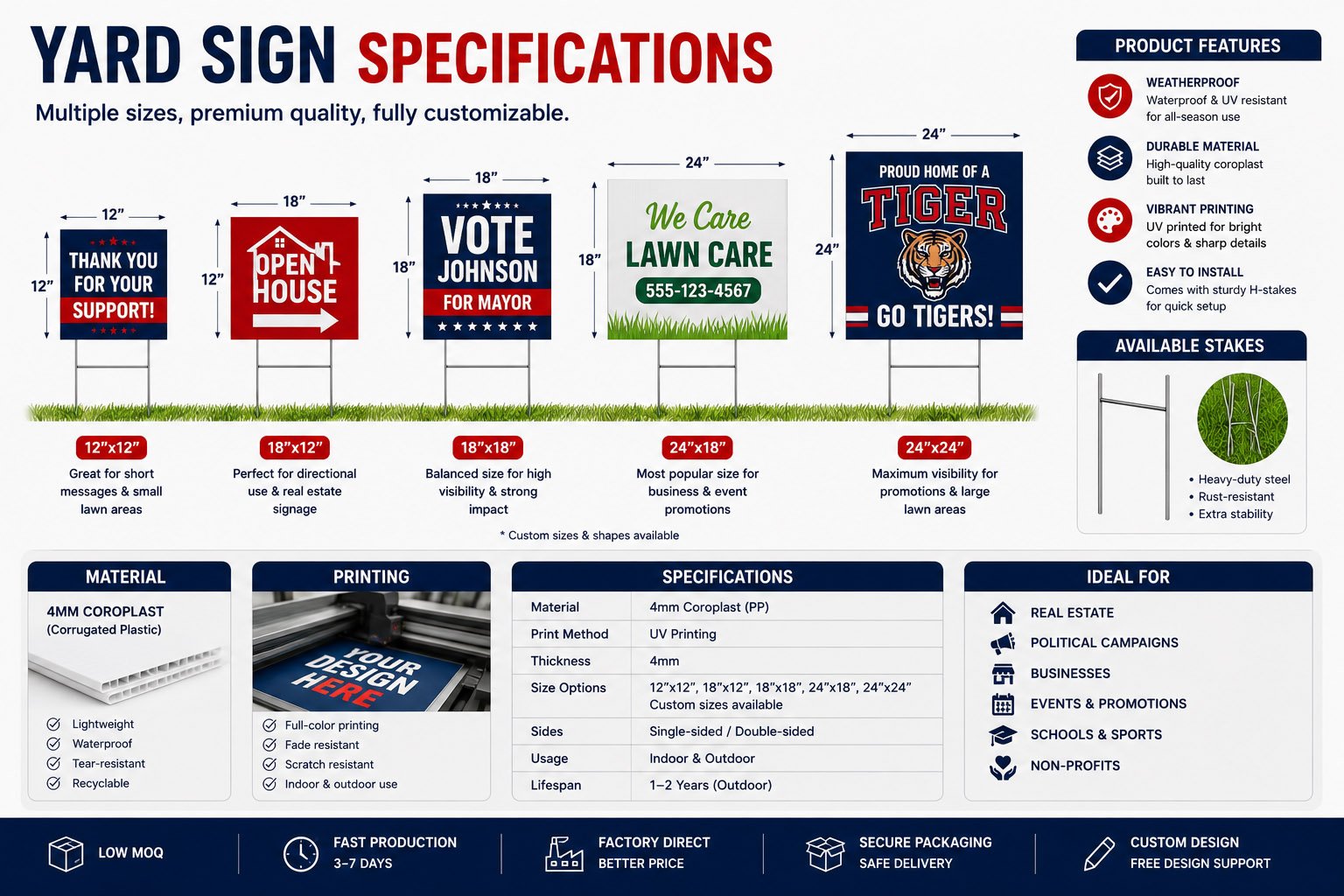
A complete specification sheet should include product dimensions, material, thickness, printing method, printing sides, artwork versions, quantity for each design, flute direction, hardware, cutting, packaging, quality requirements, delivery address, and deadline.
Every quotation, sample, proof, purchase order, and production inspection should refer to the same approved specification.
What Is a Yard Sign Specification Sheet?
A yard sign specification sheet is a written document that defines what the buyer expects the manufacturer to produce. It converts a general request such as “We need 500 custom yard signs” into a measurable production requirement.
It serves several purposes:
- Helps suppliers prepare comparable quotations
- Reduces repeated questions during purchasing
- Provides the artwork team with clear instructions
- Gives production staff an approved reference
- Supports quality inspection
- Clarifies packaging and labeling
- Reduces disputes after delivery
- Makes repeat orders easier to reproduce
Why “Custom Yard Signs” Is Not a Complete Specification
The phrase “custom yard signs” can describe many different products. A supplier still needs to know:
- How large are the signs?
- What material should be used?
- How many designs are included?
- Are the signs printed on one or both sides?
- Are the two sides identical?
- Are H-stakes included?
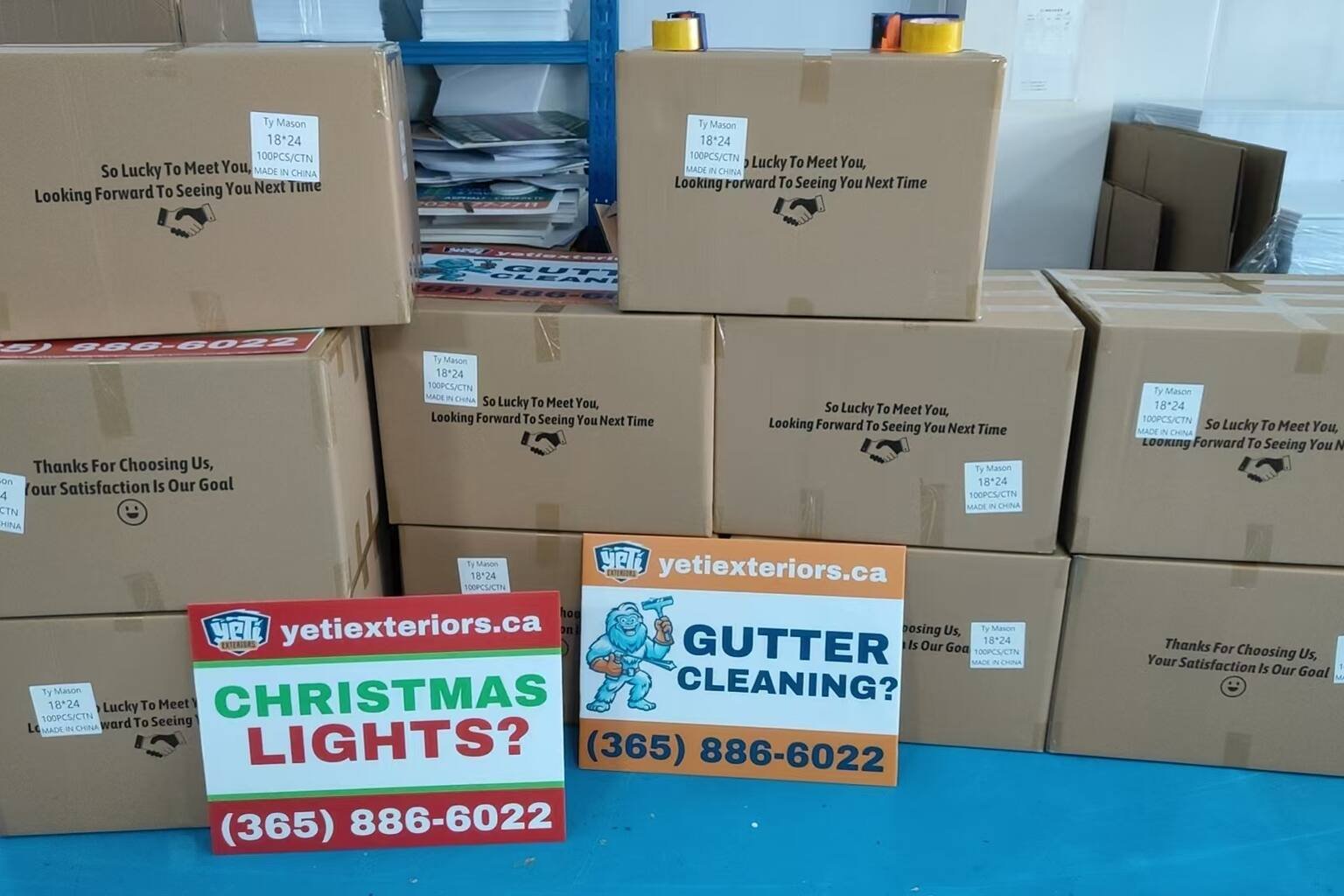
- How should signs be packed?
- Where will the order be delivered?
- When must it arrive?
If these details are missing, two suppliers may quote completely different products even though both quotations use the words “custom yard signs.”
1. Product Name and Intended Application
Begin with a short, specific product description. The intended application helps the manufacturer understand the installation and performance requirements.
Useful examples include:
- 18×24-inch real estate yard signs with H-stakes
- Double-sided cleaning service signs for residential lawns
- Custom-shaped event signs for outdoor directions
- Bulk campaign signs divided among multiple candidates
- Retail-packed yard sign kits for resale
A clear product name also makes future emails, artwork files, cartons, and repeat orders easier to identify.
2. Finished Size and Orientation
State the finished width and height using both the unit and orientation. Do not provide only two numbers without identifying which is the width.
Recommended format:
- Finished size: 24 inches wide × 18 inches high
- Orientation: Landscape
- Measurement tolerance: To be confirmed with the manufacturer
This prevents a 24×18-inch landscape sign from being confused with an 18×24-inch portrait sign.
For custom shapes, include:
- Maximum finished width
- Maximum finished height
- Approved cut path
- Position of stakes or mounting points
- Any narrow or fragile sections
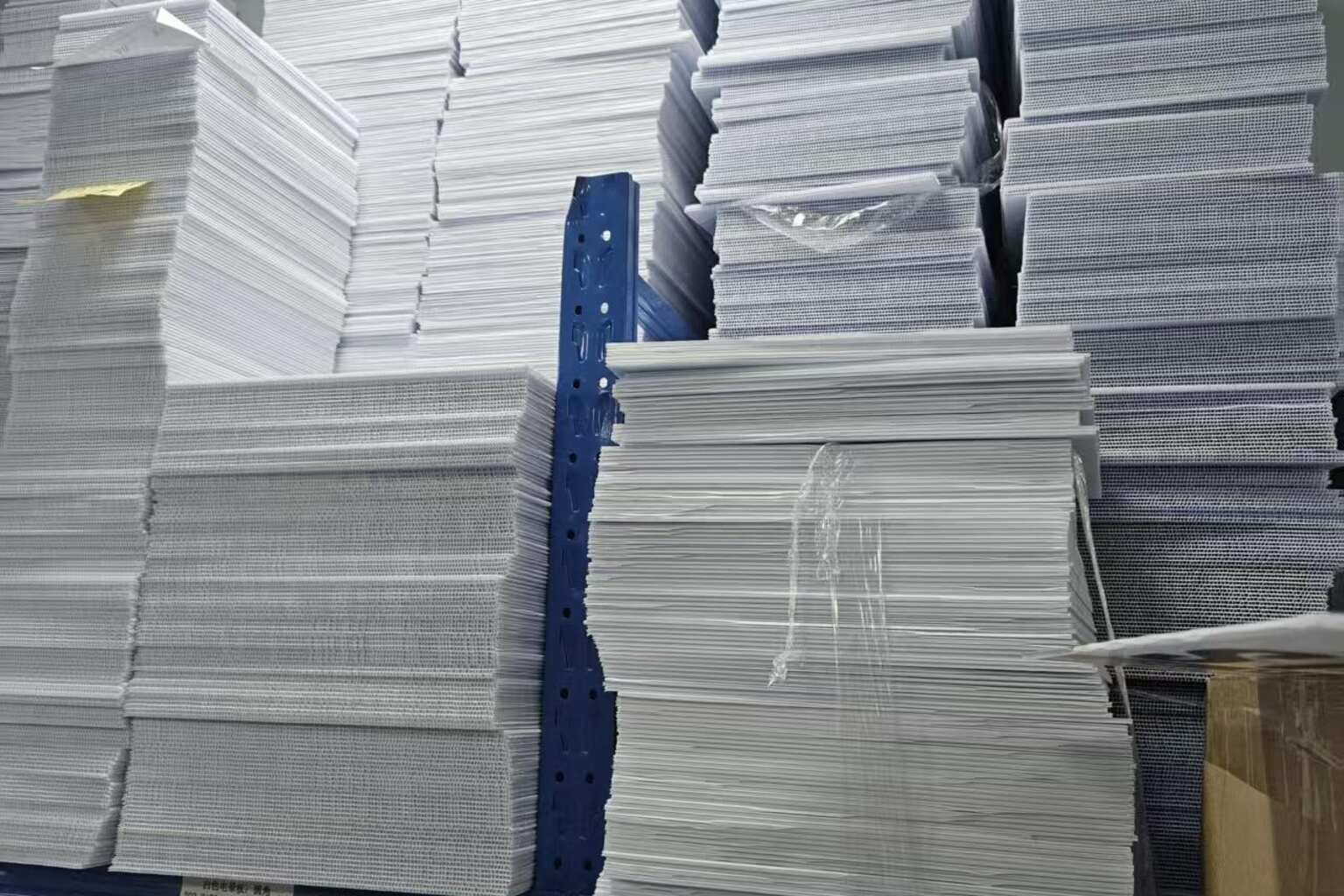
3. Corrugated Plastic Material
Do not write only “coroplast” if material construction matters to the project. State the agreed material specification clearly.
The material section may include:
- Corrugated plastic sheet
- Nominal thickness
- Sheet color
- Relevant sheet weight or construction requirement
- Flute direction
- Expected outdoor application
- Approved physical sample reference
Buyers who need help comparing materials can read the custom coroplast yard sign material guide.
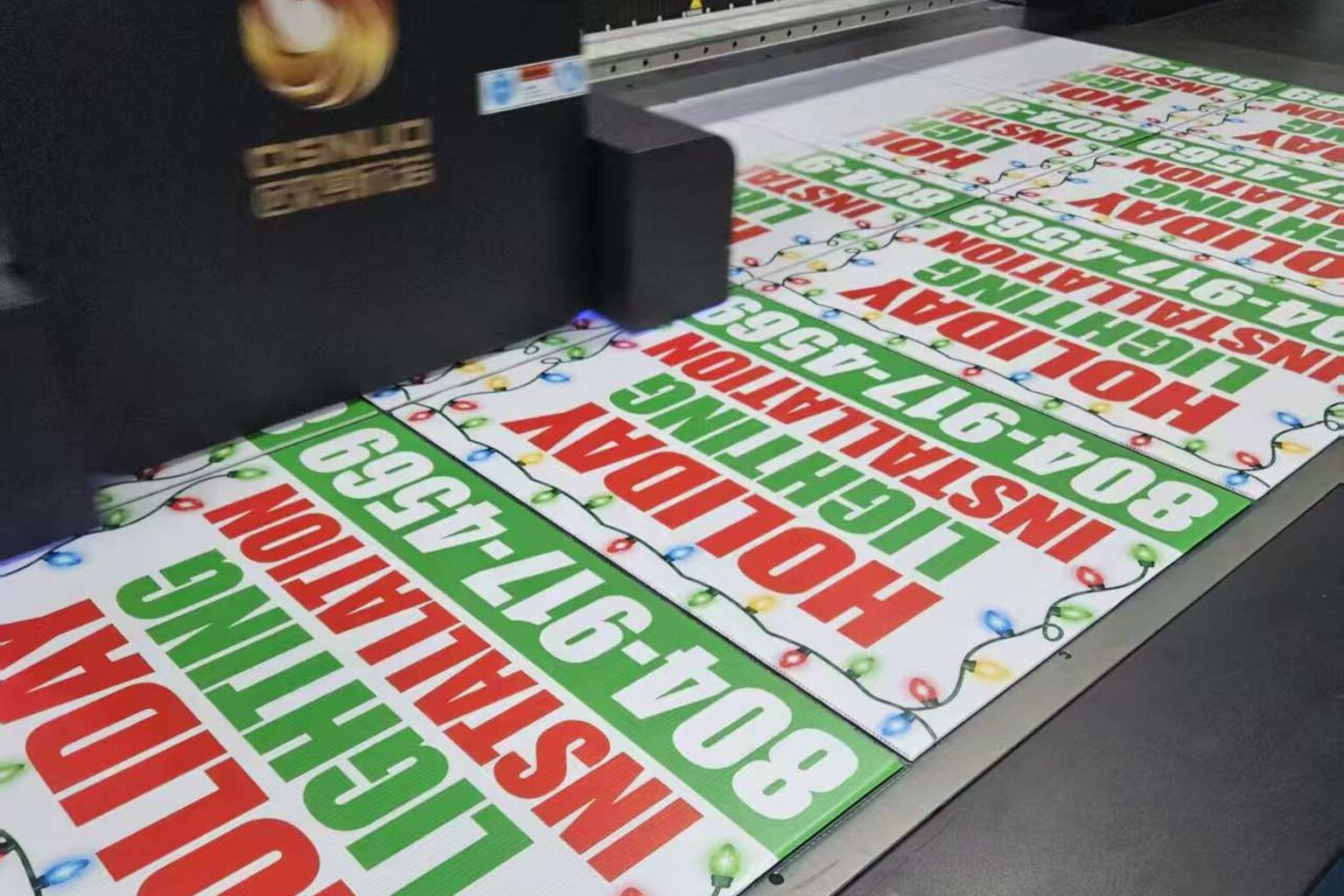
4. Printing Requirements
The specification should identify how the signs will be printed and what is expected on each side.
Include:
- Full-color or limited-color printing
- UV or other approved printing process
- Single-sided or double-sided printing
- Same or different artwork on each side
- Required print orientation
- Important brand color references
- Whether photographs, gradients, or QR codes are included
For double-sided directional signs, show the required arrow direction on each side. Do not assume the manufacturer should simply copy the same artwork to the back.
For a detailed comparison, review UV printing versus screen printing for coroplast yard signs.
5. Quantity and Design Breakdown
Always state the quantity for each individual design. A total quantity alone is not enough when the order contains several names, locations, colors, phone numbers, or artwork versions.
| Design | Description | Printing | Quantity |
|---|---|---|---|
| Design A | North location | Double-sided | 200 |
| Design B | South location | Double-sided | 150 |
| Design C | West location | Double-sided | 150 |
Different design quantities can affect setup, unit cost, sorting, packaging, and minimum order requirements. Read how custom yard sign MOQ is calculated before finalizing quantities.
6. Artwork File Requirements
The specification sheet should identify the approved artwork file for every design.
Record:
- Artwork file name
- Version number or approval date
- Finished dimensions
- Bleed requirements
- Safe area requirements
- Front and back file names
- Font handling
- Image resolution
- Color references
- Cut path for custom shapes
Avoid sending several files containing names such as “final,” “final-new,” and “final-last.” Use a clear version system so production staff can identify the approved file.
7. QR Codes and Contact Information
If the artwork contains a QR code, phone number, website, or email address, identify these as critical inspection points.
The buyer should:
- Confirm every phone number
- Open every website address
- Proofread every email address
- Scan QR codes from the printed sample
- Test the destination on a mobile device
- Confirm that old promotional links have been removed
The manufacturer can inspect the print, but the buyer remains responsible for confirming that contact details and destinations are correct.
8. Flute Direction
Corrugated plastic contains internal channels called flutes. When a wire H-stake is used, these flutes generally need to run vertically so the stake wires can enter from the bottom.
The specification should state:
- Required flute direction
- Top and bottom orientation
- Stake insertion edge
- Whether the sign uses one or two stakes
- Any special mounting requirement
Flute direction should also be shown on the approved proof for custom dimensions or shapes.
9. H-Stakes and Hardware
Do not assume that “yard sign” automatically includes a stake. The hardware section should specify:
- Whether stakes are included
- Number of stakes per sign
- Stake dimensions
- Wire specification
- Material or finish
- Compatibility with the sign flutes
- Packing method
- Quantity of spare stakes, if required
The sign and stake should be tested together before production. Use the bulk yard sign H-stake buying checklist to confirm hardware details.
10. Cutting and Finishing
Define whether the finished signs are:
- Rectangular
- Square
- Contour cut
- Rounded at the corners
- Provided with holes or slots
- Supplied as separate pieces or complete kits
For custom shapes, inspect narrow areas that may bend or become damaged during packing. The artwork and cut path should leave enough material around important printed content.
11. Sample and Proof Approval
State which approval stages are required before mass production.
Options may include:
- Digital artwork proof
- Material sample
- Printed color sample
- Full-size physical sample
- H-stake compatibility test
- Packaging sample
- Pre-production photographs or video
The specification sheet should record the approved version and approval date. Follow this yard sign sample approval guide before authorizing production.
12. Quality Inspection Requirements
Inspection criteria should be measurable and agreed before production begins.
Important checkpoints may include:
- Finished dimensions
- Correct material
- Correct artwork version
- Quantity by design
- Print orientation
- Color appearance against the approved reference
- Text and logo clarity
- QR code readability
- Flute direction
- Stake fit
- Cutting quality
- Surface scratches or damage
- Packaging and labeling
A vague requirement such as “good quality” is difficult to inspect consistently. Specific checkpoints create a clearer standard.
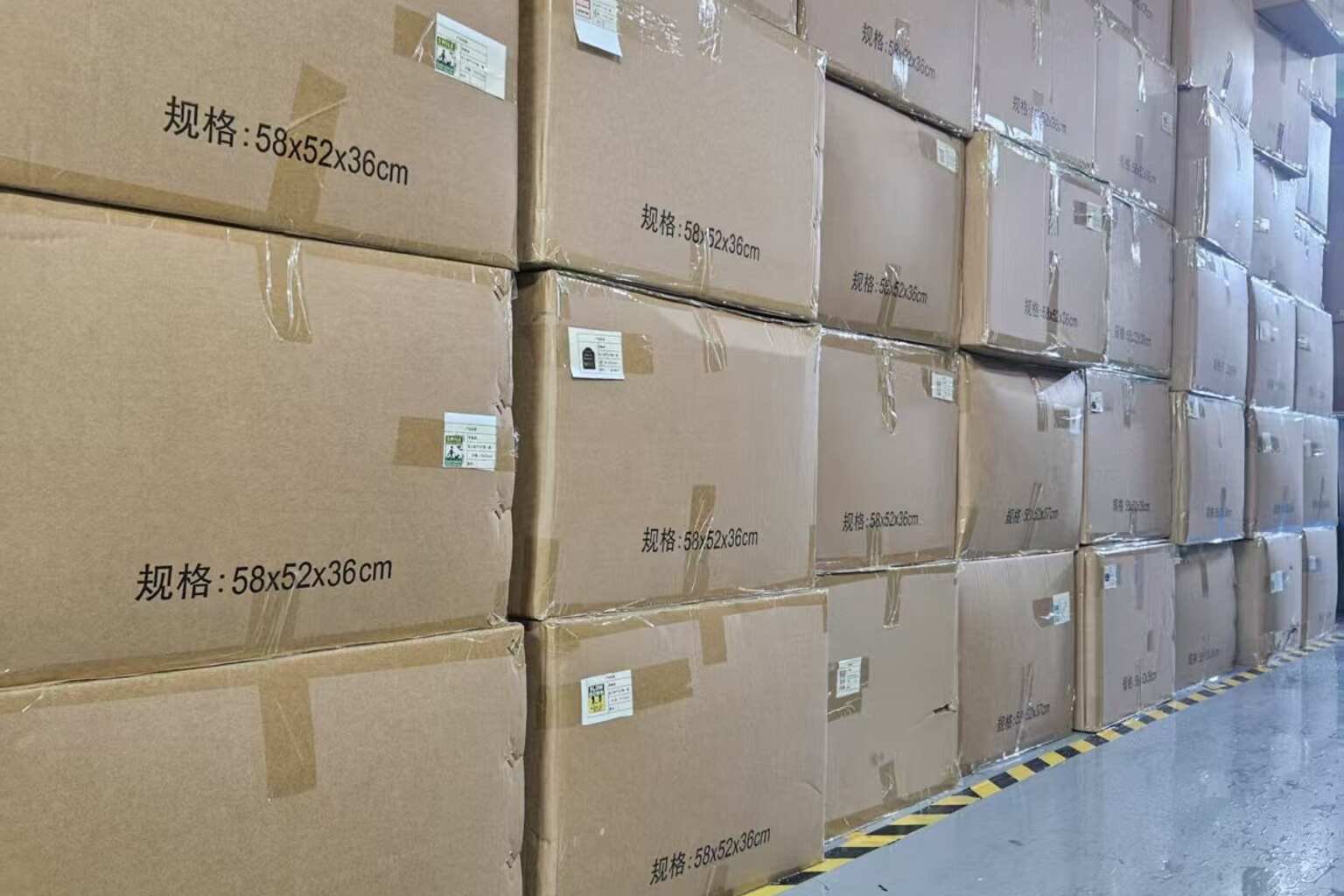
13. Packaging and Carton Labels
Packaging specifications are especially important for orders containing metal stakes, multiple designs, retail kits, or deliveries to several locations.
Confirm:
- Number of signs per carton
- Number of stakes per carton
- Protection between signs and hardware
- Carton dimensions and weight
- Design labels
- Shipping marks
- Barcode or retail labels
- Required packing list
- Whether cartons are divided by location
For additional guidance, read how to package wholesale yard signs and H-stakes.
14. Delivery Information
A factory cannot calculate an accurate delivered price without a complete destination.
Provide:
- Delivery country
- State or province
- City
- Postal code
- Commercial or residential address
- Loading dock or forklift availability
- Contact person and telephone number
- Required arrival date
- Any appointment delivery requirement
Clearly distinguish between the required shipping date and the required arrival date. They are not the same.
15. Production and Delivery Schedule
A realistic schedule should include:
- Artwork submission
- Proof preparation
- Buyer approval
- Sample production if required
- Mass production
- Quality inspection
- Packaging
- International transit
- Customs processing
- Final delivery
Buyers with a fixed event or promotion date should include additional time for artwork corrections, sample delivery, customs, and final transportation.
Example Yard Sign Specification
| Product | Custom business yard signs with H-stakes |
|---|---|
| Finished size | 24 inches wide × 18 inches high |
| Material | Corrugated plastic, approved specification |
| Printing | Full-color, double-sided, same artwork on both sides |
| Quantity | 500 signs divided among five approved designs |
| Flute direction | Vertical for H-stake installation |
| Hardware | One compatible H-stake per sign |
| Packaging | Signs and stakes protected from contact; cartons labeled by design |
| Approval | Digital proof and one finished production sample |
| Delivery | Door-to-door delivery to the confirmed commercial address |
Common Specification Mistakes
- Providing only the total quantity without a design breakdown
- Writing dimensions without identifying width and height
- Using “standard material” without defining the specification
- Forgetting to state flute direction
- Assuming H-stakes are included
- Not identifying front and back artwork
- Using several files labeled “final”
- Ignoring packaging and carton labels
- Providing only the destination country instead of a postal code
- Confusing the shipping date with the required arrival date
Yard Sign Specification Checklist
- Product name and intended use
- Finished width, height, and orientation
- Material and thickness
- Flute direction
- Printing method and printing sides
- Approved artwork files
- Quantity for every design
- H-stake or frame specification
- Cutting and finishing requirements
- Sample approval requirements
- Quality inspection points
- Packaging and carton labels
- Complete delivery address
- Required arrival date
Frequently Asked Questions
Why do I need a yard sign specification sheet?
It gives the supplier one approved reference for quotation, artwork, production, inspection, packaging, and delivery. It also makes quotations easier to compare.
Should the specification sheet include artwork?
Yes. It should identify the approved artwork file and version for every design, including separate front and back files when applicable.
Should H-stakes be listed separately?
Yes. State the stake specification, quantity, compatibility, and packaging. Do not assume stakes are automatically included with printed signs.
Can I use one specification sheet for repeat orders?
Yes, but review it before every repeat order. Contact details, artwork, quantities, packaging, delivery addresses, and material requirements may change.
Does a specification sheet replace sample approval?
No. The specification defines the requirement, while the sample or proof demonstrates how the manufacturer intends to meet that requirement.
Can iYardSign review a buyer’s specifications?
Yes. iYardSign can review size, material, artwork, quantities, H-stakes, packaging, delivery destination, and deadline before preparing a production quotation.
Send Complete Specifications for a Clear Factory Quote
A complete specification sheet helps reduce assumptions and allows the manufacturer to quote the product you actually need.