How to Install Yard Signs Correctly with H-Stakes

How to Install Yard Signs Correctly with H-Stakes
Custom yard signs are simple to use, but proper installation still matters. A sign that is placed in the wrong direction, installed too loosely, pushed into hard ground incorrectly, or positioned where people cannot see it may not perform well.
For real estate agents, local businesses, event organizers, campaign teams, schools, churches, and service companies, yard signs are often used outdoors where visibility and stability are important. Correct installation helps the sign stay upright, look professional, and deliver the message clearly.
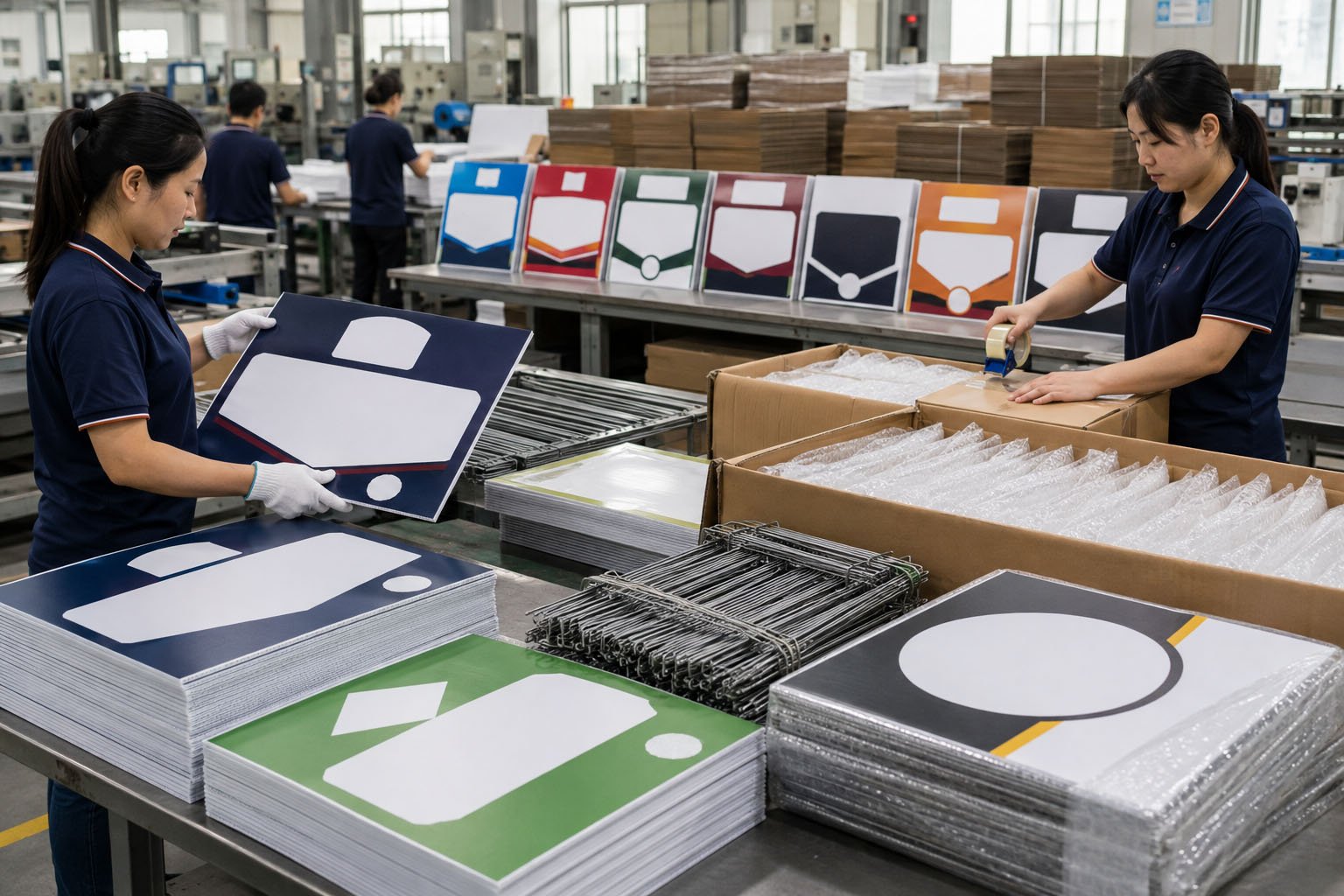
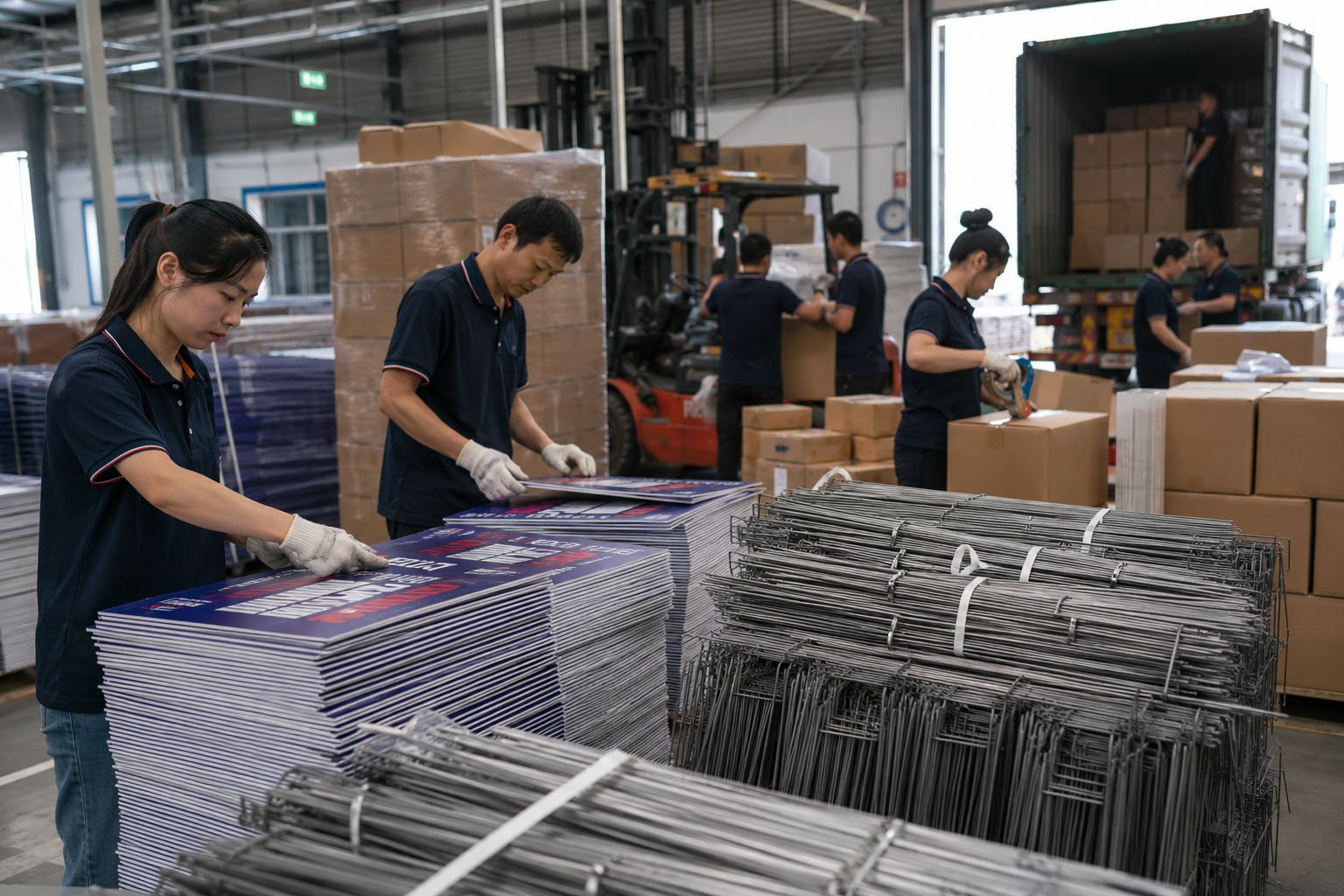
At iYardSign, we manufacture custom coroplast yard signs, business signs, event signs, real estate signs, and yard signs with H-stakes for overseas customers. This guide explains how to install yard signs correctly and avoid common mistakes.
Quick Answer: How Do You Install Yard Signs with H-Stakes?
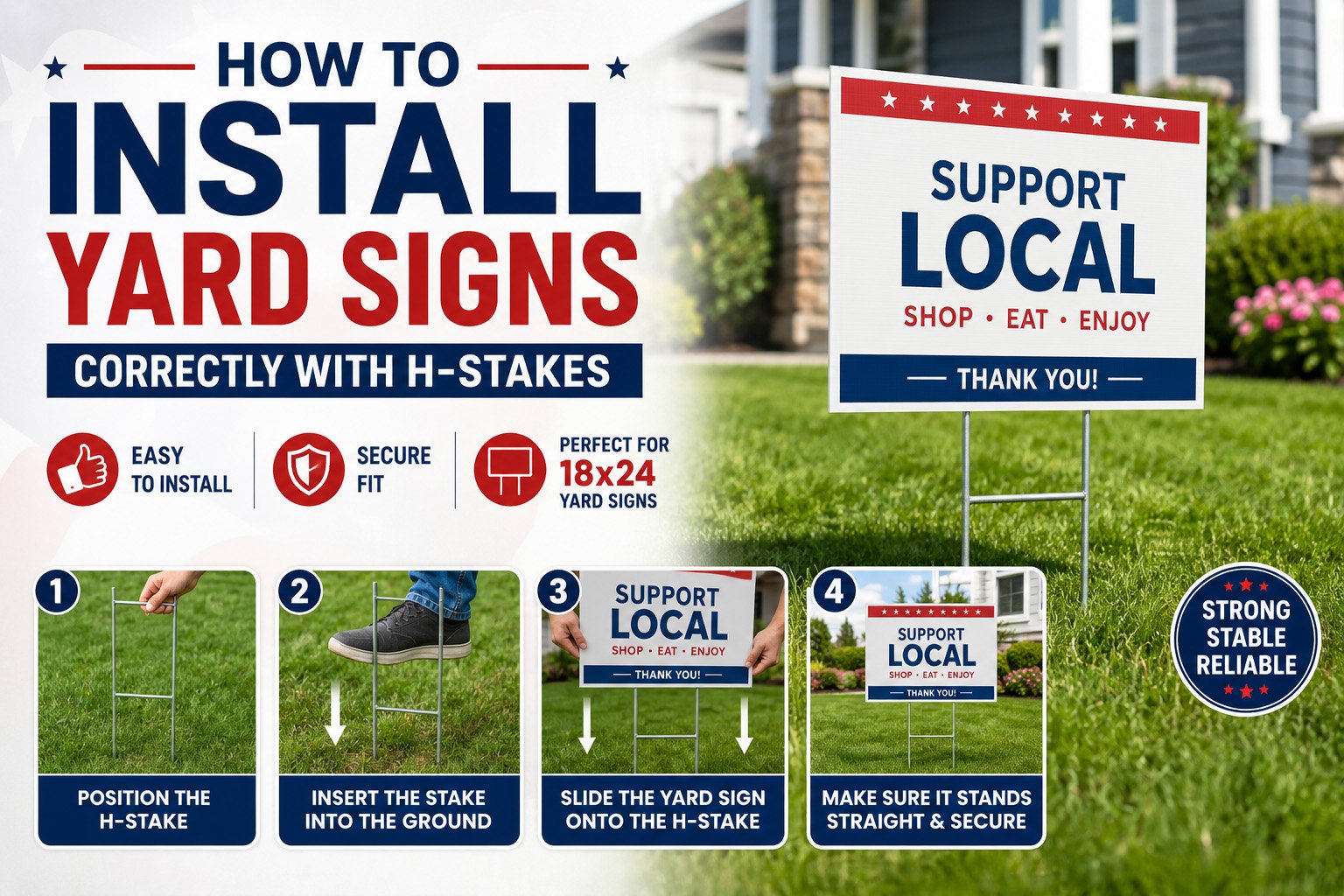
To install a corrugated plastic yard sign with H-stakes, push the metal H-stake into soft ground first, then slide the sign onto the two vertical wires through the flutes of the corrugated plastic. Make sure the sign is level, facing the right direction, and placed where people can see it clearly.
For best results, use signs with the correct flute direction and install them in grass, soil, or other soft ground. Avoid forcing stakes into concrete, rocky ground, or frozen soil.
What Are H-Stakes?
H-stakes are metal wire stakes commonly used to install corrugated plastic yard signs. They are called H-stakes because their shape looks similar to the letter “H.” The lower part goes into the ground, and the upper wires slide into the flutes of the sign.
H-stakes are popular because they are:
- Easy to use
- Affordable
- Lightweight
- Reusable in many cases
- Suitable for grass and soft ground
- Commonly used with coroplast yard signs
Many custom yard sign orders include H-stakes, but buyers should always confirm whether stakes are included before placing an order.
Step 1: Check the Sign Flute Direction
Corrugated plastic signs have internal channels called flutes. H-stakes slide into these channels. For standard yard signs, the flutes should usually run vertically so the H-stake wires can enter from the bottom.
If the flutes run in the wrong direction, the sign may not work with standard H-stakes. This is why flute direction should be confirmed before production, especially for custom sizes, vertical signs, or custom shape signs.
Before installation, look at the bottom edge of the sign. You should see the openings where the stake wires can slide in.
Step 2: Choose the Right Location
Placement affects how well the sign performs. A yard sign should be easy to see, easy to read, and safely placed.
Good locations include:
- Front lawns
- Roadside grass areas where permitted
- Event entrances
- Open house routes
- Business property edges
- Directional points
- Parking guidance areas
Before placing signs, check local rules, property permissions, HOA restrictions, city regulations, and event guidelines. Some areas do not allow signs in public rights-of-way or near traffic signs.
Step 3: Push the H-Stake into the Ground First
It is usually easier to push the H-stake into the ground before attaching the sign. Hold the stake straight and press it into the soil until it feels stable.
For harder ground, gently loosen the soil first. Do not bend the stake by forcing it into rocks, concrete, frozen ground, or very compacted soil. If the ground is too hard, choose another location or use a different installation method.
The stake should stand straight. If it leans, the sign may look unprofessional or fall over in wind.
Step 4: Slide the Sign onto the Stake
Once the stake is secure, align the sign flutes with the two vertical wires of the H-stake. Slowly slide the sign down onto the wires.
Do not force the wires if they do not align with the flutes. Forcing can damage the sign or bend the stake. If the sign does not slide on smoothly, check the flute openings and stake position.
After the sign is installed, check that it is level and facing the correct direction.
Step 5: Face the Sign Toward the Viewer
Yard signs should face the direction where people will see them. For business signs, this may be the street or sidewalk. For event signs, it may be the guest path. For real estate signs, it may be the main road or property entrance.
If the sign is double-sided, place it where people can approach from both directions. If it is single-sided, make sure the printed side faces the main traffic direction.
Common Yard Sign Installation Mistakes
Even simple signs can be installed incorrectly. Avoid these common mistakes:
- Installing the sign where it is blocked by plants, cars, fences, or other signs
- Using H-stakes with signs that have the wrong flute direction
- Placing signs too low or too close to the ground
- Putting too many signs in one small area
- Facing the sign away from traffic
- Installing signs in very hard or rocky ground
- Ignoring local sign rules or property permission
- Using small text that cannot be read from the road
A properly placed sign should be visible, readable, stable, and compliant with local rules.
How to Place Yard Signs for Better Visibility
Good placement is just as important as good printing. A well-designed sign may not work if it is hidden or placed too far from the viewer.
Use these placement tips:
- Place signs where people naturally look
- Keep signs away from visual clutter
- Use directional signs before key turns
- Place parking signs before the parking area, not after it
- Make sure signs are not blocked by parked cars
- Use high-contrast designs for roadside visibility
- Test readability from the expected viewing distance
For events and real estate open houses, walk or drive the route before the start time to make sure signs are easy to follow.
How Many H-Stakes Do You Need?
For most standard small yard signs, one H-stake per sign is common. Larger signs may need stronger stakes, multiple stakes, or alternative support depending on size, wind exposure, and installation location.
Before ordering, confirm:
- Sign size
- Material thickness
- Outdoor duration
- Wind conditions
- Ground type
- Whether signs are single-sided or double-sided
If you are ordering bulk yard signs, make sure the number of H-stakes matches the number of signs that need ground installation.
Can Yard Signs Be Installed Without H-Stakes?
Yes. H-stakes are common, but they are not the only option. Depending on the location, yard signs may also be installed with frames, posts, zip ties, wall mounting, hanging hardware, or display stands.
Alternative installation may be needed when:
- The sign is too large for standard H-stakes
- The ground is hard or paved
- The sign will be displayed for a long time
- The location has strong wind
- The sign needs a premium presentation
- The sign is installed indoors or on a fence
For temporary outdoor lawn signs, H-stakes are usually the easiest choice. For larger or long-term signs, ask the supplier for installation suggestions.
How to Maintain Yard Signs Outdoors
Yard signs are designed for outdoor use, but basic care can help them last longer and look better.
Maintenance tips include:
- Check signs after heavy wind or rain
- Reposition leaning stakes
- Wipe dirt from the printed surface if needed
- Remove signs when the promotion or event is finished
- Store reusable signs flat in a dry place
- Keep H-stakes bundled to avoid losing them
If signs are reused frequently, inspect the flute openings and edges before each installation.
Yard Sign Installation Checklist
Before installing yard signs, use this checklist:
- Confirm the sign flutes run in the correct direction
- Check that H-stakes are included
- Choose a visible and permitted location
- Push the stake into soft ground first
- Slide the sign onto the stake carefully
- Face the sign toward the viewer
- Check that the sign is level
- Make sure the message is readable from a distance
- Inspect signs after wind or rain
- Remove signs after the campaign or event
FAQ About Yard Sign Installation
How do you install a yard sign with H-stakes?
Push the H-stake into soft ground first, then slide the corrugated plastic sign onto the two vertical wires through the sign flutes. Make sure the sign is straight and facing the correct direction.
Do all yard signs work with H-stakes?
No. Yard signs must have the correct flute direction for H-stakes to slide into the corrugated plastic. Custom sizes and shapes should be checked before production.
Can H-stakes be used on hard ground?
H-stakes are best for grass, soil, and soft ground. They should not be forced into concrete, rocky ground, or frozen soil.
How many H-stakes are needed per yard sign?
Most standard small yard signs use one H-stake per sign. Larger signs may need additional support depending on size and wind exposure.
Where should yard signs be placed?
Yard signs should be placed where they are visible, readable, and allowed by local rules. Good locations include lawns, event entrances, open house routes, business property edges, and directional points.
Custom Yard Signs with H-Stakes from iYardSign
Proper installation helps yard signs stay upright, visible, and professional. Whether you are using signs for real estate, business advertising, events, campaigns, schools, churches, or local services, correct H-stake setup and placement can improve results.
iYardSign manufactures custom coroplast yard signs, business signs, event signs, real estate signs, outdoor promotional signs, and yard signs with H-stakes. We support full-color printing, custom sizes, artwork review, bulk orders, H-stake options, packaging, and shipping coordination.
Need custom yard signs that are easy to install? Send iYardSign your size, quantity, artwork, and stake requirements to get a factory quote.