How to Maintain Yard Sign Color Consistency in Bulk Orders

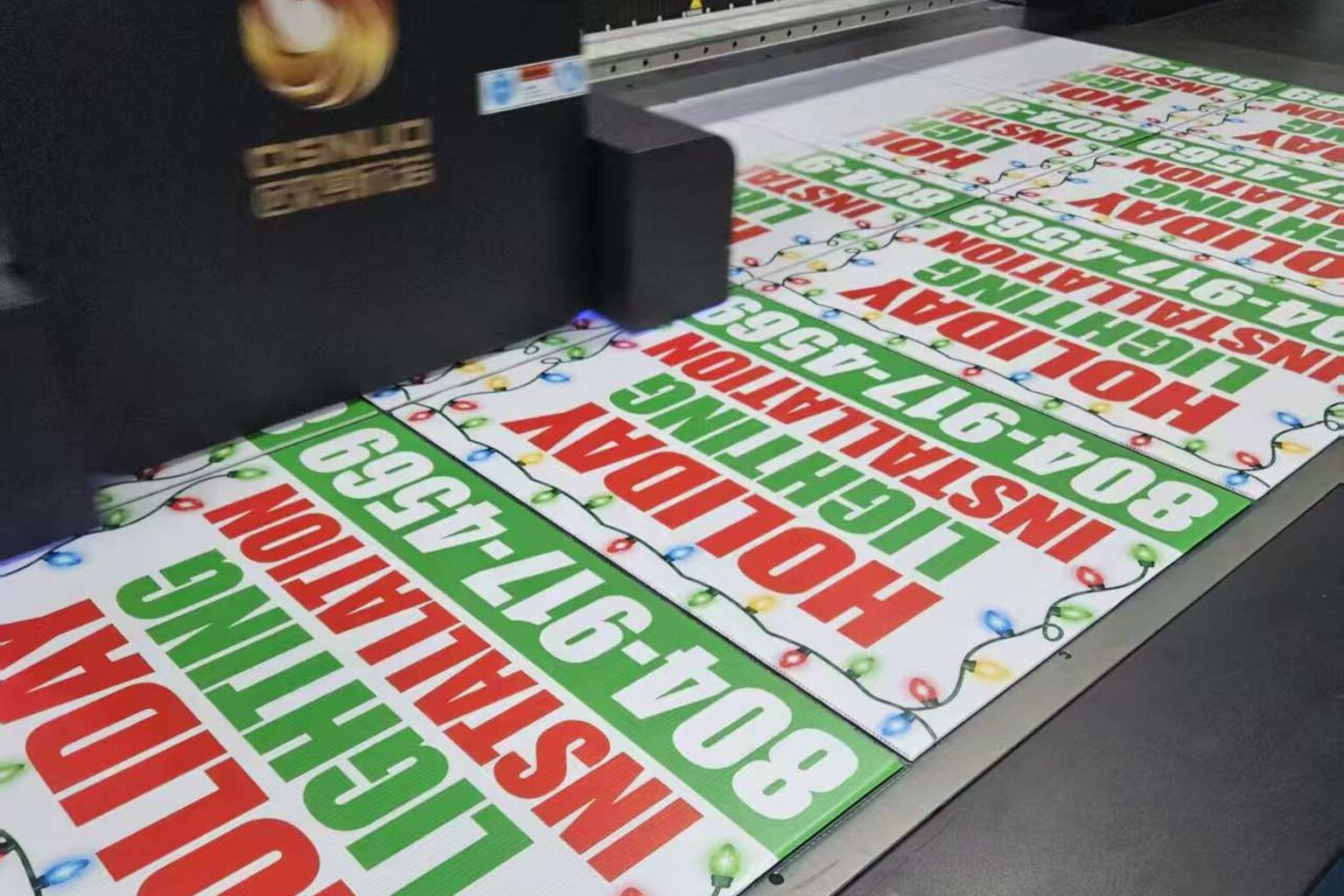
Quick answer: Improve yard sign color consistency by using one approved artwork revision, identifying critical brand colors, supplying usable color references, approving a printed sample when color is important, keeping the board and printing process consistent, checking the first production pieces, and saving records for repeat orders. Do not approve color only from a phone or computer screen.
Why Yard Sign Color Consistency Becomes a Bulk-Order Risk
Color variation is more visible when many signs appear together, when different branches receive stock, or when new inventory is placed beside an earlier order. A small difference that seems unimportant on one isolated sign may look obvious across a franchise rollout or reseller display.
Color can be influenced by:
- The color values and profile inside the artwork file
- RGB-to-print conversion decisions
- The whiteness, surface, thickness, and lot of the corrugated plastic
- Ink system, printer condition, and production settings
- Single-pass or layered ink coverage
- Whether white areas are printed or left as exposed board
- Ambient light used during inspection
- Age, weather exposure, and storage condition of an older reference sign
This is why instructions such as “match our logo blue” or “make it brighter” are not adequate production standards. The buyer and supplier need a shared reference and approval method.
Start with the Intended Color Result
Not every color requires the same level of control. A temporary directional sign may only need a clear, attractive result. A national franchise, political campaign, or reseller supplying a brand account may require closer comparison with an approved reference.
Before requesting a quotation, identify:
- Which colors are brand-critical
- Which background or photographic colors are less critical
- Whether the signs will be displayed beside previous batches
- Whether different designs must share the same brand colors
- Whether a customer requires a physical sample approval
- How the buyer will judge and accept the finished color
Separating critical and noncritical areas helps the factory focus control on the colors that affect brand recognition and customer acceptance.
Buyer note: “Exact color” is not a complete instruction. Identify the controlling file or physical reference, the viewing condition, the acceptable comparison method, and which printed areas are critical.
Choose the Correct Color Reference
A color reference tells the factory what the buyer expects. Some references are more reliable for physical production than others.
| Reference Type | Useful For | Main Limitation |
|---|---|---|
| Approved printed sample | Comparing the actual ink, board, and process | Must be identified, protected, and linked to the specification |
| Recognized color reference | Communicating a target brand color | The printing process and substrate may not reproduce every reference exactly |
| CMYK values with profile | Documented print-oriented artwork workflows | The same percentages may appear different on another device or material |
| RGB or HEX values | Digital brand identification and screen applications | They describe screen color and require conversion for printing |
| Phone screenshot or web image | Visual explanation only | Display settings, compression, and unknown file data make it unreliable for approval |
When several references are supplied, state which one controls production. A physical sample, PDF artwork, brand guide, and screenshot may show visibly different results. The factory should not have to guess which reference has priority.
How Yard Sign Color Consistency Depends on Artwork Files
Use one approved production file for every design. The file should have a clear design name, revision number, dimensions, and quantity. Avoid filenames such as final-new-2.pdf, which do not identify the approved revision.
Ask the designer or print supplier to review:
- Document color mode
- Embedded or assigned color profile
- Defined CMYK, RGB, spot, or brand-color values
- Transparency and blending effects
- Raster image color spaces
- Black construction and total ink behavior where relevant
- Whether multiple files use the same brand-color values
RGB is designed around light emitted by screens, while printing reproduces color with ink on a physical surface. A bright screen color may fall outside the reproducible range of a particular printer, ink, and substrate combination. Converting a file does not guarantee that the printed appearance will match the screen.
The International Color Consortium provides information about open, cross-platform color management and ICC profiles. Buyers do not need to become color scientists, but they should preserve profile information and avoid uncontrolled file conversions between teams.
Material Controls for Yard Sign Color Consistency
The artwork is only one part of yard sign color consistency. The printed result also depends on the production combination used to reproduce it.
Document the approved combination:
- Corrugated plastic color and nominal thickness
- Board supplier or approved material specification when required
- Surface treatment and printable side
- UV printing process
- White ink or underbase requirements when applicable
- Single- or double-sided construction
- Approved print mode or production setup
- Protective finishing, if used
Changing from one board color, surface, or print setup to another can alter the appearance even when the artwork values remain unchanged. For repeat orders, the supplier should compare the new specification with the previous approved production record before printing.
For a broader specification review, see How to Choose Print Specifications for Bulk Yard Signs.
Physical Samples for Yard Sign Color Consistency
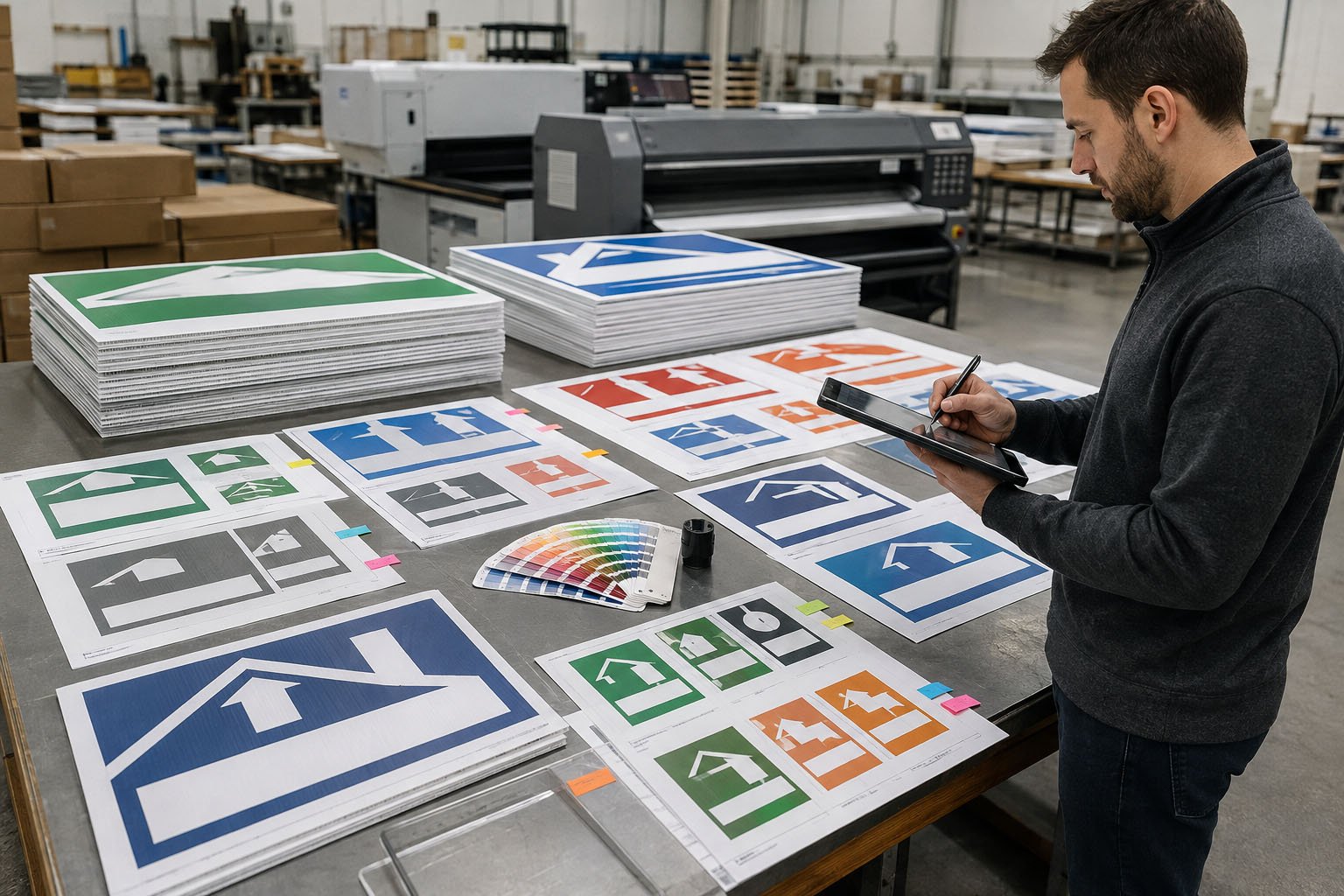
A digital proof is useful for confirming layout, spelling, dimensions, orientation, contact details, and artwork revision. It is not a dependable physical color proof because the buyer and factory may view it on different screens.
For a first order or color-sensitive project, request a printed sample using the proposed board and printing process. Review:
- Critical logo and background colors
- Neutral grays and skin tones, when present
- Gradients and large solid-color areas
- Color contrast around text and QR codes
- Front-to-back appearance on double-sided signs
- Color beside an existing approved sign, when matching is required
Approve the sample in writing and record its design ID, date, material, print method, and revision. Keep one protected reference with the factory and, when practical, one with the buyer. An unidentified sample on a desk is not a controlled production standard.
Buyers evaluating several product options can use the bulk yard sign sample kit guide to organize physical comparisons before mass production.
Define an Acceptable Color Tolerance
No bulk print process should rely on the undefined instruction “no color difference.” The buyer and supplier should agree on how color will be judged and how much variation is acceptable for the specific project.
A color-control section may define:
- The controlling printed sample or color reference
- The critical areas to be compared
- The agreed viewing environment
- Whether visual comparison, instrument measurement, or both will be used
- The acceptable tolerance when a measurement method is specified
- Whether variation within one batch and between repeat batches is evaluated differently
- Who has authority to approve production
There is no universal numerical tolerance that is correct for every brand, substrate, printer, order value, or viewing condition. If the buyer requires instrument-based measurement, both parties should agree on the device, measurement conditions, target, formula, sampling method, and acceptance limit before production—not after a dispute occurs.
Check the First Printed Pieces Before Full Production
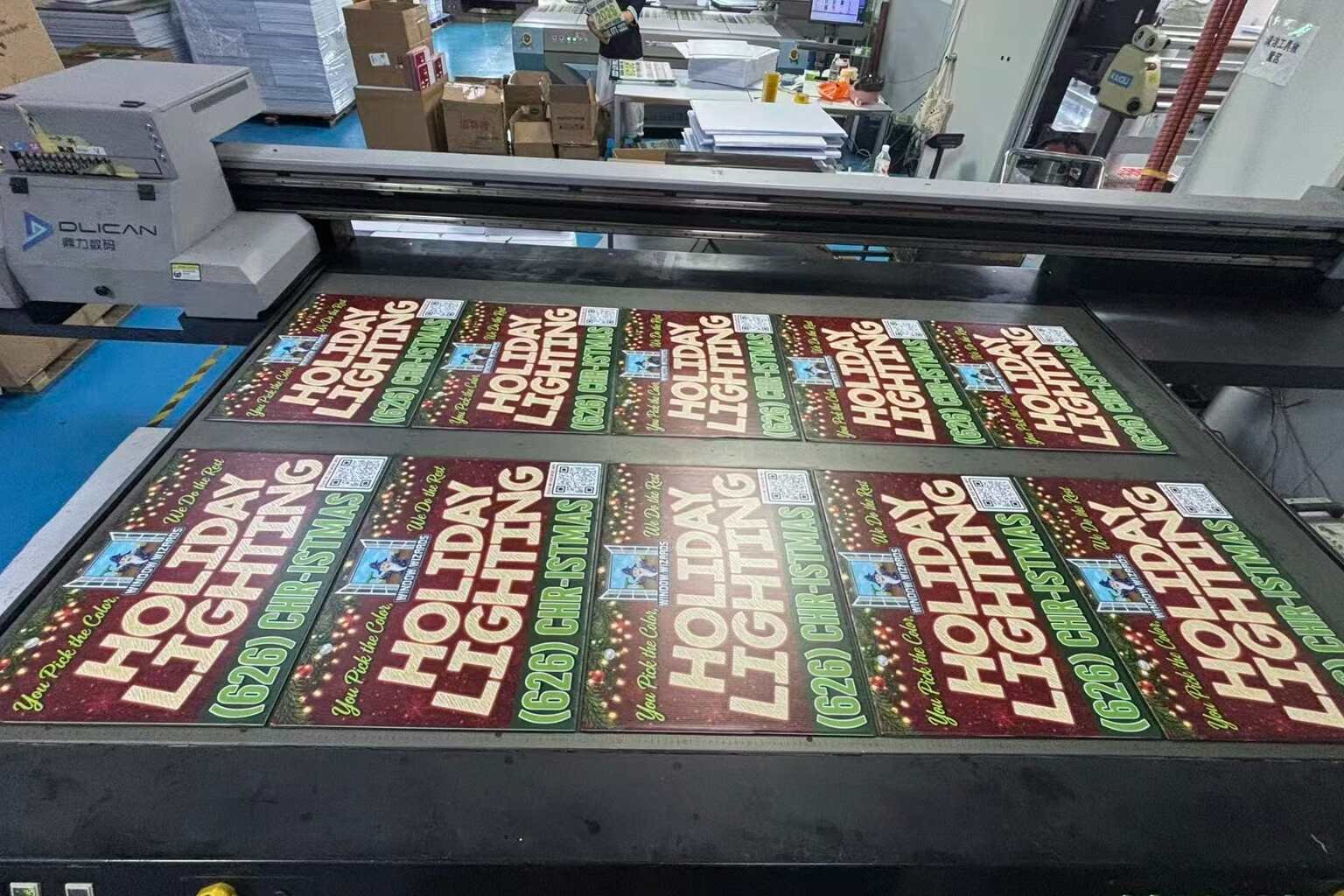
The first approved production pieces provide an opportunity to catch a problem before thousands of signs are completed. The factory should compare them with the approved file and color reference under a consistent inspection condition.
The first-piece check should confirm:
- Correct artwork revision and quantity assignment
- Correct board and printing side
- Critical brand colors against the approved reference
- Text, phone numbers, URLs, and QR codes
- Print position, orientation, and cutting relationship
- Whether large solid areas show unacceptable banding or inconsistency
Approval should be documented. If an adjustment is made, record the revised production setting or reference and confirm the new first piece. Do not allow an unrecorded press-side adjustment to become the hidden standard for the next order.
Monitor Yard Sign Color Consistency During Production
Approving the first piece does not eliminate the need for in-process checks. Long runs, multiple designs, production interruptions, or material changes can introduce variation.
A practical inspection plan can include:
- First-piece approval at the start of the run
- Periodic samples during production
- A new check after a material, ink, machine, or setup change
- Comparison across all designs sharing the same brand colors
- Final samples retained with the order record
- Separation and review of questionable pieces
The buyer does not need to request photographs of every sign. A defined sampling and reporting process is more useful than a large folder of uncontrolled phone images.
Evaluate Color Under Comparable Lighting
The same printed sign can appear different in warehouse lighting, daylight, warm office lighting, or a phone photograph. Compare color under a consistent agreed light source and view the sample at a normal angle.
Avoid making a rejection decision from:
- A compressed image sent through a messaging app
- A photograph with automatic exposure or white-balance changes
- Two photos taken under different lighting
- A backlit screen compared directly with a reflective printed board
- An old outdoor sign that has already experienced sun and weather exposure
Photos are useful for locating an issue, but a brand-sensitive decision may require the physical production sample, agreed reference, and documented inspection method.
Preserve Yard Sign Color Consistency Across Repeat Orders
Repeat orders often create the greatest expectations because the buyer assumes the new signs will match earlier inventory. Preserve the production history instead of starting again from an email attachment.
The repeat-order record should include:
- Approved artwork file and revision
- Color profile and critical color values
- Material and print specification
- Approved physical sample or retained production sample
- First-piece approval record
- Production date and order number
- Any approved adjustment or exception
Before repeating production, confirm whether the buyer wants to match the original approved sample or an aged sign currently in the field. These may no longer look the same. Also confirm whether any logo, brand guide, substrate, or artwork has changed.
What to Do When a Color Difference Is Found
First determine whether the difference comes from the file, material, printing, lighting, photography, or the comparison reference. Do not classify the entire order from one uncontrolled image.
A useful review process is:
- Identify the affected design, carton, and production quantity.
- Confirm the artwork revision and production specification.
- Compare production samples under the agreed viewing condition.
- Check the approved physical or documented color reference.
- Separate questionable inventory while the review is open.
- Record the finding, affected quantity, and agreed corrective action.
Possible actions may include accepting the variation, sorting affected pieces, adjusting remaining production, reprinting an agreed quantity, or using another documented remedy. The decision should follow the order’s written quality agreement rather than a new expectation created after production.
See How to Write a Yard Sign Quality Agreement for Bulk Orders for a broader framework covering standards, inspection, evidence, and remedies.
Bulk Yard Sign Color Approval Checklist
Before mass production, confirm:
- Final artwork file and revision number
- Critical colors and controlling references
- Color mode and profile information
- Approved corrugated plastic specification
- Printing and white-ink requirements
- Need for a physical printed sample
- Viewing and comparison method
- Acceptable tolerance and approval authority
- First-piece and in-process inspection checkpoints
- Records required for future repeat orders
Important: A monitor preview, HEX code, or verbal color name should not be the only acceptance reference for a color-sensitive bulk order. Connect the approved artwork to a physical or otherwise documented production standard.
How iYardSign Supports Color-Controlled Bulk Orders
iYardSign manufactures custom corrugated plastic yard signs for overseas B2B buyers, including sign and printing companies, distributors, resellers, campaign suppliers, franchise groups, and multi-location service businesses.
For qualified bulk orders, buyers can discuss:
- Artwork and color-file review
- Printed samples before mass production
- Single- or double-sided UV printing
- First-piece and production inspection
- Multi-design color coordination
- Reference retention for repeat orders
- Pre-shipment photos and quality records
Send the final artwork, critical brand-color information, previous approved sample when available, sign size, quantity by design, and delivery requirements. Color expectations should be reviewed before production timing and mass-print approval are confirmed.
Frequently Asked Questions About Yard Sign Color Consistency
Can a factory match the color shown on my phone?
A phone image can explain the general appearance, but it is not a reliable physical production standard. Screen calibration, brightness, camera settings, compression, and lighting can change the visible result.
Are HEX or RGB values enough for yard sign printing?
They are useful digital references, but they describe screen-oriented color. The file must be converted or interpreted for the specific printing process, ink, color profile, and corrugated plastic substrate.
Should every order require a printed sample?
Not necessarily. A sample is most valuable for a new supplier, new material, first production, critical brand color, unusual artwork, or order that must match existing inventory. Buyer and supplier should decide based on risk.
Can a repeat order match the previous batch?
Consistency improves when the factory uses the same approved artwork, material specification, printing process, color reference, and production records. Some variation may still occur, so acceptance criteria should be agreed in advance.
Why does a printed sign look different indoors and outdoors?
Color appearance changes with light source, intensity, surroundings, viewing angle, and surface reflection. Compare samples under an agreed and reasonably consistent viewing condition.
How should buyers report a possible color problem?
Provide the order number, design ID, carton information, affected quantity, photos showing the issue, viewing conditions, and comparison reference. Keep the questioned inventory separate until the review is complete.
Planning a Color-Sensitive 500+ Piece Yard Sign Order?
Send your artwork, critical brand colors, reference sample information, quantity by design, sign specification, H-stake requirements, destination, and required delivery date.
iYardSign can review the sample, production, inspection, packing, and shipping requirements for your bulk custom yard sign project.